Trump’s second Asean summit presence comes at a price for region
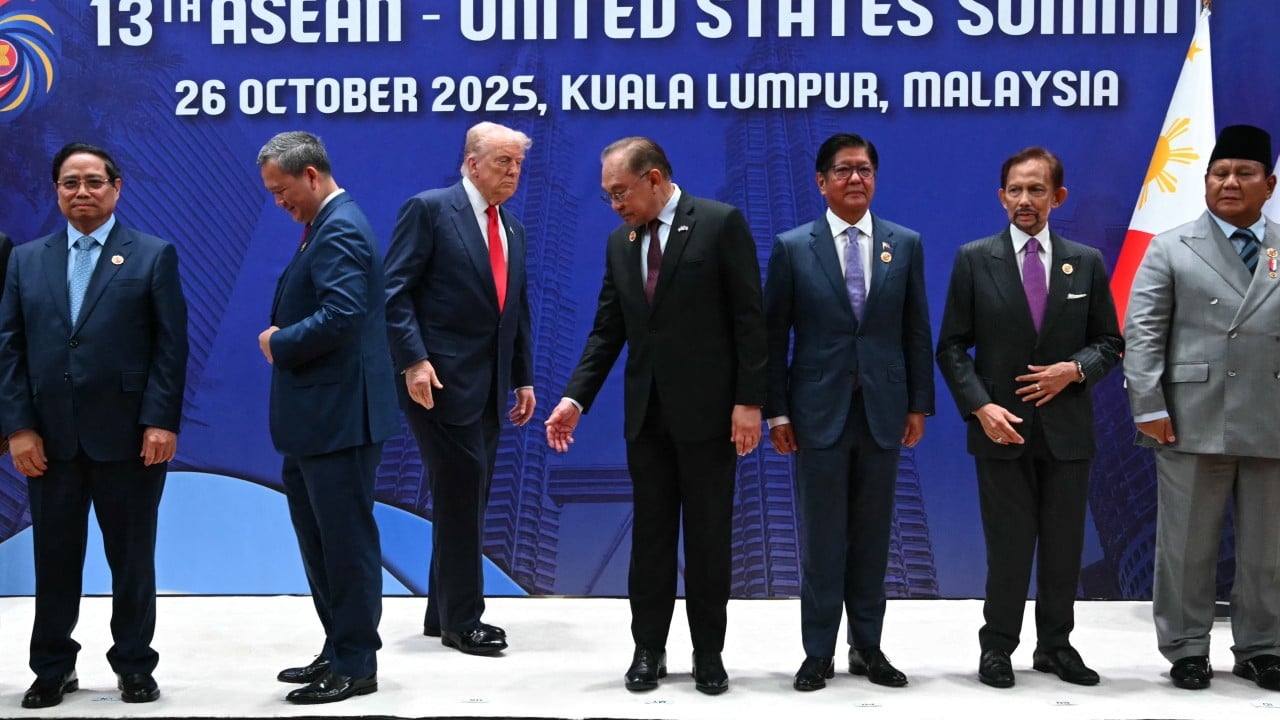
US President Donald Trump is expected to drive hard bargains on tariffs and critical minerals in his return to the Asean summit in Manila next month, with Washington seeking greater economic and strategic concessions while remaining hawkish on China.
The Philippines confirmed on Wednesday that Trump would fly in for the summit from November 16 to 18, before attending the Asia-Pacific Economic Cooperation (Apec) summit in Shenzhen that same week.
Trump’s second consecutive appearance at the forum signals continued US engagement despite his preference for one-on-one deals, analysts say. The timing of the trip ahead of an expected meeting with counterpart Xi Jinping in Shenzhen is also seen as a chance for the US to reassure regional partners of its commitment.
But they warn that renewed US tariff pressure and demands for closer alignment could push Association of Southeast Asian Nations members into competing bilateral deals that would undermine economic ties with both superpowers.
“His attendance at two consecutive Asean summits is significant, given his preference for bilateral engagement and transactional diplomacy over multilateral institutions. The fact that the Philippines is a close treaty ally of the US also makes a difference, particularly given their strong defence cooperation and shared security interests in the South China Sea,” said Joanne Lin, a senior fellow at the ISEAS-Yusof Ishak Institute.
Lin added that Trump’s visit was a positive sign that Southeast Asia remained important to Washington.
“As an ally, President Trump is here to strengthen the Philippines’ position on many issues that confront both countries in Southeast Asia and the wider Indo-Pacific,” said Julio Amador, CEO of Amador Research Services and visiting fellow at Perry World House. “While it is tempting to look at the Apec summit as the main goal, I believe that the East Asia summit, which figures a lot in security issues, is more vital to the visit.”
Security concerns
Analysts said that a large part of Trump’s agenda in attending the Asean summit would deal with trade and economic security.
“A big part of it is to show that the US is still vital to the security of the region, and shoring up its alliances and partnerships and putting forward a case for economic security,” Amador said.
He added that as US foreign policy primarily focused on alliance and security, the visit was also likely to affirm the economic aspect, particularly the Luzon Economic Corridor – a connectivity project that could inject as much as US$100 billion into the Philippine economy – as a crucial part of bilateral ties.
“The administration has made it clear that economic security is now closely linked to national security,” Lin said. “Beyond securing better market access for American products, Washington will likely be looking for concrete commitments on supply-chain security, critical minerals, technology cooperation, AI and greater investment in the US.”
The order of Trump’s stops is “telling”, according to Asean observer Vu Lam. “As chair and treaty ally, Manila has pledged to conclude a legally binding Code of Conduct in the South China Sea by the end of its chairmanship. Visiting an ally just before Beijing offers reassurance and some leverage,” the Australia-based researcher said.
03:31
China and the Philippines trade accusations after clash in South China Sea
Collins Chong, a foreign affairs and security analyst at Universiti Malaya, said that Trump’s visit was a calculated move to sustain the momentum of his diplomatic engagement with the region after his trip to Malaysia last year.
“Trump recognises that personal diplomacy and direct engagement with regional leaders remain indispensable tools in preserving American influence, especially at a time when China continues to expand its … presence across Southeast Asia,” Chong said.
Total US-Asean trade in goods and services reached US$686 billion in 2025, reflecting the region’s growing importance. “Asean is now an increasingly important geopolitical and geoeconomic battleground, encompassing critical minerals, semiconductors, energy security, advanced manufacturing, maritime connectivity and diversified supply chains,” he said.
As such, Washington cannot allow Beijing to become the “overwhelmingly dominant economic and strategic reference point” for Asean. “The challenge is not simply to contain China’s military rise, but to prevent Beijing from accumulating structural influence over the industries, infrastructure, technologies and maritime routes, eventually gaining strength to challenge the US in key areas,” Chong said.
“Trump is seeking to translate American market access, security commitments and technological advantages into greater strategic returns, while ensuring that China cannot turn Southeast Asia into an uncontested platform for its expanding regional power.”
Tariff talks
Following a new wave of US tariffs under alleged forced labour practices in its Section 301 investigations in July, levies will continue to be the focus, according to the experts.
“The main difference is that we are moving from the initial tariff shock to a more established pattern of bilateral bargaining,” Lin said. “The pressure on Southeast Asian economies remains, but it is becoming more targeted and tied to specific regulatory and economic-security commitments.”
This could push members into making separate bilateral deals, she added. “Ultimately, Asean cannot prevent its members from pursuing bilateral deals, but it should ensure that these arrangements do not undermine regional economic integration or weaken Asean’s collective position.”
Lam said such agreements were likely, pointing to developments last year, when Thailand agreed to remove tariffs on nearly all US goods and Vietnam gave preferential access to almost all US exports.
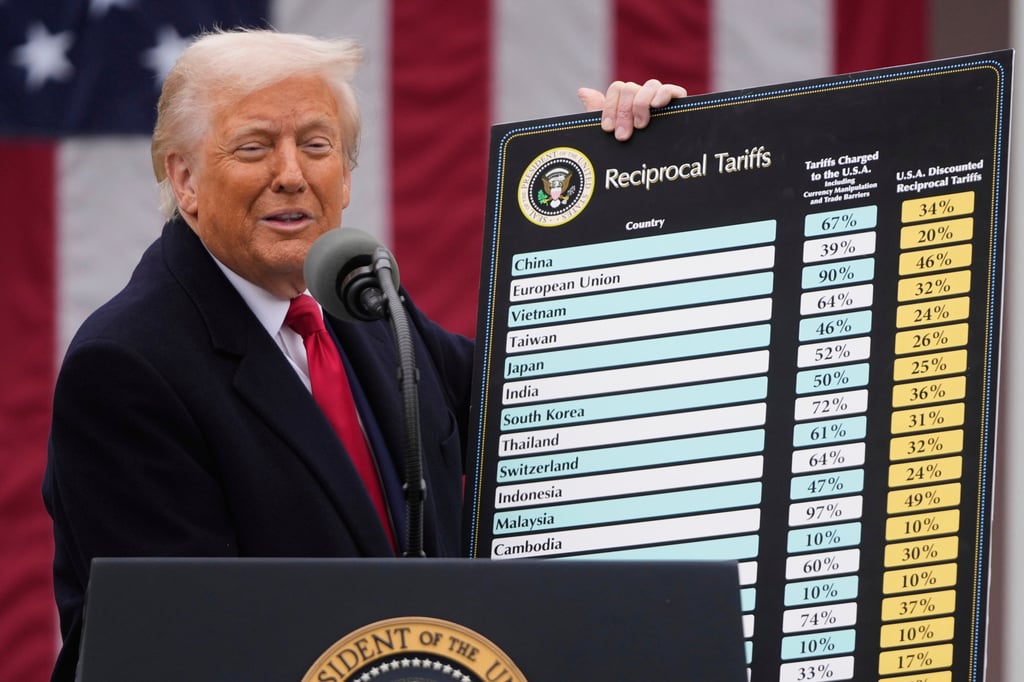
“Expect commitments on intellectual property, purchases of US goods and tighter rules on Chinese transshipment too. In return, they hope for lower tariffs and fewer future US trade actions, but nothing is guaranteed. Their concessions are long term, while US tariff relief can be withdrawn at any time,” Lam said.
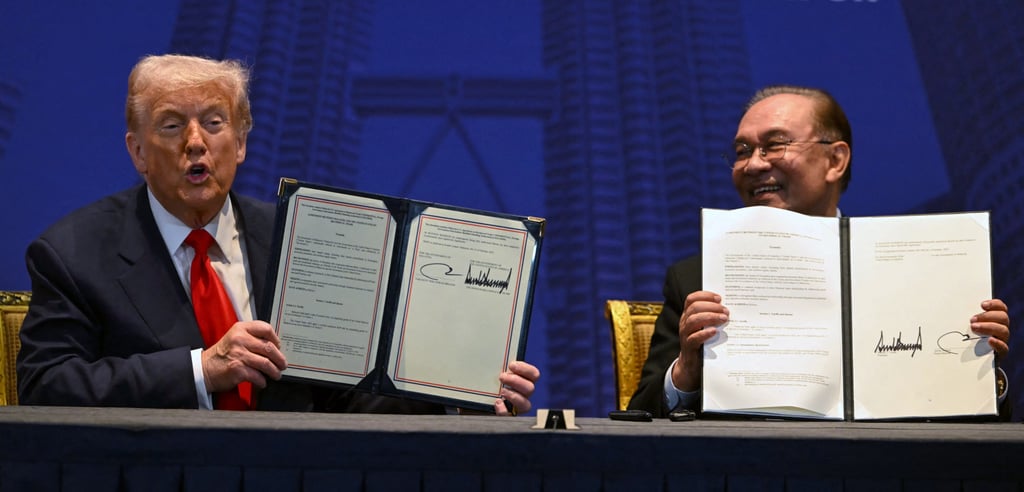
Trump’s hard bargains in matters such as export controls, supply-chain security, technology governance and trade practices involving third countries could increasingly involve geopolitical considerations, Lin said. “We saw how similar provisions in the earlier agreements with Malaysia and Cambodia became politically sensitive because of China’s concerns about ‘poison pill’ clauses.”
Asean countries faced a difficult balancing act as “they want more predictable access to the US market, but they also need to preserve their economic relationships with China and avoid commitments that could constrain their strategic autonomy”.
KioskNews shows a cleaned-up reading view extracted from the publisher’s page — the original always lives on their site, not ours.