2026 Audio Awards: 40 products to upgrade your listening experience

We may earn revenue from the products available on this page and participate in affiliate programs. Learn more ›
Last year, we started a tradition. For our second annual roundup of outstanding audio gear, we worked even harder to find more highlights. From October 2025 to October 2026, we sat our ears down in hotel suites and a Honda Fit, toured factory floors and demo rooms with the same criteria as last year: make us feel something. What we found were headphones, earbuds, speakers, and sources ranging from close to $100 to nearly $100,000 … something for everyone, let’s say. But enough talk. Let’s press play on Audio Awards 2026.
Passive Speakers
Bowers & Wilkins 800 Series Diamond 801 D5

It only took 10 seconds in front of the 801 D5 towers to know I was listening to something special, because it took exactly 10 seconds for the lush plate reverb in Roberta Flack’s “Killing Me Softly With His Song” (2025 Remaster) to frame her vocal in a satin aura wider, deeper, more distinct than I’d heard before. Launched for the company’s 60th anniversary, its laminated layers finished by hand in Worthing, UK, formed around enhanced bracing to reduce vibration and irritation, these $65,000 three-way icons project but don’t interject presence in a way that’s as engaging as it is illuminating.
Sonus Faber Olympica V G3
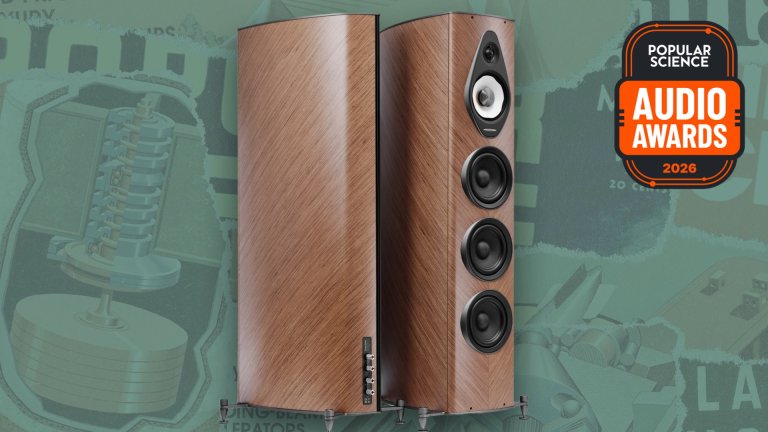
Hailing from Vicenza, Italy, and inspired, like all sonus faber speakers, by a heritage of luthiers as much as listeners, the Olympica V G3 flagship floorstander draws acoustic inspiration from lutes and veneer from violins. A pair of these $30,000 3-way ported towers features trickle-down tech from the summit-fi Suprema, including the flower petal-inspired Camelia midrange driver and organic, recycled cork-lined chambers to cut resonance. Sitting before a pair, however, it wasn’t just the looks that stunned. The typical sonus faber romantic tuning has been shifted from purely natural to slightly more neutral, clarifying this model’s focus on full-range realism. These are speakers to be admired for their timbre and timber.
DALI SONIK 5
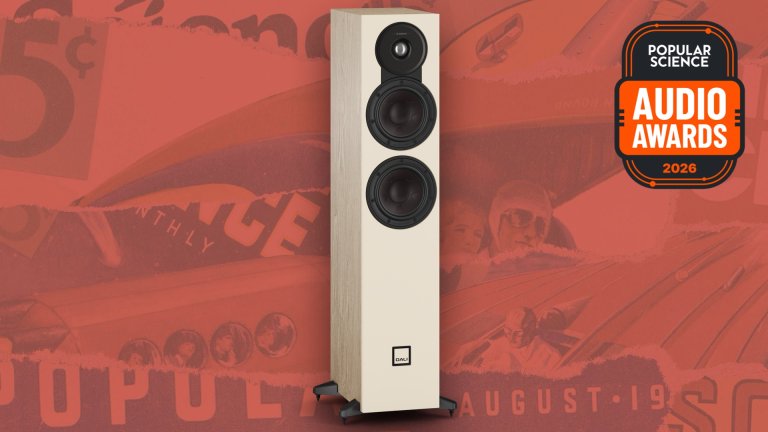
Based up the Jutland peninsula in Nørager, Denmark, DALI applies a human-centric, minimalist Danish design approach to speakers, but never forgets to include the fun in functionalism. DALI stands for Danish Audiophile Loudspeaker Industries, though plenty of reviewers would joke it’s actually “Don’t Angle Loudspeakers Inwards,” as the company’s acoustic engineering is praised for its wide, stable stereo imaging in slim 2-way towers. You don’t need an open floor plan to fit these into your space, and they’ll feel bigger than their boxes. The SONIK 5 is particularly bang for the buck at only $1,800 a pair, getting a magnet system and paper/wood fiber diaphragms derived from pricier speaker lines and pairing twin 5 ¼-inch woofers with a newly designed 29mm soft-dome tweeter. What I heard was uncolored coherence, a composed midrange, and more low-level detail than many similar speakers targeting smaller rooms and tighter budgets.
KLH Model Four

If you feel like nailing speaker positioning in a tight space has your back to the wall, you’ll be as shocked as I was at the KLH Model Four’s ability to be placement-friendly without sacrificing transient response. A shallow acoustic-suspension floorstander, its sealed enclosure can even play nicely in arrangements that would muffle and muzzle a ported design. Combining the Model Five’s midrange, tweeter, and crossover with the Model Three’s 8-inch woofer, the 3-way KLH Model Four hits a sweet spot in almost any spot. There’s even a three-position Acoustic Balance Control that trims mids and highs to compensate for hard-surfaced floors versus carpeted ones. Combined, these features presented a midcentric solution for even the least forgiving hotel demo room.
Revel Performa4 M146
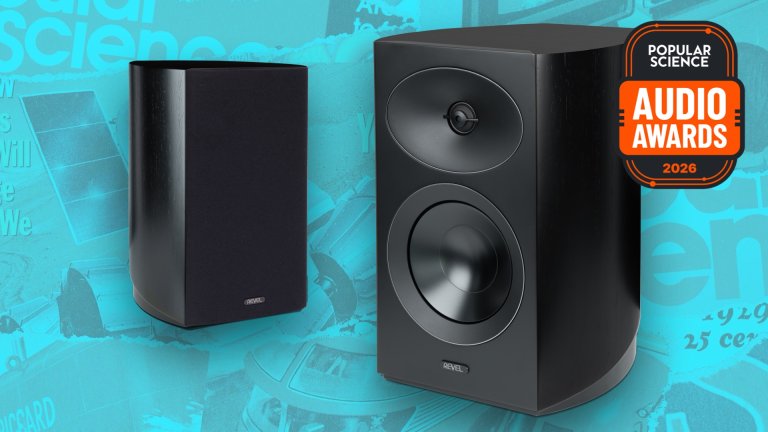
I’m 5’6” … my dog is 8.5 pounds … my preferred car is a hot hatch. I appreciate things that are small but mighty. And I appreciate the Revel Performa4 M146, a $2,999 set of 2-way standmount speakers that presents neutrality as authenticity. With its 7th-generation Acoustic Lens waveguide paired to new ceramic-composite drivers, there’s wider dispersion with a precision that will thrill detail fiends. But where the M146 has truly evolved is in the bass, with lighter, stiffer cones that dig substantially deeper than previous generations, plus a precision crossover allowing the midrange to tweeter handoff an uncolored background on which to work. Pairing the speakers with the ARCAM A25+ integrated amp, I settled in each time for some impeccable imaging and prepared to be stunned again that I wasn’t listening to bigger boxes.
JBL Summit Ama
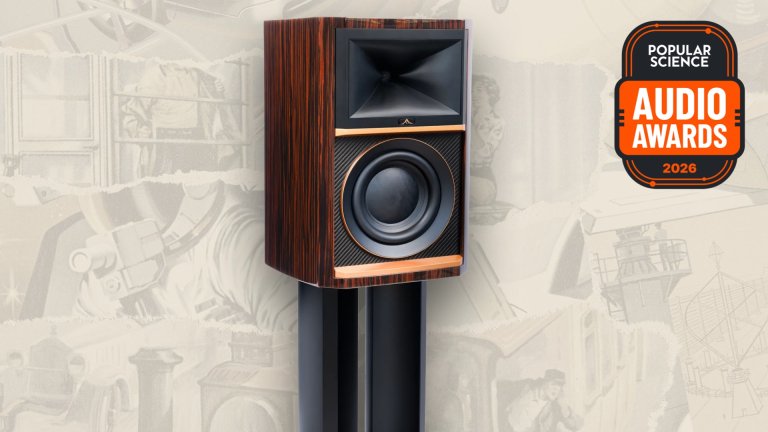
Some summits are famous for raw elevation, others for technical achievement. Take Ama Dablam, for instance. It’s an elite technical climb, a high-altitude summit, but not as daunting as some of the most prominent expedition peaks. The JBL Summit Ama 2-way standmount speakers work the same way. Auditioned next to the far more imposing JBL Summit Everest and K2 towers at Audio Advice Live 2026, the pint-sized Ama still made the biggest impression on me with its dual-diaphragm, dual-motor compression driver and large-format Sonoglass HDI horn pushing an expansive soundstage, even off-axis. As for bass … reach for the oxygen tanks, because I found myself gasping at how shockingly dominant this low-profile mount proved to be in the larger JBL Summit massif (though you’d hope so, since they’re still $19,999 a pair).
Components
Advance Paris A10 APEX
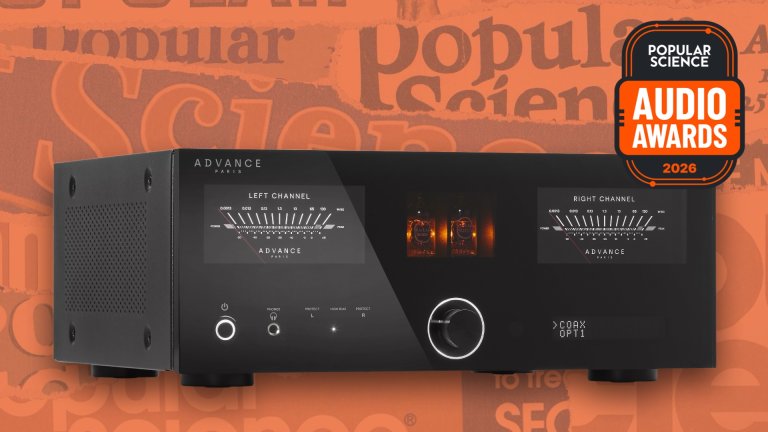
Audiophiles are drawn to tubes like moths to a flame (just because it’s a lazy analogy doesn’t make it not true). Well-integrated tubes can add feeling with fuzziness. Couple a pair of ECC81/12AT7 tubes in the preamp stage to a 130-watt Class AB transistor output stage, and you’ve got toned muscle. You’ve got the Advance Paris A10 APEX. And it’s got aura points. Running the A10 APEX with a variety of DALI, GoldenEar, and Bowers & Wilkins speakers in High-Bias mode was such addictively sweet, silky listening. So linear, so fresh and so clean clean in those first watts for low-level listening. During late nights with limited volume, there’s also a Loudness curve that compensates for the ear’s loss of sensitivity, lifting the bass and restoring sparkle in a way much more pleasing than a fixed bloated boost. And what can I say … I’m drawn to VU meters like an audiophile to tubes.
Active Speakers
JL Audio Primacy S3 / T6

Plenty of companies say they built a product from the ground up. But during the eight years JL Audio developed the fully active Primacy S3 standmount and T6 tower speakers, the company had to literally reinforce the factory floor to handle the weight of five-axis milling machines they showed me in Florida, where they tool the sand-cast, aluminum-alloy cabinets. That commitment to customization also extended to the Primacy Automatic Room Optimization (P.A.R.O.) and triple-core per-driver DSP. The result is seamless time and phase alignment with subs and coherent integration in every room I heard it in for the most dynamic streaming system I’ve auditioned, whether picking the $35,000 smaller S3 or the more substantial $90,000 T6 (and possibly the $15,000 control box). And the front baffle can be opened for authorized repairs or upgrades (a fun feature to see, but don’t try this at home), so you don’t have to worry about your investment.
KEF LS LUXE

The KEF LS LUXE is what happens when a company takes a repeatedly proven platform and shaves off any remaining rough edges, somewhat literally. Multiple years in the making, the LS LUXE standmount wireless Hi-Fi speakers elevate my beloved KEF LS50 Wireless II’s sonic profile and physical silhouette. The curvaceous Ross Lovegrove-designed enclosure, with fluid lines all the way to the rear ribbing, cuts diffraction from the freshly expanded 12th-generation 6.5-inch Uni-Q driver. And what a difference an extra inch of cone diameter makes, allowing for an even bigger soundstage with even more expression. Velocity Control Technology (VECO) continually monitors the amp and driver to eliminate misalignments between the audio signal and excursion. What you get for $3,999 (a grand more than the LS50 Wireless II) is punchy-meets-pinpoint performance.
Cambridge Audio L/R X

High above the Strip at CES 2026, in the hallway outside a Cosmopolitan of Las Vegas suite, I came to two realizations: Whatever was behind the door was very British, and boy, did it have bass. I could hear the skittering jungle rhythms and nocturnal atmosphere of trickpony’s “Shiver (On Ice Dub)” before I entered the room. But even more so, I could feel the low end emanating from what turned out to be the Cambridge L/R X, the largest of the London-based company’s trio of active streaming speakers (shown on the right above) and the most expensive at $2,399 a pair. With 800W and dual 6-inch passive radiators augmenting dual 5-inch woofers, the standmount L/R X extends down to 35Hz, with the custom 28mm Torus tweeter, custom waveguide, and 64-bit DSP pipeline with DynamEQ ensuring clarity isn’t sacrificed for chest-thumping, regardless of source.
Klipsch The Nines II
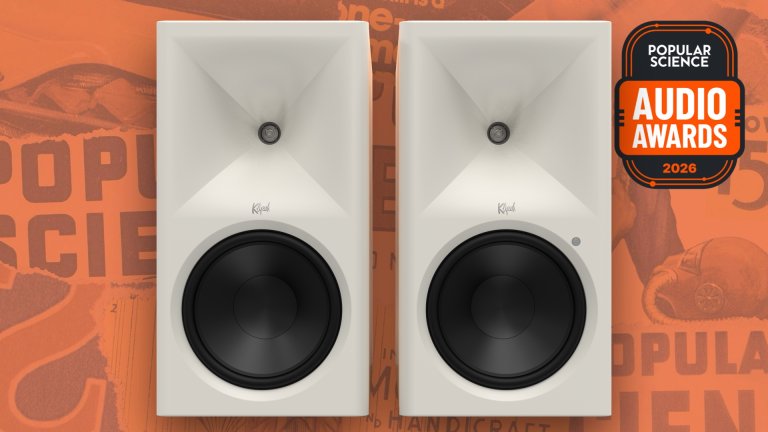
Arkansas’s Klipsch and Osaka’s Onkyo were both founded in 1946. And though they’re not in the same building, they operate under the same Premium Audio Company umbrella. So, as part of their joint 80th anniversary year, the two brands got together to reengineer the Klipsch powered bookshelf/standmount speaker line, including The Nines, which we’ve featured previously as top-tier turntable speakers. Now The Nines II have expanded beyond immersive stereo speakers into immersive audio-compatible stereo speakers. The internal AVR architecture means every conceivable input and digital format handling (from Dolby Atmos/DTS:X virtual height channels to every Connect-equipped streaming service), with Dirac Live Room Correction included to help tune for your space. And you can still plug an MM turntable in. But no matter what you play, it’s gonna have the lively dynamics that have defined Klipsch for decades … and they can play loud.
Sources
Magnetar UDP900 MKII
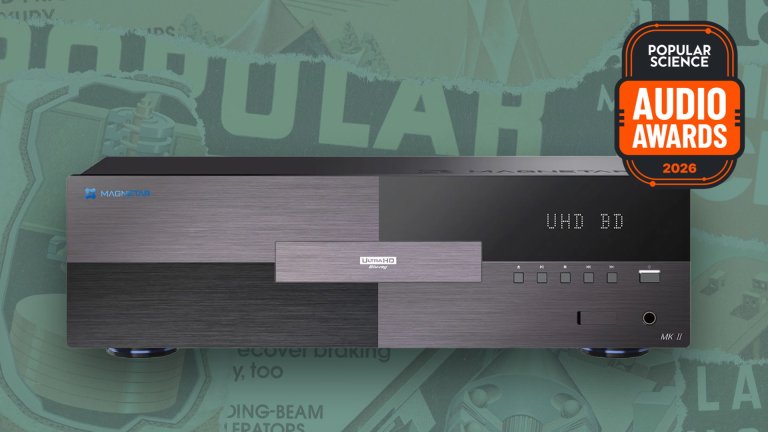
Streaming fatigue is real, and so is the physical media revival. Blu-ray and SACD are just two formats making a comeback. Unlike vinyl, however, where an LP is sometimes seen as more of a collectible decorative art object than an audio format, 4K UHD and DSD appeal to folks who want to play their purchases. And the $3,399 Magnetar UDP900 MKII offers a one-and-done purchase for universal media handling and reference-quality performance. Inside this 34-pound, two-layer brushed aluminum chassis, shielded compartments separate digital and analog circuitry and their dedicated power sources (a custom high-power switching supply and 60W low-noise toroidal transformer, respectively) for zero-compromise signal chains. Video is absolutely top-notch, as are the accompanying uncompressed soundtracks. But I really found myself smiling when I rediscovered advanced-resolution remasters of some of my favorite albums, from disc and drive. Whether through the stereo XLR or 7.1 analog outputs, the dual ESS 9038PRO DACs and optimized analog stage kept playback confident and captivating. Everything I cued up was vibrant but avoided SABRE glare. Whatever I threw at it, the Magnetar UDP900 MKII depicted every dynamic shift.
TEAC NT-507T Network Transport
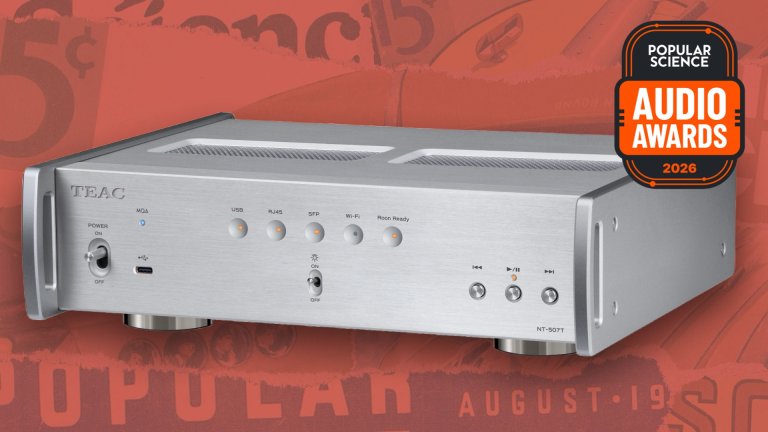
We’ll keep this short and sweet, because the TEAC Reference Series is just that. I loved on the UD-507 DAC/amp and HA-507 analog amplifier last year, and in 2026 I added the $2,499 NT-507T Network Transport into the stack. It’s another compact A4 chassis, this time dedicated to network streaming/servers. It’s exclusively USB output, designed to pair with a DAC, with support for Qobuz Connect/TIDAL Connect/Spotify Connect, and a dedicated Roon Ready mode for untouched FLAC/ALAC/WAV/MQA/DFF/DSF delivery. Plus, there are two USB inputs for flash drives/HDDs/SSDs. An app-controlled endpoint, with no screen or control onboard, it does one thing but does it with aplomb: delivering high-resolution, high-purity data thanks to choices like a large linear power supply to avoid noise-inducing switching circuits. For my headphone station, it ensures no texture or transparency is lost to poorly implemented parts.
Wireless Headphones
HiFiMAN HE1000 WiFi

The HiFiMAN HE1000 WiFi addresses a modern audiophile conundrum that cutting the cord requires embracing Bluetooth blues. No matter how good the DSP, something is literally lost in wireless transmission. But the HE1000 WiFi solves this by shoving a desktop’s worth of signal chain into the earcup, with a Roon Ready onboard streamer feeding lossless audio to a built-in Himalaya R2R ladder DAC and dedicated amplification. And what’s being powered is HiFiMAN’s award-winning nanometer-thick diaphragm with Stealth magnets, so you’re getting full fidelity while on network, with a little extra low-end warmth balancing the typically airy HiFiMAN tuning. Plus, there’s Bluetooth with LDAC and USB-C (up to 32-bit/768kHz, DSD512) if that’s more your bag. It’s a listening solution for $2,699, not much more than a similarly wired model.
Technics EAH-A1000

Technics has been putting magnetic fluid inside earphone drivers since the EAH-TZ700 in 2019, most notably in 2025’s award-winning EAH-AZ100 earbuds. The fluid fills the gap around the voice coil, keeping it centered and controlled with less side-to-side distortion-producing wobble. When it came time to scale this up to the 40mm drivers in the new EAH-A1000 Bluetooth ANC headphones, however, re-engineering it took more than just more fluid. So Technics crafted a new carbon-fiber diaphragm, set in a Symmetrical Surround Technology edge borrowed from the brand’s flagship floorstanding speakers. The result, particularly over LDAC or USB-C, is “taut, articulate bass and expansive transient details,” as I put it myself.
Sonos Ace Ultra

The original Sonos Ace, released in 2024, did what a wireless headphone was supposed to do, but not what people expected a headphone from Sonos to do. The Ace Ultra, while visually quite similar to its predecessor, is a total internal redesign that improves and/or implements the longstanding wishlist. Custom 44mm drivers with a new motor/magnet deliver a more spacious soundstage with some cinematic rumble (particularly great for movies, but there’s an 8-band EQ in the app if it’s not to your preference). Adaptive ANC is noticeably upgraded, even competitive, and enhanced comfort helps you make the most of it. Bluetooth 6.0 with AAC/aptX Lossless lets you groove on the go. Most importantly, the Headphone Engine 2 and new “Sonos Fabric” software platform allow the Ace Ultra to link with your Sonos system and have audio handed off from compatible speakers on the same Wi-Fi network (though it’s not lossless). You know, the fun things a Sonos headphone should do.
Nothing Headphone (1) Pro

Nothing products have always been something to look at. You notice that transparent design language from across a room. Now, a year after a collaboration with KEF on the Nothing Headphone (1), Nothing has turned in-house to design the $399 Headphone (1) Pro. And the London-based design firm has packed the earcups with things you’ll notice, too. Each side splits its work between three drivers: dynamics for the bass and midrange, with treble from a solid-state silicon µSpeaker by xMEMS, the first of its kind in an over-ear headphone. The silicon’s rigidity preserves timing cues and sparkling details that could get smeared in the transition between cones. Overall, the default sound is a big, bright V, tuned in collaboration with London’s Metropolis Studios. But what makes this the best new headphone for control freqs is the many ways to change that tuning. Flip a physical Flat switch and mixing desk midrange steps forward. Or turn to the Parametric EQ for British genre presets as well as independent control of both dynamic drivers. There’s also LDAC, lossless USB-C, Auracast, 10-mic ANC … all in that distinctive 327g aluminum-and-titanium frame.
Sony 1000X The ColleXion

To celebrate a decade of the 1000X line of ANC headphones, Sony released an anniversary edition that was more about getting people talking than noise cancellation. With its plastic-free, vegan leather-and-metal build, the $649 ColleXion is $200 more than the WH-1000XM6 (the undeniable award winner under purely ANC criteria), and heavier, too. Yet it doesn’t feel it. The sound also comes across as resonant but more refined. Under the new fit and finish there’s a newly developed 30mm unidirectional carbon composite driver as part of the bespoke acoustic architecture. With LDAC, DSEE Ultimate, and 360 Upmix for cinema, music, and gaming, the tuning emphasizes soundstage and separation over aggressively masking your surroundings. Eschewing Sony’s familiar V-shaped signature but still warm, it’s the aural equivalent of the build quality and the overall textural intent.
EarFun Wave Pro X

Let’s be honest, innovation is typically associated with expense. I’m guilty of holding certain presumptions. And yet, here we are at $129.99, coming across something we haven’t encountered before. The EarFun Wave Pro X features a coaxial design, where two drivers are aligned on the same axis so their sound arrives from a single point. It’s typically seen on expensive speakers (see the KEF LS LUXE on this very page). Even more original, this pairing of a 40mm DLC woofer and 10 mm LCP tweeter is packed into a Bluetooth 6.0 headphone with the Qualcomm QCC3095 adaptive ANC platform, which also supports AAC, aptX Adaptive/Lossless, LDAC, and LC3/Auracast. That’s a codec package none of the big brands are offering, even at more than twice the price. As for the sound, it’s a bit dark by default, with a meaty midrange surrounded by domineering bass and relaxed treble. However, a 10-band parametric EQ means this is merely a suggestion. Sonically, you still get more out-of-the-box refinement if you pay more. But from the ergonomic angle of the earcups to a 90-hour battery (ANC off), this is a thoroughly thought-out headphone and the budget buy of the year if you’re not averse to EQ.
TWS Earbuds
Sennheiser MOMENTUM True Wireless 5

Air travel can be stressful, particularly when there are weather delays. The Sennheiser MOMENTUM True Wireless 5 earbuds were there for me when I was stranded in Newark Liberty International Airport for 12 hours, and these 7g polished pebbles will continue to be there for me because they embrace the company’s emphasis on user-replaceable batteries, a feature even more rare in earbuds (and their case, in this case) than it was when introduced in the full-sized Sennheiser MOMENTUM 5 Wireless headphones. Equally important are other traits inherited, including drivers from the same Irish factory as Sennheiser’s summit-tier systems, aptX Adaptive/Lossless over Snapdragon Sound, vastly more effective active noise cancellation, and a midrange-rich default tuning that can be carved for even more clarity through the app’s 8-band EQ. And it all comes at last-generation’s $299.95 price.
Sony WF-1000XM6

Headphones may be my preferred way to listen, but earbuds are undoubtedly my favorite way to not have to hear. When I’m traveling, I wouldn’t be able to survive without earbuds for those long hours in the air. And Sony reentered the active noise cancellation conversation in 2026 with the WF-1000XM6, which brings the QN3e processor from the over-ear XM6 for 25 percent greater noise cancellation (particularly in the mid-highs), but packs it into an 11 percent slimmer, much more ergonomic shell. The new 8.4mm driver, with its rigid dome, soft edge suspension, and mastering-engineer tuning, also improves how dense mixes don’t threaten to collapse into exaggeration. It’s a trait all the more important when presented against that blacker background.
Status Audio GoldenSound Pro X

I’m typically skeptical of measurements-led listening. I know that every single tuning is inherently just graphs made tangible, yet I can hear my eyes roll over even the loudest music when folks tout the importance of a rig or reading. And yet, the combination of full-sphere anatomical sound mapping and listener-preference research by Cameron Oatley that led to the GoldenSound Pro X edition has captured something special. The midrange is simultaneously full-bodied and unboosted, an intimate profile brought to life by each Pro X earbud’s pairing of a 12mm dynamic driver and two Knowles balanced armatures (best heard off LDAC). There’s a slight lift in the lower bass “thump” zone that doesn’t obscure the balance of those natural mids, but bass fiends (or treble heads, for that matter) will need to dig into other presets for more pump or presence.
Wired Headphones
Audeze LCD-5s

One of my first audiophile headphones was an Audeze LCD-2.2 (Pre-Fazor), legendary for its planar slam and rolled-off treble. Sooooooo good for doom/stoner metal. I once used a 2013 review of the original Audeze LCD-X as an excuse to write a love letter to My Bloody Valentine. I’ve certainly been a fan of Audeze, but not every Audeze. That’s the thing with tunings: No one is right for everyone. But with the 2026 LCD-5s, SLAM is back and so am I. Only this time, SLAM is Symmetric Linear Acoustic Modulator, an acoustic venting/channel system that evens out the air resistance the driver encounters on the push/pull and reduces distortion while boosting low-end response. Combining SLAM with Audeze’s thinnest 90mm Uniforce driver, sitting between N50 neodymium Fluxor magnet arrays, plus new earpad geometry, this $4,499 flagship fixes criticisms that the original LCD-5 was shouty and bass-shy. The midrange is given room without sacrificing fundamentals, and faster perceived transients support dynamic contrasts. It’s weightier without being oversaturated, and smooth but never stifled. Sooooooo good for funeral doom.
Audio-Technica ATH-ADX7000

Audio-Technica’s $3,499 flagship may be the hardest-hitting lightweight headphone I’ve ever worn. A wee slip of a thing at 270g, these open-back headphones embody an idea engineer Shiwaku Nonomi let develop for years, which was a “True Open-Air” sound that let air flow so freely the diaphragm moves unimpeded. To that end, the precision-molded 58mm HXDT diaphragm, baffle, magnet, and voice coil are aligned to ±0.02mm. This assembly is then set in a magnesium frame behind a handmade honeycomb aluminum grille. Tighter tolerance = taut reproduction. Without a build-up in pressure, nothing impedes the impact. You will want an amp, however, because the 490-ohm impedance demands voltage but delivers impeccable transients and that punchy pacing.
Meze Audio ARTA

While some headphone designers focus on how you should appreciate their beautiful tuning, Romania’s Meze Audio has pushed the narrative that it’s just as important to appreciate beautiful tooling. Ascend Meze’s product line and you’ll find increasingly fluid, retrofuturistic designs, culminating in the $6,000 ARTA and its industrial Art Nouveau. This is a headphone that is all about eliciting an emotional response, about being the endgame in terms of aesthetic refinement, not necessarily scaling resolution. The ARTA’s presentation is far more lush and organic. Using the Rinaro MZ5 HΩ driver (an ovoid, 102 x 73mm, high-impedance 225-ohm planar driver), the ARTA achieves an unapologetically luxurious tonal density when paired with a capable amp. There’s physicality, but it’s not aggressive. There’s precision without bite. All in the service of sumptuous spatial cues. What stands out the most to me about the ARTA is the mass and immersion. And the distinctive grille, with its angled slats, breaks up internal reflections that could blur the dimensionality and speaker-like height. Tooling and tuning make beautiful music together.
HEDD Audio HEDDphone D1

Klaus Heinz made his name, and even named his company Heinz Electrodynamic Designs (HEDD), championing the Air Motion Transformer driver and its exceptionally fast fine-detail retrieval. AMT even sits at the core of his first two HEDDphones, which run nearly $2,000. For the $799 built-in-Berlin HEDDphone D1, however, the engineers skipped AMTs for what HEDD calls the world’s first dynamic driver using a Thin-Ply Carbon Diaphragm. Developed with Sweden’s Composite Sound, these carbon layers carry damping in the material itself, eliminating additional coating and freeing the 50mm driver to produce what I hear as an uncolored midrange that remains clean without the bass and treble rolloff of its spiritual predecessor, the Sennheiser HD 600 Series. For every lover of articulate presentations, the D1 keeps ensembles collected and busy arrangements tidy, offering tonal realism made more complete by tactile bass and treble extension. It’s just the right amount of just right, neutral but not neutered.
Grell OAE2

There are few things I love more than an iconoclast. And Axel Grell qualifies. After decades leading Sennheiser’s headphone design, helming development of the legendary HD 650, HD 800, and Orpheus, among other sets, Grell struck out on his own to reproduce a more nearfield monitor-like presentation in portable form. The $599 OAE2 (Open Around Ear 2) is the culmination of that quest, taking into account actual ear anatomy and featuring what Grell calls Front-Sided Sound Field Modulation. In simplest terms, this means a 40mm bio-cellulose dynamic driver mounted forward and steeply angled back in each earcup, rather than one running parallel to your ear canal, so sound arrives at your outer ear the way stereo speakers would be perceived in a room. An open baffle adds to the unfettered, out-of-head experience. To me, the OAE2’s imaging exhibits a depth and sense of localization that is singular. The caveat is that every ear is different. But the OAE2 is definitely a headphone I’d recommend you try for yourself to see if its spaciousness works for you.
IEMs
Campfire Audio Chimera

From the minute you see the topography, the twist pattern on the carbon fiber/brass Damascus lid, it’s a safe assumption that the Campfire Audio Chimera is all about texture and layering. And once you take a first listen, you find this theory to hold truth. A nine-driver, “quad-brid” in-ear monitor hand-built in Portland, Oregon, this $7,500 statement piece may be the most mesmeric IEM I’ve ever heard. A 10mm True Glass Dynamic Driver, dual-diaphragm balanced armature, two high-frequency BAs, and quad electrostatic supertweeters conjure an astonishing amount of spiritual, nay, transcendent detail. Yet it never comes across as overly technical, in the dry, analytical sense of the word. That’s thanks in part to the painstaking acoustic routing, from the ALO Audio Valence-6 cable onward. But primarily it comes from a 10mm bone conduction driver, carefully paired to the resonant nature of the CNC PVD magnesium shell and peaking in the transition to melodic midrange, enhancing feeling where vocals resonate and instruments chug.
Meze Audio ASTRU

While there is plenty to be said for hybrid-driver flagships and who’s got the bigger specs competitions, Meze Audio’s top-tier in-ear ASTRU shows restraint in that each housing contains a single 10mm dynamic driver. But don’t mistake that for a lack of indulgence, because this is a dynamic driver made from 80 ultra-thin gold layers topped with titanium. And that’s placed within a biomorphic shell CNC-machined out of a solid block of titanium, then put through a multi-stage, multi-day electroplating process. Make no mistake, there’s indulgence a’plenty in this $899 IEM, but it’s all to benefit personal listening chambers that disappear into your ear. And, once settled, a rich, smooth, natural timbre emanates, centering warm, textured bass and in-focus, never-fatiguing treble around a midrange where you can feel the clout and contour of each element. Plus, it’s easy to drive from any device.
DACs/Amps
iFi iDSD Phantom
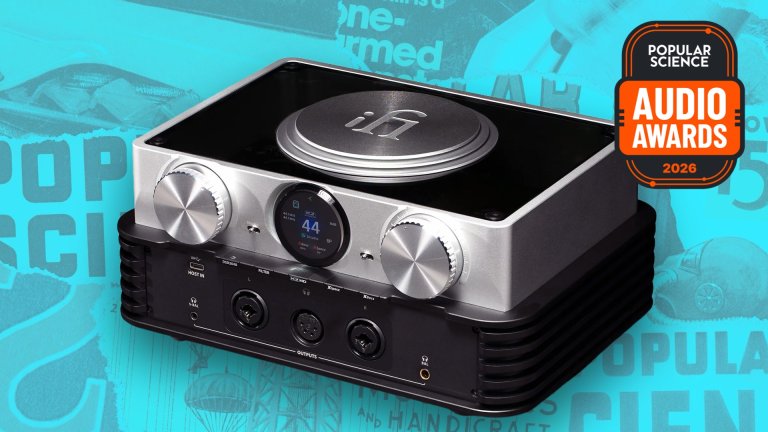
The iFi iDSD Phantom is extra in every sense of the word, just what you’d expect from a self-contained $4,499 streamer, DAC, and headphone amp tower with a name that nods intentionally to an iconic Rolls-Royce. Inside this terraced housing, four Burr-Brown DACs are run in an interleaved layout by an FPGA chipset with custom code. This makes it capable of remastering any physical inputs or network-based audio at DSD2048, a first for a consumer device and just one of the many ways it sets out to turn everything into gold, so to speak. There’s also K2HD to restore harmonics and treble well above your hearing, as well as seven DAC filters. But most impactful are the three output stages: Discrete Class A solid state, matched GE5670 tubes, or Tube+, which adds 6dB of second-order harmonics. This makes sure that no matter what headphones you run, and the 4.6 watts on tap ran anything and everything I threw at the Phantom, it’s possible to swing transients from scalpel-sharp to tube-sweetened with the turn of a dial.
Bluetooth Speakers
Andover Audio FreePlay
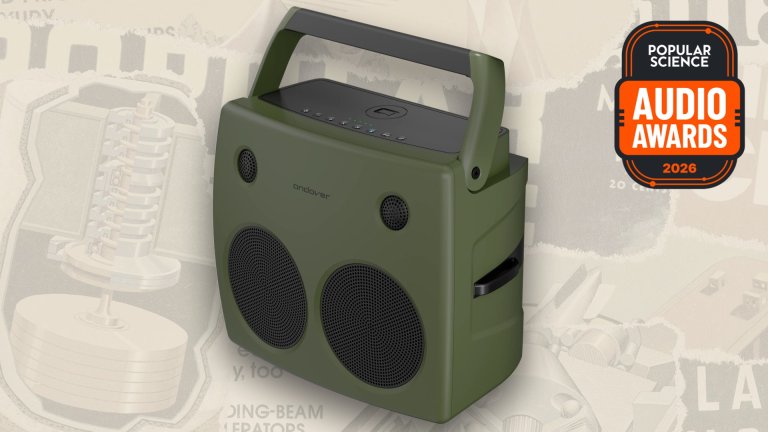
Andover Audio’s first Bluetooth speaker gives boombox vibes but in a more composed cabinet, and I’m here for it. It’s a premium portable more than a party speaker, a $429 pair of bookshelf speakers that happens to have a handle (and, at 9 pounds, that handle is appreciated). While there are louder, more low-end-anchored options, the FreePlay comes across to me as a truer stereo source with its dual 5.25-inch aluminum woofers and twin 25mm dome tweeters prioritizing midrange clarity and balanced soundstage over brute force. It’s got punch, but it uses it more for pacing. Even Loud Mode is more about boosting treble for outdoor intelligibility than it is about pushing air. And while plenty of battery-powered speakers can act as power banks, the FreePlay shares its 24-hour life with a 5W charging pad (plus a 45W USB-C port for quicker charge). I can’t live without my “radio.”
Sony ULT Tower 7

The Sony ULT TOWER 7, sitting at the center of the TOWER Series, is a $649 rolling DJ booth. It’s got XLR inputs and outputs alongside its RCA input, USB-A port, mic jack, and Bluetooth 5.3 with AAC and LDAC, so you can put nearly any analog or digital source into the mix. And, with XLR and Auracast, you can daisy-chain or Party Chain multiple speakers easily, as I experienced at a party in New York. Plus, a new circular 280mm woofer with a downward-facing duct, two midrange drivers, and four tweeters (two backfiring) driven by 420W ensure this is truly a party speaker. Or, at the very least, a 50-pound speaker that got an entire semi-pro soccer team to pay attention and push harder during practice when it rolled up. If not convinced, just hit the ULT button (also a volume knob) to switch modes. But be prepared for when it goes from bass to in. your. face.
Fender Audio ELIE 12
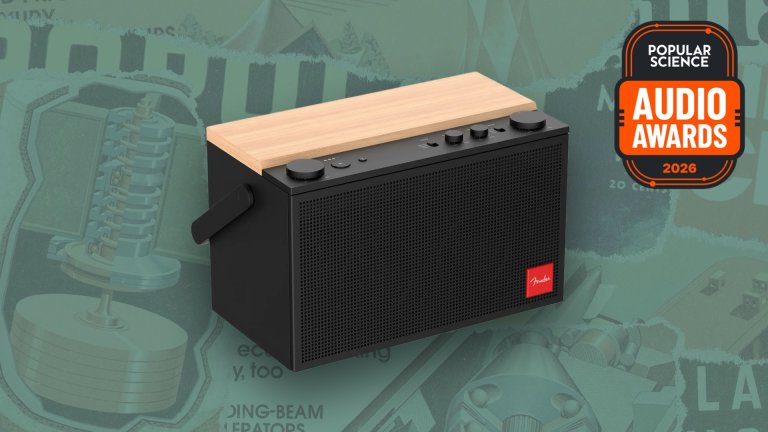
Classic Fender amps are known for glassy highs, smooth, thick midrange, and the ability to get loud without breaking up. Fender Audio may only operate under license (run by Riffsound, a Singapore-based company), but it’s quickly apparent they took the Fender Musical Instruments Corporation heritage into consideration when voicing the consumer audio line. The $399 Fender Audio ELIE 12 portable Bluetooth speaker has some of that milky quality, which is good because with its combo XLR-1/4 you can run it as a practice amp. There’s even 48V phantom power for condenser mics and a -14dB PAD button for hot instrument signals, though a preamp/amp modeler is needed to get beyond simple clean tones. And, let’s be honest, that’s not how you’re using it. It’s primarily a retro-styled wireless speaker, and in that role it’s pleasingly potent (it better be, since the name stands for Extremely Loud Infinitely Expressive). It packs 120W for two full-range drivers, two tweeters, and two subwoofers, physically separated internally into bass- and treble-tuned chambers. Maybe it’s the genres I listen to most (such as atmospheric black metal), but there’s the right propulsive quality to the sound.
Sonos Play
See ItSonos CEO Tom Conrad calls Play the Sonos Goldilocks speaker, and after a summer with it, I’m not inclined to argue with that analogy. This IP67 cylinder sits squarely between the nearly pocketable Roam 2 and the far heftier Move 2, both in size and price, and is a callback to one of the Sonos products (Play:1) that helped establish the company. Its two angled tweeters throw surprising stereo width for something you can swing around on a loop, and its mid-woofer plus passive radiators give real bounce for a cabinet so compact. Voices stay clear and stable, beats are taut and lively, and both are automatically retuned to wherever you set the Play down thanks to Trueplay. You can play off Wi-Fi or Bluetooth. This ain’t reinvention. It’s more like Baby Bear’s bowl of porridge: not a new recipe, but a nourishing one at the right temperature. And its ability to easily join a Sonos Arc Ultra or Beam Ultra soundbar as rear speakers is the cinnamon sugar on top. More than anything, it’s a speaker that’s just right for when I’m going to go sit in the backyard.
Connected Audio / Home Theater
Denon Home 600 / 400 / 200
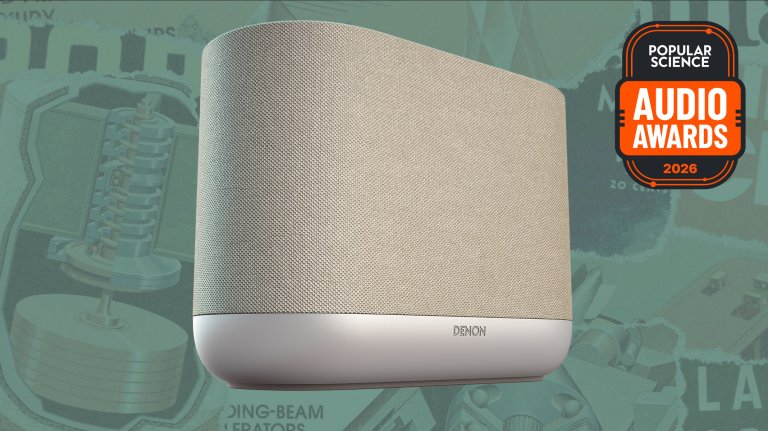
Voiced by Sound Masters at Shirakawa Audio Works, Denon’s Home speakers are an expression of equal parts heart and head (or ear and engineering, if you prefer). Like the brand’s heritage hi-fi components, the intention is for sound that’s articulate, animated, enveloping. Above all, natural. And the three connected speakers in this line achieve this in various ways, from the intimate stereo of the 200 to the airy projection of the 400 to the sweeping insistence of the 600. While the three-driver $399 Home 200 renders Atmos virtually, the $599 Home 400 doubles the drivers and includes angled, up-firing ones, and the flagship $799 Home 600 makes room in its 8-driver array for dual opposing 6.5-inch force-canceling woofers. That’s tabletop subwoofer territory there. What they all share is a home in the HEOS multiroom platform, so you can stream content with confidence and clarity.
JBL Cove X1 / P1 / M1
See ItJBL built its Cove line of compact connected speakers around the idea that multiroom audio shouldn’t require babysitting an app. Setup is an account-free, 3-step process in the JBL One app, and then you may never have to look at it again unless you want to (re)arrange speaker groups. The rest is done over Wi-Fi with native streaming service apps you already use (Spotify, TIDAL, Qobuz, and Roon) or AirPlay 2/Google Cast. Press and hold the Moment button on a speaker, and the Music Follows Me feature pulls what’s playing on another speaker or compatible MK2 soundbar to you. As for sound, it scales up from the surprisingly big-voiced, shelf-sized M1 (shown above) to the portable, still-palpable P1 to the broader-shouldered, bass-anchored X1. The P1 and X1 add a Dolby Atmos-compatible height channel, and Constant Sound Field and AI Sound Boost help balance low-distortion, low-maintenance playback in any room. The speakers’ unifying factor is being as fun as they are frictionless.
WiiM Bar + WiiM Sound
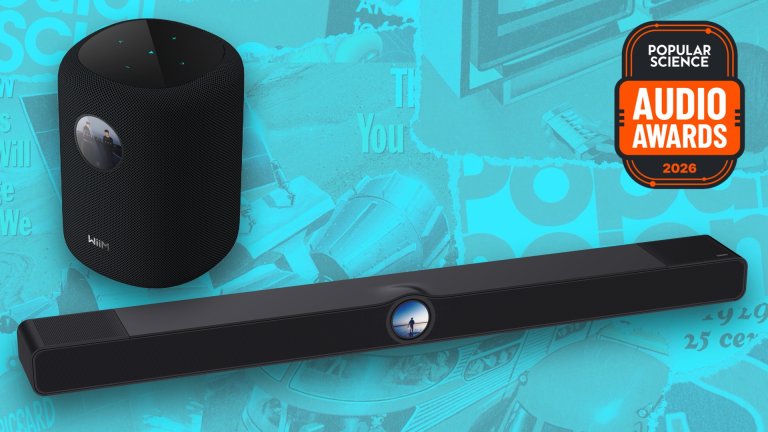
WiiM launched as the consumer brand of an embedded-audio company that built the guts for other ecosystems. Starting out with affordable streamers, WiiM’s software-first approach kept free features and OTA refinements flowing at an unrivaled pace. In Q4 2025, WiiM launched its first smart speaker, the $299 WiiM Sound, which put a circular display and touch controls on a taut cylinder tailored for small-room streaming. In September 2026, WiiM, well, widened its ambitions with the $479 3.0.2 eARC Bar, which has an 8-driver acoustic system that gives me crisp, convincing quality, a 2.1-inch touchscreen, and more than competes at the price point. And, here, yet again, that software shines, with RoomFit calibration, Parametric EQ, Dolby Atmos + DTS:X decoding, and streaming through the WiiM Home app or almost every service’s cloud streaming (including Roon). I’ve set it up with two Sound speakers as rears, and it was easy to integrate a wireless WiiM Sub with the app, which can optimize crossovers based on room acoustics and speaker placement. The end result has been a deeply customizable 5.1.2 system that doesn’t demand the deepest pockets.
Focal Mu-so Hekla
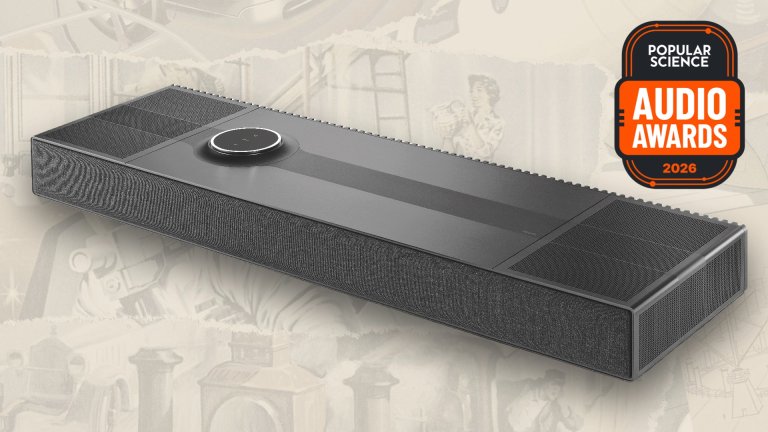
Audio shows serve a purpose when you need to audition a lot of gear quickly, but cleared-out suites and converted ballrooms aren’t kind to acoustics. You have to temper your expectations, especially for simulated surround sound. So, sitting in front of the $3,600 Focal Mu-so Hekla in what was basically a makeshift cubicle, I didn’t expect much. Which made this immersive all-in-one system’s ability to sound good between two baffles even more … baffling. Using ADAPT (Adaptive Acoustic Personal Tuning), which uses actual room dimensions, not sine sweeps, to calibrate, the Dolby Atmos 7.1.2-compatible system created a convincing virtual vista for movies and music. And, with 15 drivers reaching toward 30Hz, pushed by 660W of muscular Naim amplification, it did so with authority and exacting detail you wouldn’t expect from a single slab (albeit a sizable one).
Car Audio
Pioneer SPHERA
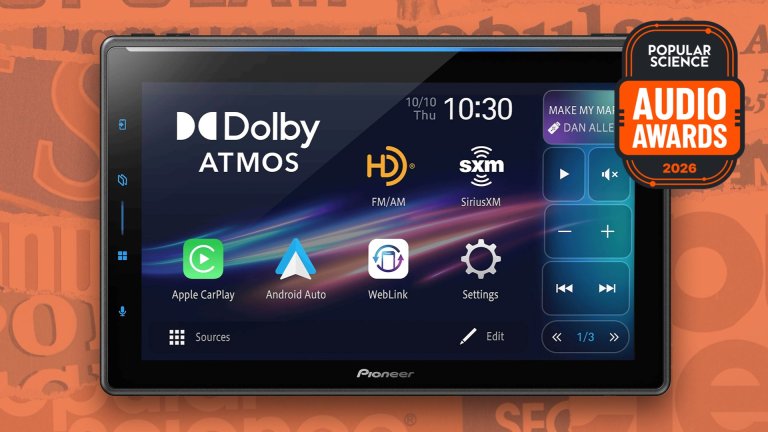
In early 2026, I documented my love affair with Dolby Atmos in unattainable EVs. As I was musing on that, I was introduced to the Pioneer SPHERA, the first aftermarket head unit to decode Atmos and virtualize it through your existing speakers using CarPlay (plus Apple Music, Apple Music Classical, and/or Audible). It promised to give me a taste of that sweet, sweet spatial audio but in my very sensible 2020 Honda Fit. In early summer, I finally had one installed (sold as the DMH-WT8000NEX in the States), alongside some Pioneer speakers, and proceeded to sit in the Best Buy parking lot just playing with the 10.1-inch touchscreen and listening for so long the installer saw me on his lunch break and asked if something went wrong. The only thing “wrong” was how just four channels could sound so much more expressive, so much more expansive. The post-calibration time alignment, frequency response, and level adjustments put me in the center and created a perceptible dash-height channel from a nonexistent speaker. Backing vocals swelled from behind me, and overall details took a step forward without feeling disconnected from the soundstage. Pioneer’s algorithms can even upmix stereo content and/or sculpt it with a 13-band EQ. No amount of reflection can match actual A-pillar and headliner speakers, but it’s an undeniably immersive upgrade to standard receivers. It makes me want to drive more, or sit in the driveway more.
KioskNews shows a cleaned-up reading view extracted from the publisher’s page — the original always lives on their site, not ours.