Data shows the CFP committee is boosting the SEC more than ever, and it isn't close
The SEC lobbied hard for the CFP's new 'strength of conference' metric in the offseason, and so far, it's been the primary benificiary -- by a wide margin

• 6 min read
Shane Beamer didn't watch the College Football Playoff rankings Tuesday night, so when he got home late, his son had to break the news.
South Carolina was still ranked.
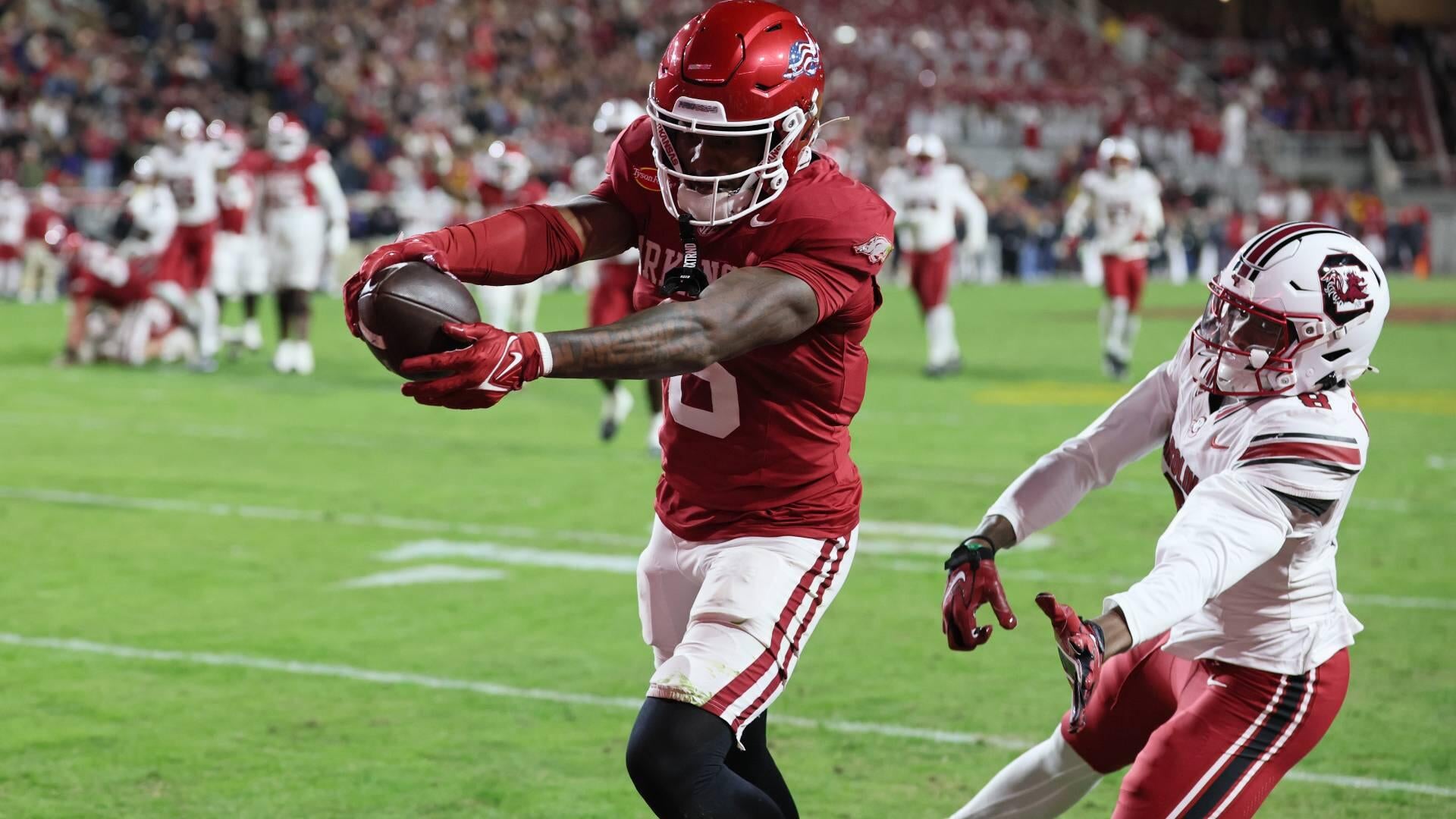
The Gamecocks had been flattened 34-6 at Arkansas three days earlier, a beating by a one-win SEC team that knocked them clean out of the AP Top 25. The CFP selection committee didn't follow suit, sliding them from No. 17 to No. 21.
"I appreciate the committee, you know, feeling that way about us," Beamer said Wednesday on the SEC's weekly coaches teleconference. "I appreciate the committee respecting what it means to be in this conference."
That sentiment holds truer today than ever, Shane. It took pushing for a nine-game SEC slate and urging the CFP committee to weigh a crucial metric: the Strength of Conference Enhancement.
The playoff says it isn't a new metric, just an existing one presented with "greater emphasis on differences in schedule strength within a single conference."
That means two teams from the same league with the same record don't necessarily have comparable resumes. But is that proving true?
The SEC lobbied hard for the "enhancement," starting when the SEC voted in August 2025 to add a ninth conference game. Commissioner Greg Sankey said the committee's new schedule-strength tools favored the move.
By November last year, his coaches weren't buying it.
"We were all given the promise there was going to be a strength-of-schedule metric factored in," Missouri's Eli Drinkwitz said then. "That didn't happen."
Turns out, Sankey was right. The league just needed to wait for the move to a ninth conference game this fall. The pendulum has swung dramatically in the SEC, but is the CFP committee giving the league too much benefit of the doubt?
At the very least, the SEC has become the CFP's favorite son. Add up how far the committee has placed each league's teams above or below the AP poll across the first three rankings and the SEC comes out an incredible 41 spots ahead, its biggest edge since the rankings began in 2014.
The committee is diverging from the voters in the SEC's favor more than ever. The previous high was 34 spots in 2018.
This shift toward favoring the SEC marks a dramatic turnaround from last year. Through the first three rankings of 2024 and 2025, the committee consistently rated SEC programs lower overall than the AP poll did in the net evaluation. Last season, that number was minus-10 through three weeks.
This year, Alabama accounts for 12 of those spots on its own, four more than the AP across the three releases. If you measure the CFP's placement of SEC teams against the coaches' poll instead, the conference is still ahead 32 spots.
Naturally, this net advantage comes at a cost. Through simple cause-and-effect, when the SEC gains leverage, other teams inevitably drop.
Compared to their positions in the AP polls, both the Big Ten and the ACC have fallen to all-time low rankings this season. The Big Ten is down five overall, its lowest mark ever by a hair, through three weeks. The ACC is down a cumulative 11 spots.
The committee hasn't placed a single ACC team above its AP spot all season. Independent Notre Dame hasn't been helped, either, ranking a combined 12 spots lower than the AP, its lowest mark ever. Boise State has ranked a combined 14 slots lower.
So, in a year where the SEC is receiving more favor than ever from the CFP, its chief rival, the Big Ten, has never fared worse against the AP in the committee's rankings. It's those same teams fighting the SEC's two- and three-loss programs for at-large bids.
How the CFP committee's rankings differ from the AP Top 25 through three weeks
| Conference/Team | Spots higher | Spots lower | Net | Rank in 13 CFP seasons |
|---|---|---|---|---|
| SEC | 42 | 1 | +41 | Highest difference |
| Big 12 | 6 | 8 | -2 | 9th highest |
| Big Ten | 11 | 16 | -5 | Lowest |
| ACC | 0 | 11 | -11 | Lowest |
| Notre Dame | 0 | 12 | -12 | Lowest |
| Pac-12 | 0 | 14 | -14 | Lowest |
Sources: College Football Playoff, AP Top 25
But this is where the committee's explanation breaks down. At no point has the CFP said, bluntly, that the SEC is stronger than it has ever been. Remember, the "enhancement" was sold as a way to sort teams within a conference, not to give one conference more favor than another. The Big Ten and Big 12 were already playing nine league games, and neither is getting anything close to this lift since the SEC moved to a nine-game schedule.
The tool built to compare teams within the same league has arrived, and in the same season, SEC teams are rising over everyone else outside the league.
The bottom of Tuesday's rankings reads like a copy-paste of the SEC standings. Four-loss South Carolina, Oklahoma, Florida and Ole Miss sit between No. 21 and No. 25. The four 6-4 teams ranked in the top 25 are the most ever in the CFP rankings at this point in a season. The previous record was two -- and those teams were from separate conferences.
In the first three rankings of the previous 12 seasons combined, the committee ranked five four-loss teams.
And don't forget the effects on the Group of Six. Liberty is 9-1. Memphis is 8-2. The AP ranks both, but the committee ranks neither, opting instead for four SEC teams with four losses.
Rising Tide
But, again, that's outside the SEC. What about the "enhancement" that is supposed to compare teams within the same league?
That points us back to Alabama.
Tennessee smothered the Crimson Tide 26-10 at Neyland Stadium in October, holding them to only 201 yards and forcing four turnovers. Both now hold identical 8-2 records. Many fans seem disturbed that Alabama is ranked higher than Tennessee, but the Tide's resume is a tad better. The AP has them two spots apart, which is feasible. What's wacky is the committee ranking Alabama at No. 3 and Tennessee at No. 9, a full six spots apart.
Two teams from the same league with the same record, and a head-to-head result the committee lists among its core principles, and yet a wide chasm separates them. This is where, theoretically, the new "enhancement" comparing schedules within the conference is supposed to explain the Tide.
There are two problems: the CFP hasn't explained how the enhancement views the two, and the public doesn't have access to that data.
"Basically there's so many metrics, to really give that out publicly with an explanation of them isn't really feasible now," CFP executive director Rich Clark said Tuesday. "It is something that we're considering. We're looking at this in the offseason to see what metrics and how we would present those potentially in the coming seasons."
Chairman Hunter Yurachek compared Alabama and Tennessee's relative scoring offenses and defenses, and the Tide have a big offensive advantage but a top-5 defense that barely edges Tennessee at No. 6.
"Quite honestly, when we watch [Alabama] on film, when we watch their games, we really feel like they're one of the best three or four teams in the country," Yurachek said.
Ahh, the eye test. No mention of the strength-of-conference enhancement, which should explain the gap. Well, theoretically. And that's a problem that needs a better explanation and more transparency from the CFP.
Nonconference boost
As for the SEC receiving more favor than the Big Ten and the other power conferences, the in-season results at least provide some credence.
"I'm sure everybody's seen the stat out there, I don't know what it is, but it's out there," Georgia coach Kirby Smart said Wednesday.
The SEC is 10-2 against nonconference opponents from the power leagues and Notre Dame, its best mark at this point of any season in the CFP era. The Big Ten is 4-10, its worst in those same 13 seasons.
The most decisive blow to the Big Ten remains Texas's fourth-quarter comeback against Ohio State in September.
That, perhaps, makes the case for the SEC's best teams, but it doesn't make the case for a 6-4 team over a 9-1 team, or for a 16-point loser ranked six spots above the winner.
"We've played six ranked teams at this point in the season," Texas A&M coach Mike Elko said. "And this is a league that punishes you severely if you don't get it right."
KioskNews shows a cleaned-up reading view extracted from the publisher’s page — the original always lives on their site, not ours.