Baidu, Xiaomi CEOs warn of growing gap between AI hype and returns
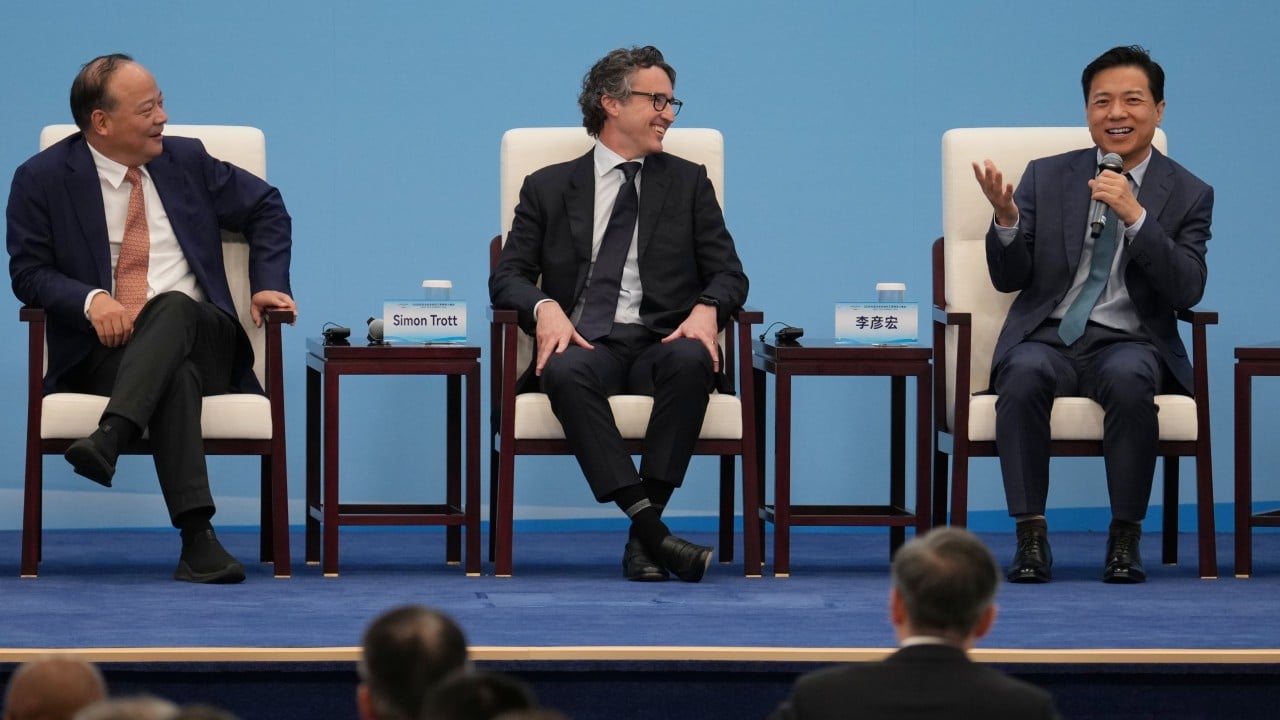
Amid mounting concerns of an artificial intelligence bubble and fresh market jitters following the resignation of Nvidia CEO Jensen Huang, the leaders of two of China’s biggest tech giants have urged the industry to focus on building practical applications, warning that massive investments in the technology are outpacing commercial returns.
Speaking at the Asia-Pacific Economic Cooperation (Apec) CEO Summit in Shenzhen on Tuesday, Baidu founder and CEO Robin Li Yanhong and Xiaomi founder and CEO Lei Jun both flagged a widening gap between heavy capital expenditure and profitable AI adoption.
“The most pressing task is to identify and develop the right, high-value applications for AI models,” Li said during a panel on regional AI development, a day after Baidu reported its sixth straight quarterly revenue drop.
“If we fail to address this, the common fear that AI might be a bubble could well become a reality.”
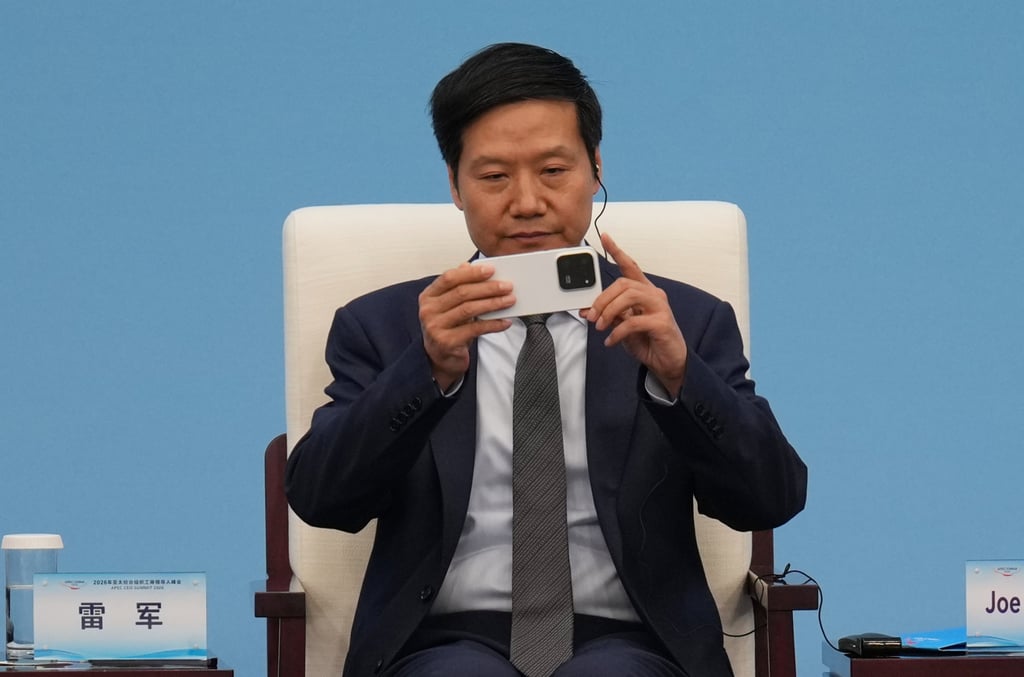
Lei, who spoke on a separate panel, voiced similar concerns.
“The investment in AI has been extremely huge, yet the scenarios where the technology can actually be implemented are very limited,” he said, adding that very few companies had succeeded in closing the “commercial loop” needed to turn the technology into profits.
Despite rapid advances in recent years, Lei noted a lack of “truly revolutionary” AI products. He expressed optimism, however, that combining AI with hardware and the physical world could unlock greater value.
Great products would emerge in fields like AI smartphones and vehicles in the coming years, Lei predicted, while humanoid robots could bring far-reaching changes to manufacturing.
Li likewise argued that AI’s greatest economic value lay in the application layer rather than in foundation models themselves, saying industry-wide adoption was still “falling short of expectations”.
He questioned whether the fierce US-China race to build more advanced AI models justified the massive costs involved.
Comparing the situation to the Industrial Revolution, Li said electricity did not deliver widespread economic benefits immediately after it was harnessed, only decades later when factories were completely reorganised around the technology.
“The same applies to AI today: while large language models possess immense power, the question is still whether small and medium-sized enterprises can truly benefit from them,” he said.
“Beyond simply adopting the technology, you need an organisational structure that aligns with AI’s capabilities to derive real value.”
Li’s remarks came after Baidu reported a 46 per cent drop in adjusted net profit for the September quarter to 1.4 billion yuan (US$210 million), as AI-related gains failed to offset sliding advertising revenue. Its Hong Kong-listed shares fell 5.8 per cent on Tuesday.
Although AI generated 53 per cent of Baidu’s core revenue, the company’s early lead with Ernie Bot in 2023 – one of China’s first generative AI chatbots – has faded.
Start-ups DeepSeek and Moonshot AI, along with rivals Tencent Holdings and Alibaba Group Holding, have since overtaken its foundation models. The gap remains even after the release of its latest model, Ernie 5.5 Flash Preview, last week. Alibaba owns the South China Morning Post.
Rather than competing solely on general-purpose models, Li said domain-specific AI agents were more likely to generate measurable economic benefits.
He cited Baidu’s partnership with the Port of Qingdao, where AI agents trained on specialised data identify the most efficient way to load shipping containers onto vessels, delivering “immediate and measurable gains”.
The two executives’ remarks also land as investors question whether AI capital expenditure can continue at its current pace. Market concerns have intensified following the recent US midterm elections and the resignation of Nvidia’s Huang.
Despite those concerns, Li maintained that Baidu and the broader tech industry still faced a “most urgent” shortage of computational power.
To ease that constraint, the company plans to launch a Tianchi 1024-chip supernode next year, powered by proprietary processors from its in-house semiconductor unit, Kunlunxin.
KioskNews shows a cleaned-up reading view extracted from the publisher’s page — the original always lives on their site, not ours.