Palmer Luckey’s plan to fix the US military’s ‘dog problem’
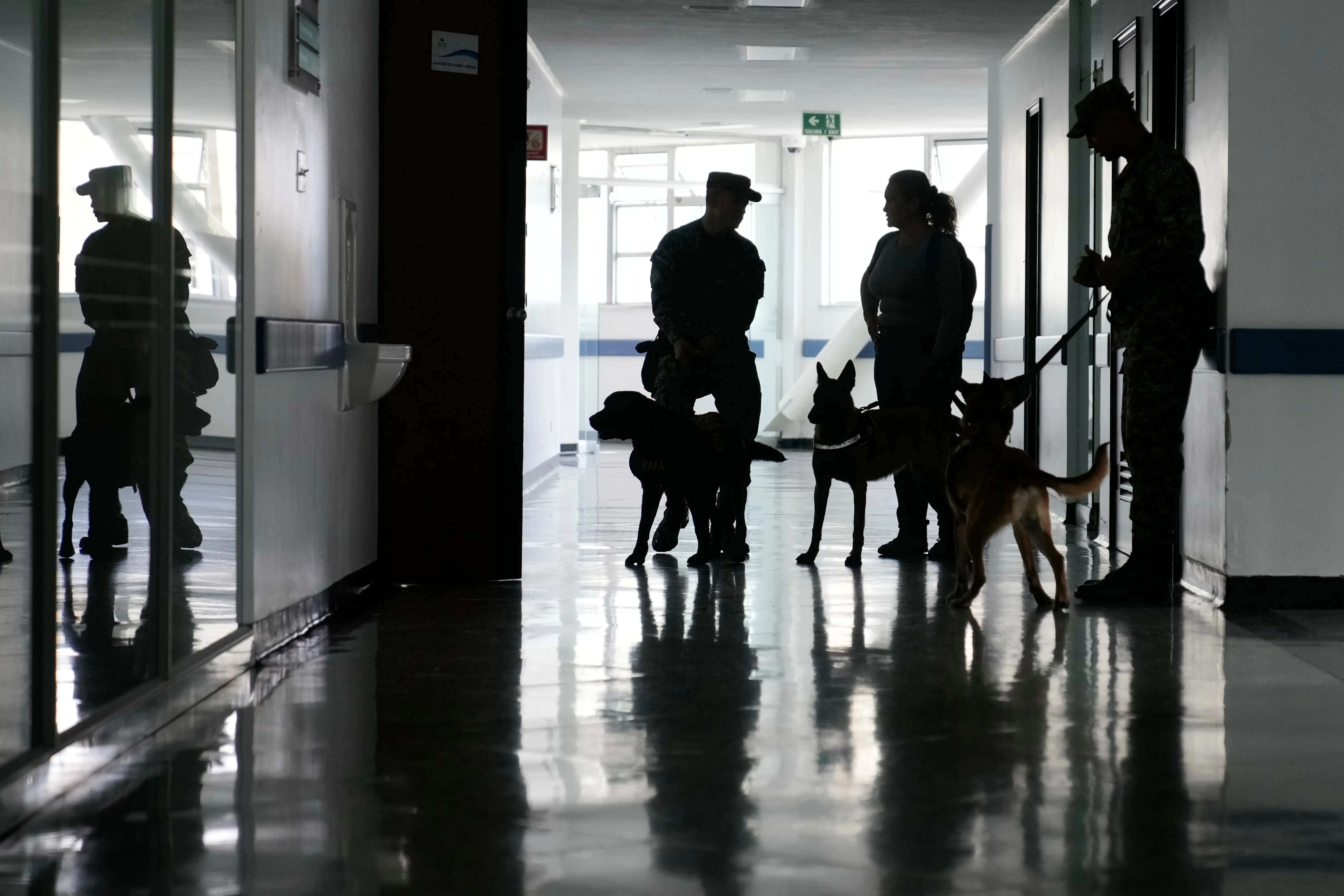
Representative image
The US military relies heavily on working dogs for missions ranging from explosives detection to security operations, but according to a new Fortune report, America is facing a growing shortage of suitable military canines.
Now, a new defence technology startup backed by prominent Silicon Valley investors believes it has a solution: genetically engineered, cloned military dogs equipped with advanced protective gear and integrated with battlefield technologies. As per the Fortune report, Warhound, a new Texas-based defence startup conceived by Anduril founder Palmer Luckey and Colossal Biosciences CEO Ben Lamm, has emerged from stealth mode with a $200 million seed funding round.
The company aims to use cloning and gene-editing technologies to create healthier, more capable working dogs while reducing the U.S. military's dependence on European breeders.
America's dependence on European military dogs
According to the report, more than 80% of U.S. military working dogs are currently sourced from Europe. The Pentagon's Military Working Dog Program operates more than 2,200 dog teams, but finding suitable animals has become increasingly difficult.
Lamm told Fortune that the United States is competing with foreign governments, including China and Russia, to acquire top-quality dogs from a limited pool of overseas breeders.
The challenge is compounded by the fact that less than half of the dogs purchased ultimately qualify for military service after completing a lengthy training and evaluation process.As a result, the military reportedly needs to purchase and train around 200 dogs to eventually field 100 operational working animals, significantly increasing costs and logistical challenges.
How the plan works
Lamm's confidence in the project stems from technology developed at Colossal Biosciences, the company known for its high-profile de-extinction efforts. Earlier this year, Colossal announced the creation of animals carrying genetic traits inspired by the extinct dire wolf through gene-editing and cloning techniques.Lamm described the approach in stages. Warhound will find top dogs that have finished training and bank their genetic material.
It will then clone those proven animals, though Lamm acknowledged that training and environment will always influence performance. In parallel, the company will pursue targeted gene edits. The first group of dogs has already been banked and is being edited, and Lamm expects to deliver the first dogs in about two years.Edits will first aim to screen out known harmful variants linked to muscle degeneration and other inherited diseases, so that no dog enters service carrying markers for common career-ending conditions.
Lamm said the company is still deciding which other traits are scientifically and responsibly actionable, but is planning future genetic enhancements to improve performance."The first group of dogs has already been biobanked and is being edited now," Lamm told Fortune, adding that the company expects its first dogs to be delivered within approximately two years.
Gene editing aimed at healthier service animals
Warhound says its initial focus will be eliminating known genetic conditions linked to issues such as muscle degeneration and other inherited diseases that can prematurely end a dog's military career.
Lamm said the company is still determining which additional characteristics can be responsibly enhanced through biotechnology, but acknowledged that Warhound is considering future genetic modifications to improve performance beyond current standards.The company argues that reducing genetic health risks could increase the number of dogs capable of successfully completing demanding military training programmes.
Anduril brings the hardware
While Colossal's technology forms the biological foundation of the project, Luckey's defence company Anduril will contribute the equipment layer. Warhound plans to equip dogs with protective technologies including body armour, eye and hearing protection, and integration with Anduril's Eagle Eye situational awareness platform. The company describes these systems as "cybernetic augments" designed to allow dogs, handlers and autonomous systems to operate as a coordinated team.Despite the futuristic vision, Lamm rejected suggestions that the programme is a stepping stone toward robotic replacements. "No machine today matches a dog's nose or its judgment in complex environments," he said.
A subscription model for military dogs
Warhound has not yet secured official customers and has not disclosed pricing. However, the company is reportedly exploring a "Canine-as-a-Service" model in which government agencies would pay for a continuous supply of trained and supported working dogs rather than purchasing individual animals.The approach mirrors subscription-based procurement models increasingly used across the defence technology sector. The startup's investors include In-Q-Tel, Sequoia Capital, ARK Invest, Franklin Templeton, 8VC, Breyer Capital, Lux Capital and several other venture firms.
The 'Captain America dog program'
Lamm described the concept as something akin to a "Captain America dog program," referencing the comic-book super-soldier project that transformed Steve Rogers into Captain America.
According to Lamm, the idea emerged during a conversation with Luckey at entrepreneur Peter Diamandis' Moonshots Summit, where the two discussed military dog shortages, high training failure rates and growing procurement costs.Although Luckey helped develop the concept, Lamm stressed that Warhound operates independently. Former Pentagon Chief Data Officer David Spirk, a Marine veteran with extensive experience in defence and intelligence organisations, has been appointed CEO and will lead the company as it seeks to turn biotechnology research into field-ready military capabilities. Luckey summed up the project's mission in a statement to Fortune: "Man's best friend deserves man's best tech.
KioskNews shows a cleaned-up reading view extracted from the publisher’s page — the original always lives on their site, not ours.