‘Shrine belongs to Dawoodi Bohras’: Old records settle Patan shrine dispute in Gujarat HC
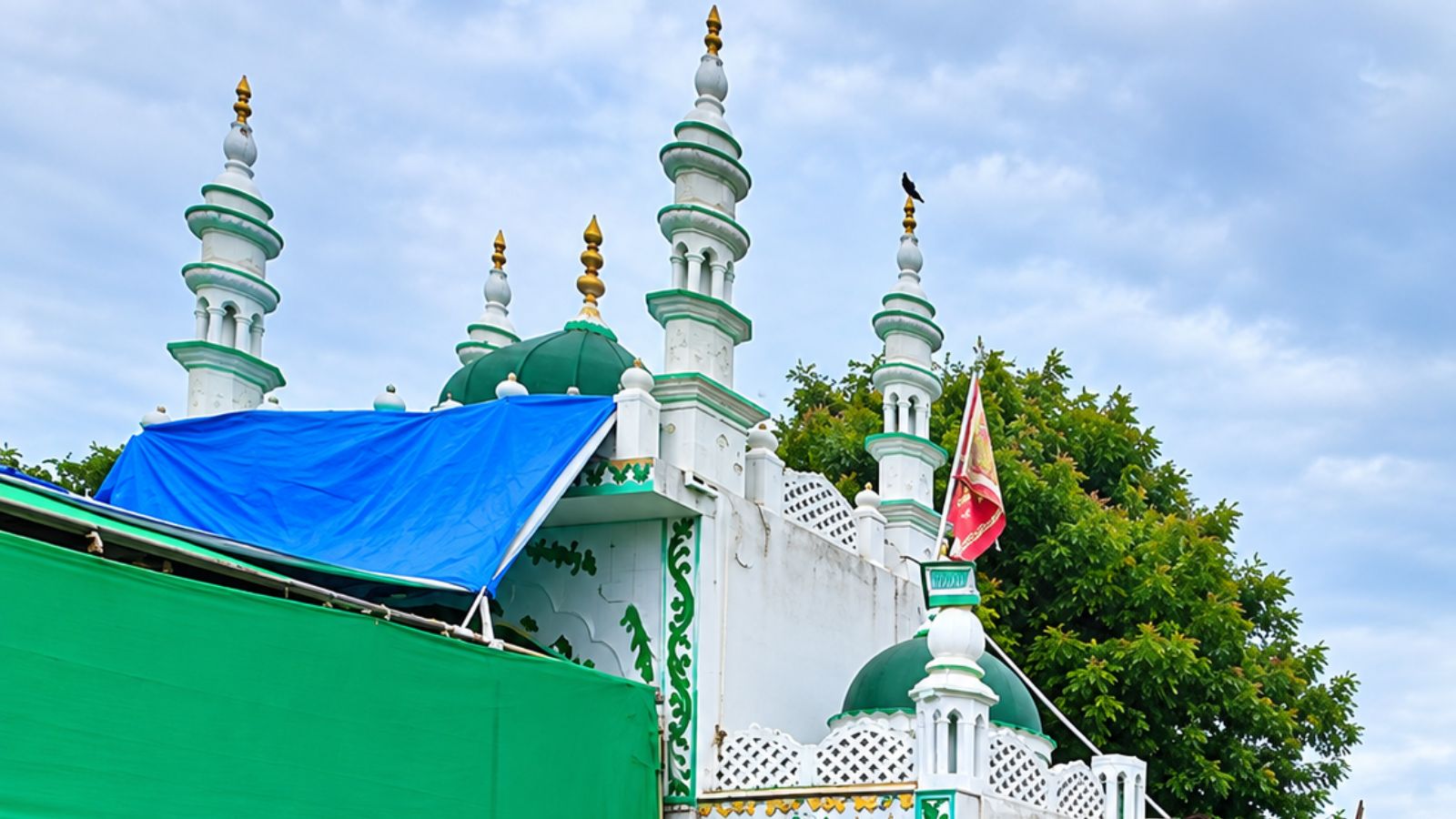
The case is linked to the ownership of a piece of land with Survey No.935 at Anavada village, measuring about one acre and 21 gunthas.
A century-old paper trail and an ancient inscription have helped settle a decades-long fight over a shrine in Patan, with the Gujarat High Court on Monday upholding the finding that the Anavada shrine is associated with Maulana Yaqub and the Dawoodi Bohra community, and rejecting the Faruqui family’s claim that it was a Sunni-Hanafi-Barelvi shrine.
In a 137-page judgment on Monday, Justice J C Doshi dismissed a first appeal filed by Kutubuddin Fakruddin Faruqui and others against the Gujarat Waqf Board and other respondents, finding no reason to interfere with the Waqf Tribunal’s February 9, 2026 order, which had upheld the Waqf Board’s April 24, 2025, resolution identifying the shrine as “Maulana Yaqub Saheb Dargah and Dawoodi Bohra Kabrastan” instead of “Maulana Mehboob Dargah, Masjid and Kabrastan”.
Government Pleader G H Virk appeared for the Waqf Board.
The case is linked to the ownership of a piece of land with Survey No.935 at Anavada village, measuring about one acre and 21 gunthas. The Faruqui family claimed that the shrine was the burial place of Hazrat Maulana Mehboob, who they said died there in 1377 AD, and that members of their family had managed it for generations as “Mujawars” (caretakers of the shrine). The respondents, including members of the Dawoodi Bohra community, maintained that it was the shrine of Maulana Yaqub, a saint revered by the community.
What the court said
The High Court found the documentary record for the land from 1916-17 onwards describing the site as “Maulana Yaqub Saheb Dargah Dawoodi Bohra Kabrastan Pir Ni Jago”. The records subsequently used the description “Malansha Pir Ni Jago”, but the court noted that the name “Maulana Mehboob Dargah” was conspicuously absent from the relevant revenue material.
The court also rejected Faruquis’ allegation that the revenue records had been “interpolated”. The judgment notes that an earlier criminal inquiry into the alleged manipulation had been dismissed by the Judicial Magistrate, Patan, in March 2022 and that the Sessions Court had dismissed a revision against that decision in May 2025. The latter order had not been challenged before the High Court.
As per the court judgment, an ancient inscription at the shrine provided another significant piece of evidence. Its Gujarati translation, which formed part of the Waqf Board record, referred to “Maulana Yaqub”. The inscription also indicated that Yaqub was referred to as “Mehboob” and “Mashuk” by the community as expressions of respect. The High Court observed that the existence of the inscription had not been rebutted and that the appellants’ counsel had not offered an explanation for its reference to Yaqub.
Story continues below this ad
How Faruqui family’s claim evolved
The court then examined how the Faruqui family’s claim to management had evolved. Nanibi, widow of Jamaluddin Kutubuddin, had applied for registration of the shrine as a public trust in 1952-53, describing it as ‘Maulana Mahboob Dargah, Masjid and Kabrastan’. In the application, however, she described herself as a “Mujawar”. Significantly, the registration papers stated that documents relating to the creation or origin of the trust and its scheme were not available. The revenue material annexed to her application also contained references to Maulana Yaqub.
After Nanibi’s death in 1960, her daughter Badibi succeeded her as Mujawar. The court noted that the family subsequently sought to move from the status of Mujawar to that of Mutawalli, or manager of the Waqf. But it held that mere service as a Mujawar did not create a hereditary right to Mutawalliship. The judgment drew a distinction between the two positions, observing that a Mujawar is “essentially a caretaker appointed” to carry out daily rituals and upkeep as a custodian and does not acquire a proprietary or “hereditary interest” in Waqf property merely because the service has continued for a long period. It found that, in the absence of a Waqf deed or written instrument prescribing the manner of appointment, the statutory mechanism for appointment of a Mutawalli had not been followed.
The court also found that a 2014 change report relied upon by the Faruqui family could not provide a valid legal foundation for their claim to Mutawalliship. The Waqf Board had considered the family’s change report even though a change report filed earlier by members of the Dawoodi Bohra community was pending. The High Court held that the statutory procedure for appointment had not been followed.
‘No Shia-Sunni dispute’
The dispute had also acquired a sectarian dimension, with the Faruqui side arguing that the shrine’s religious character was Sunni-Hanafi-Barelvi and therefore protected by the Places of Worship (Special Provisions) Act, 1991. The High Court rejected the argument, holding that the appellants had failed to produce documentary evidence showing that the shrine had the claimed Sunni-Hanafi-Barelvi character on August 15, 1947. The court said the dispute was between the Dawoodi Bohra community and the Faruqui family rather than between the Shia and Sunni sects.
The court turned down the challenge posed to the Waqf Tribunal’s composition on the ground that the matter had been heard by two members but signed by a third member, who was appointed while the proceedings were pending, holding that the third member’s subsequent signature did not invalidate the decision. Justice Doshi held that the findings reached by the Waqf Board and Tribunal after considering the evidence were “just, proper and in accordance with law”.
In 2022, the High Court had set aside proceedings before the Waqf Board and Tribunal by consent of the parties, and remanded the matter to the Waqf Board for fresh adjudication. The Board subsequently passed its April 24, 2025 resolution, followed by the CEO’s consequential order of April 30, 2025. The Waqf Tribunal upheld those decisions in February 2026.
© The Indian Express Pvt Ltd

Aditi Raja is an Assistant Editor with The Indian Express, stationed in Vadodara, Gujarat, with over 20 years in the field. She has been reporting from the region of Central Gujarat and Narmada district for this newspaper since 2013, which establishes her as a highly Authoritative and Trustworthy source on regional politics, administration, and critical socio-economic and environmental issues. Expertise: Core Authority & Specialization: Her reporting is characterized by a comprehensive grasp of the complex factors shaping Central Gujarat, which comprises a vast tribal population, including: Politics and Administration: In-depth analysis of dynamics within factions of political parties and how it affects the affairs in the region, visits of national leaders making prominent statements, and government policy decisions impacting the population on ground. Crucial Regional Projects: She consistently reports on the socio-economic and political impact of infrastructure projects in the region, especially the Statue of Unity, the Sardar Sarovar Project on the Narmada River, the Mumbai-Ahmedabad High Speed Rail bullet train project as well as the National Highway infrastructure. Social Justice and Human Rights: Her reporting offers deep coverage of sensitive human-interest topics, including gender, crime, and tribal issues. Her reports cover legal proceedings from various district courts as well as the Gujarat High Court (e.g., the Bilkis Bano case remission, POCSO court orders, Public Interest Litigations), the plight of tribal communities, and broader social conflicts (e.g., Kheda flogging case). Local Impact & Disaster Reporting: Excels in documenting the immediate impact of events on communities, such as the political and civic fallout of the Vadodara floods, the subsequent public anger, and the long-delayed river redevelopment projects, Harni Boat Tragedy, Air India crash, bringing out a blend of stories from the investigations as well as human emotions. Special Interest Beat: She tracks incidents concerning Non-Resident Gujaratis (NRIs) including crime and legal battles abroad, issues of illegal immigration and deportations, as well as social events connecting the local Gujarati experience to the global diaspora. ... Read More
Stay updated with the latest - Click here to follow us on Instagram
KioskNews shows a cleaned-up reading view extracted from the publisher’s page — the original always lives on their site, not ours.