New UPI Charges: If Digital Payments Save Money, Why Charge For Them Now?
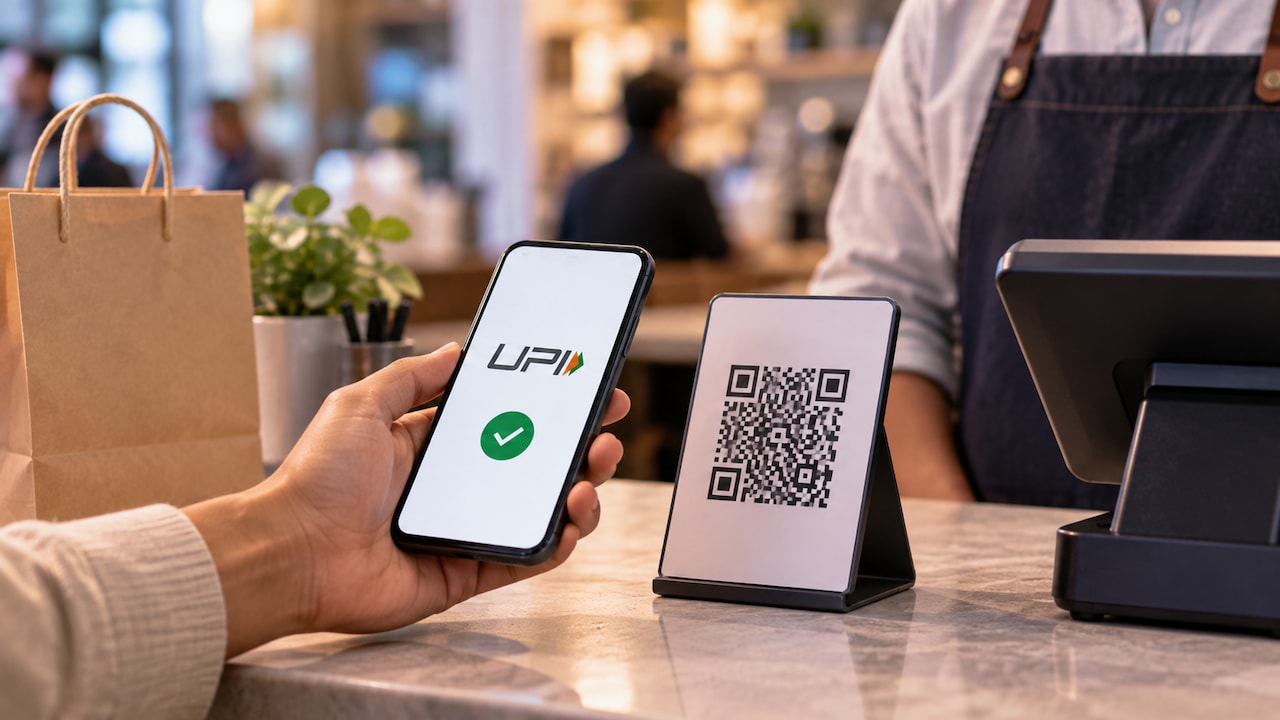
For years, Unified Payments Interface (UPI), offered something unusual in the world of digital payments: instant money transfers without a visible transaction fee for consumers or merchants.
The model helped UPI become a part of everyday life. A cup of tea, a grocery bill, a cab ride or a large online purchase could all be paid for with the same QR code.
Advertisement - Scroll to continue
Now, that model is changing.
From October 15, 2026, a Merchant Discount Rate, or MDR, of 0.4 per cent will apply to certain UPI payments made to merchants above Rs 2,000. The charge will be borne by eligible merchants, not consumers, and will be capped at Rs 300 for transactions of Rs 75,000 or more. Some specified sectors will have a flat Rs 5 MDR, while capital-market transactions will have a separate 0.02 per cent rate, capped at Rs 300. Person-to-person UPI transfers remain free. Small merchants covered under the exemption also remain outside the standard MDR framework.
The government has also made it clear that the charge should not be passed on to customers.
All this, however, has triggered a debate -- was this really necessary?
Former BharatPe co-founder Ashneer Grover has questioned why UPI needs to be charged at all. His argument, broadly, is that UPI has already created enormous savings and efficiencies for the banking system, businesses and the government. Critics have also pointed to the cost of handling physical cash and the wider economic benefits of digital payments.
Advertisement - Scroll to continue
On the other side is a less obvious question: who pays for UPI when nobody pays for UPI?
First, What Exactly Is Changing?
The first thing to understand is that this is not a charge on every UPI user. A person sending Rs 5,000 to a friend will not suddenly pay 0.4 per cent. Person-to-person transactions remain free.
The new MDR is primarily about person-to-merchant payments. For example, under the new standard rate, an eligible merchant receiving a Rs 10,000 UPI payment would face an MDR of Rs 40.
A Rs 20,000 payment would mean Rs 80. At Rs 75,000, 0.4 per cent works out to Rs 300, and the cap means the MDR does not rise beyond Rs 300 for larger transactions.
Certain categories, including areas such as railway, fuel, telecom and insurance, have separate arrangements, including a flat Rs 5 MDR for specified transactions. Capital-market transactions have a 0.02 per cent MDR with a Rs 300 cap.
The government has also said that consumers will not be charged for making UPI payments and that the MDR cannot simply be added to the customer's bill.
Therefore, calling the new MDR a "UPI tax" can be misleading. It is a merchant-side payment fee, not a new tax collected directly from every UPI user.
Why Was UPI Free In The First Place?
The zero-MDR model was a policy choice. Before January 2020, UPI merchant transactions could attract MDR. The Centre subsequently made MDR zero for UPI and RuPay debit-card transactions to accelerate digital payments.
The government then created an incentive mechanism to compensate participants in the ecosystem. The numbers show that this was not a trivial expenditure.
Government payouts under the UPI and RuPay incentive scheme were Rs 1,389 crore in FY2021-22, Rs 2,210 crore in FY2022-23 and Rs 3,631 crore in FY2023-24. For FY2024-25, the government approved an estimated Rs 1,500 crore scheme focused on low-value UPI transactions involving small merchants.
For FY2026-27, Rs 2,000 crore has been allocated to support the zero-MDR framework. But there is now a much bigger number in the discussion.
A Parliamentary Standing Committee on Finance cited an industry estimate of around Rs 20,700 crore in annual operational costs for the UPI ecosystem, compared with the Rs 2,000 crore allocation. The committee argued that the existing model could leave payment providers dependent on inadequate subsidies and could constrain spending on cybersecurity, fraud prevention and network infrastructure.
This is the government's strongest economic argument. UPI may be free at the point of use. It is not free to operate.
There are banks, payment service providers, technology infrastructure, cybersecurity systems, fraud monitoring, network capacity and other costs behind every transaction.
And the scale is enormous. NPCI data shows that UPI processed about 24.51 billion transactions worth Rs 29.82 lakh crore in August 2026 alone.
At that scale, even a very small charge can become a significant source of funding.
But Here Is The Other Side Of The Argument
The question is not simply whether UPI costs money. It clearly does.
The more difficult question is whether the cost of running UPI should be viewed in isolation. Digital payments also replace activities that cost money.
Cash has to be printed. It has to be transported, stored, counted, reconciled, secured and replaced.
The Reserve Bank of India has highlighted the significant cost associated with physical cash management. It reported that expenditure on security printing alone was Rs 4,984.80 crore in FY2021-22. That figure does not include all the wider costs of moving, storing and managing cash.
So, if digital payments reduce the need for cash, then the economic benefit of UPI is not limited to the payment itself. There can be savings for banks because they need to handle less physical cash. There can be savings for businesses because cash collection, counting and reconciliation become easier. There can be efficiency gains for consumers. And there can be broader benefits from greater visibility of transactions and movement towards a formal digital economy.
A 2024 Nasscom report estimated that UPI added $16.2 billion, or around Rs 1.3 lakh crore, to India's GDP in 2022 through direct and indirect effects. One of the components it identified was savings in payment costs resulting from the adoption of low-cost UPI transactions.
But there is an important caveat here. GDP contribution is not the same thing as government savings. Nor can the cost of printing cash simply be treated as money that the government has saved because someone used UPI.
Cash has not disappeared from India. The country still needs currency, ATMs, cash transportation and other physical infrastructure. And some cash-related costs would exist even if UPI usage were much higher.
So the claim that "UPI saves the government thousands of crores, therefore UPI should be free" cannot be established simply by adding the cost of cash to the benefits of digital payments.
So, Does The Government Have A Point?
It does have a factual basis for saying that the existing model has depended on public support.
The government has subsidised or incentivised UPI adoption for years. Official figures show thousands of crores in payouts over multiple years. The Parliamentary Standing Committee has also flagged a large gap between estimated industry costs and the government's allocation.
And UPI's scale has changed dramatically. What was once an emerging digital-payment system is now critical financial infrastructure.
Suppose the government continues paying the entire bill indefinitely. As transaction volumes rise, the subsidy requirement could also rise. Alternatively, if banks and payment companies absorb all the costs, they may have less economic incentive to invest in the network unless they can recover those costs elsewhere.
The parliamentary panel specifically linked the funding question to investment in cybersecurity, fraud prevention and infrastructure.
The government's argument, therefore, is not simply: "UPI costs money, so users should pay." It is closer to: a payment network that has become critical infrastructure needs a sustainable funding model, and commercial transactions can contribute to that cost.
But Why Charge Merchants At All If UPI Is Already Cheaper Than Cards?
This is perhaps the strongest counterargument. A merchant does not compare UPI only with "free".
The real comparison is often between different ways of accepting payment. Card payments can carry MDRs. Cash has handling costs. Bank transfers have infrastructure and processing costs. Digital platforms also have technology and fraud-related expenses.
UPI has historically offered merchants a very low-cost way of accepting digital payments. Even the new 0.4 per cent MDR is lower than many traditional card-payment rates.
The question, therefore, is not whether UPI has a cost. It is how that cost should be distributed. And that is where the new system attempts to draw a line.
- Small merchants are protected.
- Low-value payments remain free.
- P2P transfers remain free.
- Higher-value commercial payments, where the transaction is more likely to involve businesses with greater payment volumes, contribute to the cost.
The government has said the vast majority of UPI transactions will continue to remain free for merchants as well.
But Can A Merchant Really Absorb The Cost?
This is where the economics become less straightforward. Legally and operationally, the merchant cannot simply tell a customer: "UPI costs 0.4 per cent, so pay extra."
The government has explicitly said the MDR should not be passed on to consumers. But economics does not stop at the payment screen.
A business has several costs. If one of those costs rises, a business can respond in different ways. It can absorb the cost, reduce another expense, accept a lower margin or adjust its broader pricing.
This does not mean that every merchant will raise prices because of UPI MDR. Nor is there enough evidence yet to say that consumers will ultimately bear the entire cost.
It simply means the statutory rule and the eventual economic incidence are not necessarily the same thing. This is one of the issues that will need to be watched after October 15.
What About Ashneer Grover's Argument?
Grover's criticism goes to the heart of the alternative case. His argument is that UPI itself has already created enormous economic value and reduced costs elsewhere. From that perspective, the government could continue treating UPI as public digital infrastructure rather than attempting to make individual transactions pay for the network.

There is also a broader policy argument here. India deliberately made UPI free to accelerate adoption. The policy worked at extraordinary scale. The question now is whether charging for some commercial transactions risks undermining part of the very network effect that made UPI valuable.
This is not merely a question of Rs 40 on a Rs 10,000 payment. UPI's biggest strength has been its simplicity. One QR code. One app. No card machine. No visible payment fee.
Any change to that model has to be assessed not only in terms of immediate revenue but also in terms of merchant behaviour, pricing, adoption and the long-term economics of digital payments.
There Is Another Question: Who Actually Gets The Money?
This is important because the political debate can make it sound as though the government is directly collecting 0.4 per cent on every large UPI transaction.
That is not what the MDR framework does. The fee is part of the payment ecosystem. It is paid by eligible merchants and distributed among the relevant participants according to the framework.
Ranadurjay Talukdar, Partner and Payments Sector Leader, EY India, told NDTV, "The revised UPI MDR framework represents a shift from subsidising adoption to building sustainable digital infrastructure. Its calibrated design protects consumers, small merchants and over 95 per cent of low-value merchant transactions, while asking larger commercial payments to contribute modestly towards ecosystem costs. For banks and payment providers, this creates resources for resilience, cybersecurity, innovation and customer service."
Talukdar added, "Large merchants will face an incremental cost, but UPI remains significantly cheaper than most card-based acceptance. The cost is capped, which might merit a revisit in the future. The key will be transparent sharing of MDR revenues, strict prevention of consumer surcharges and effective deployment of the proposed fund to deepen acceptance among smaller merchants and underserved markets."
Could UPI Have Remained Completely Free?
Yes, that was one possible policy route. The government could have continued funding the ecosystem through the budget.
But that would mean asking taxpayers to fund an infrastructure increasingly used for commercial transactions. There is a legitimate policy question about whether that is the best use of public money when the system is already handling tens of billions of transactions every month.
There is also a counterargument. UPI is not merely another private payment product. It is a public digital infrastructure project that creates benefits beyond the individual transaction.
Roads are not funded by charging every vehicle the full cost of every kilometre. Currency itself is not priced every time someone uses a banknote.
The same logic can be applied to UPI. The challenge is deciding how much of the infrastructure should be treated as a public good and how much of the commercial payment activity should pay for itself.
The Cash Question Is More Important Than It Looks
One of the strongest arguments against making UPI more expensive is the possibility of weakening the incentive to use digital payments. But it would be premature to conclude that the new MDR will push India back towards cash. There are several reasons:-
- The consumer still does not face a direct UPI transaction charge.
- P2P payments remain free.
- Payments below the threshold remain outside the standard MDR.
- Small merchants have exemptions.
- And for many consumers, UPI offers convenience that cash cannot easily replicate.
At the same time, merchants operate on margins. If the cost of accepting a particular payment method rises, their behaviour can change.
The important question is therefore not whether people will suddenly stop using UPI. It is whether the new cost changes the behaviour of some merchants and high-value commercial users enough to affect the economics of the network.
KioskNews shows a cleaned-up reading view extracted from the publisher’s page — the original always lives on their site, not ours.