Care gaps hold back Thai women’s employment
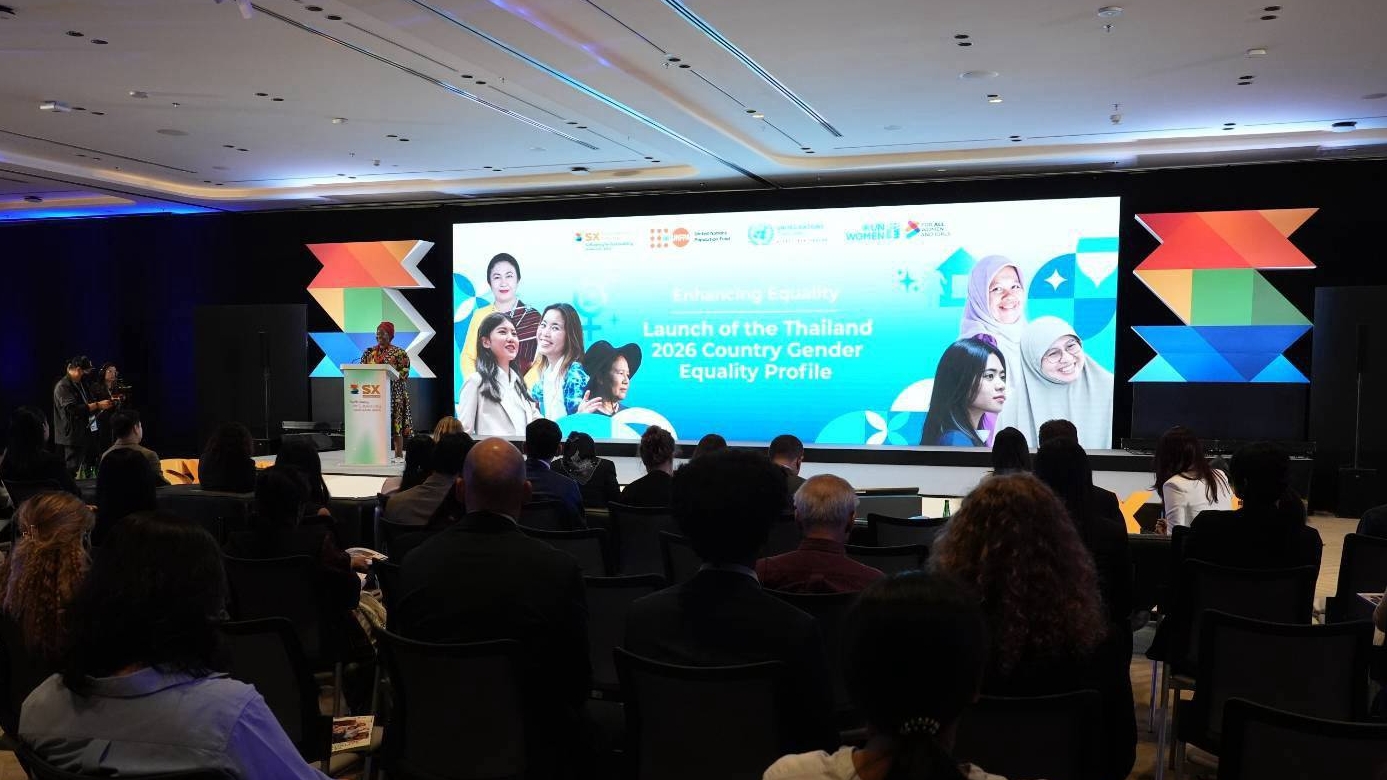
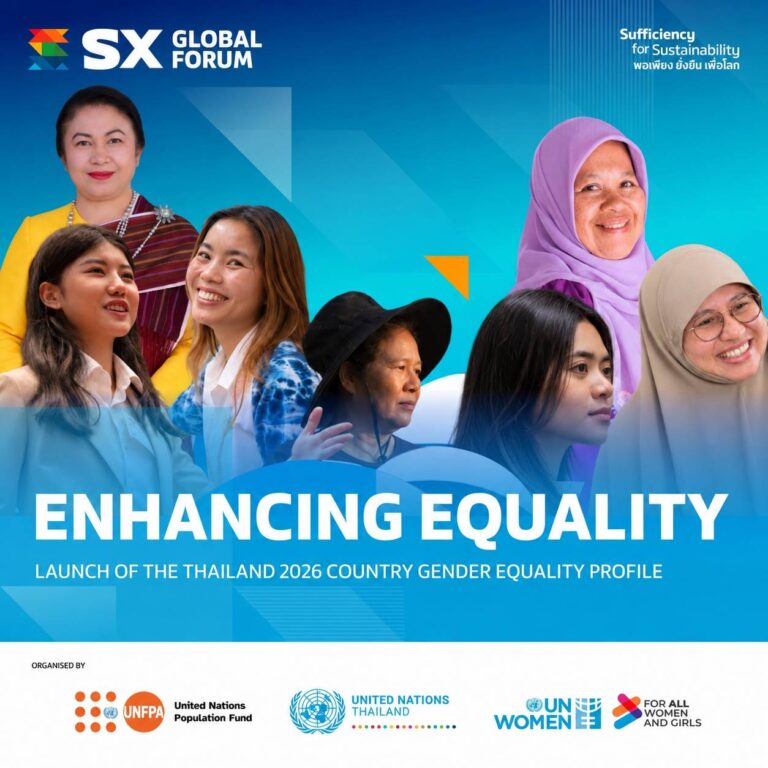
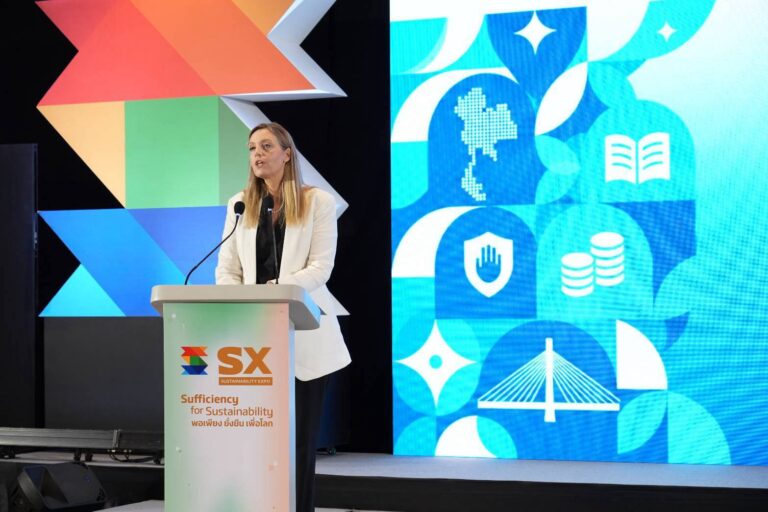
Thailand’s strong gains in girls’ education and maternal health have yet to translate into equal economic opportunities, political leadership or personal safety for women, according to the Thailand Country Gender Equality Profile 2026 launched by the United Nations at the Sustainability Expo 2026 (SX2026) in Bangkok.
Produced jointly by the UN in Thailand, UN Women and the United Nations Population Fund (UNFPA) in partnership with the Ministry of Social Development and Human Security (MSDHS), the report highlights a stark disconnect between educational attainment and workforce participation. While women outpace men in tertiary education enrollment at 51.6 per cent compared to 38.6 per cent, female labour force participation remains stagnant at 58.9 per cent, lagging well behind men’s 74.7 per cent.
Unpaid care work is identified as the primary barrier holding women back. Among working-age women outside the labour market, 87.3 per cent cite unpaid domestic and caregiving responsibilities as the reason, compared with just 16.3 per cent of men. Gaps in affordable childcare for children under three and insufficient elder care services continue to constrain women’s career choices as Thailand transitions into a super-aged society.
“Thailand’s achievements in girls’ education and women’s health show what sustained investment in public services can deliver,” said UN Resident Coordinator Michaela Friberg-Storey. “The next step is to ensure that these gains translate into equal opportunities to earn a living, lead and live free from violence. That requires tackling the barriers women face at home, at work and in public life.”
Gender-based violence and underrepresentation in decision-making also remain pressing concerns. The report notes that 32.9 per cent of ever-partnered women aged 15–49 have experienced physical or sexual intimate partner violence in their lifetime, with 14.3 per cent experiencing it within the past year. Meanwhile, following the February 2026 elections, women hold 19.8 per cent of seats in the House of Representatives and 22.5 per cent in the Senate—still short of national representation targets.
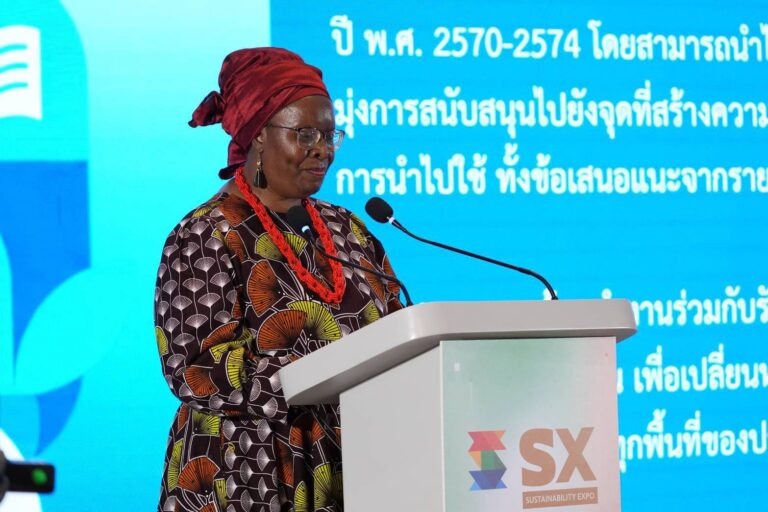
United Nations Assistant Secretary-General and UN Women Deputy Executive Director Nyaradzayi Gumbonzvanda stressed that data-driven action is essential to reach marginalised groups, including rural women, migrant workers, LGBTQI+ individuals and women with disabilities. “This profile provides a shared evidence base for action. By using its findings to guide policies, budgets and services, we can address persistent inequalities and ensure that progress reaches women and girls who face the greatest barriers,” she said.
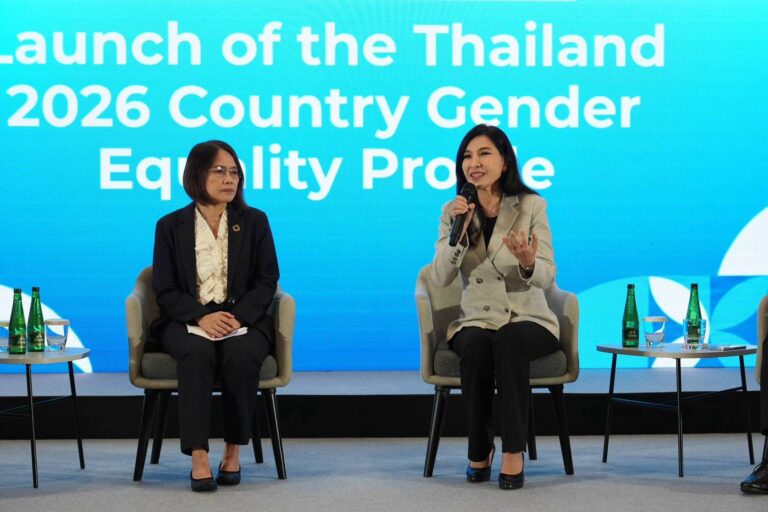
During a panel discussion on women’s economic empowerment moderated by UN Women Goodwill Ambassador Cindy Sirinya Bishop, representatives from the public and private sectors outlined concrete steps to address the care burden and expand opportunities.
Representing the MSDHS’s Department of Women’s Affairs and Family Development, specialist Urupin Singhanoi said the ministry is advancing gender-responsive budgeting alongside a proposed family leave policy that would allow men to take leave for caregiving duties. The ministry is also rolling out professional care training programmes and a community-based “one tambon, one caregiver” initiative to support families with elderly dependents.
From the private sector, CLP Axtra Plx. Chief Sustainability and Corporate Communications Officer Siriporn Dechsingha noted that women own 51 per cent of the retailer’s supplier network, with a target to reach 60 per cent. To help female farmers and entrepreneurs overcome travel and caregiving constraints, the company launched an online sourcing portal and is expanding regional agricultural learning centres across four regions. Internally, CP Axtra provides lactation rooms across its Makro and Lotus’s branches and has opened traditionally male-dominated roles, such as delivery fleet management, to women, who now make up 58 per cent of its executive team.
Meanwhile, Office of Small and Medium Enterprises Promotion (OSMEP) Assistant Director-General Wittawat Lamsam said the agency has established a formal national definition for women-owned enterprises in collaboration with UN Women. The standardised classification will enable financial institutions and state agencies to better track data and direct targeted credit and market access programmes to female entrepreneurs under Thailand’s upcoming five-year SME master plan.
KioskNews shows a cleaned-up reading view extracted from the publisher’s page — the original always lives on their site, not ours.