From robots to cancer screenings, Asia’s next wave of AI startups is moving into the real world
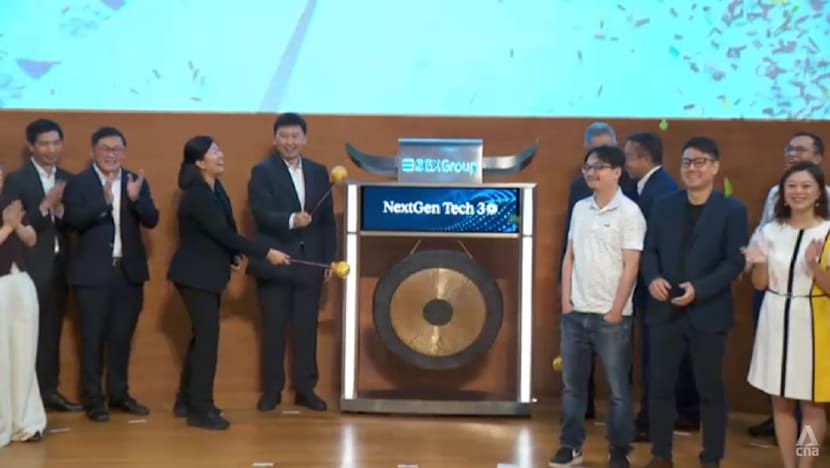
More than half of the 30 companies showcased at the NextGen Tech 30 event are applying AI to physical industries, marking a shift from the software-focused firms in previous cohorts.
New: You can now listen to articles.

This audio is generated by an AI tool.


30 Sep 2026 07:43PM
SINGAPORE: From underwater drones and cancer screening to industrial maintenance and real-time fraud detection, Asian startups are taking artificial intelligence beyond software and into the real world.
Thirty of these companies were showcased on Wednesday (Sep 30) at the NextGen Tech 30 (NGT30), an initiative that recognises and supports growth-stage technology companies from across the region.
More than half of this year’s honourees are applying AI to physical industries such as wind farms, warehouses, pharmacies, construction sites and low-Earth orbit, marking a shift from the software-focused firms that dominated previous cohorts.
They are also developing technologies ranging from custom silicon and humanoid robots to hyperspectral satellites and sustainable aviation fuel systems.
Now in its third edition, NGT30 is led by Singapore-based private capital platform Granite Asia in partnership with the Singapore Exchange (SGX), bringing together investors, government agencies and industry players to help promising companies scale globally from Asia.
Nearly half of the startups recognised this year are headquartered in Singapore, while a third are from Japan. The remaining firms are from China, India, Malaysia and South Korea.
Speaking at the event, Minister for National Development and Monetary Authority of Singapore (MAS) deputy chairman Chee Hong Tat said the firms “illustrate the growing depth and breadth of Asia’s innovation base”, with the potential to “reshape business models and transform industries”.
But recognition is only the beginning, he said, with the next challenge being to turn promising startups into companies capable of competing internationally.
“A startup has to prove that an idea can work. A scale-up has to make it work repeatedly, across different markets beyond domestic shores, and at a much greater scale,” Mr Chee said.
This requires capital that can grow with a company, organisational capabilities that can keep pace and the ability to adapt to different markets, he added.
“Our aim is to create an enabling environment where companies can build from Singapore, progress from startup to scale-up, and become regional and global leaders,” he said.
AI MOVES INTO THE REAL WORLD
Granite Asia senior managing partner Jenny Lee sees this year’s cohort as part of a broader evolution of AI.
“We’re now going into what we call AI 3.0,” she told CNA, describing a shift beyond frontier models and AI agents towards their deployment in real-world environments.
“This year’s awardees … are actually leveraging AI models to transform industries. And that’s the excitement.”
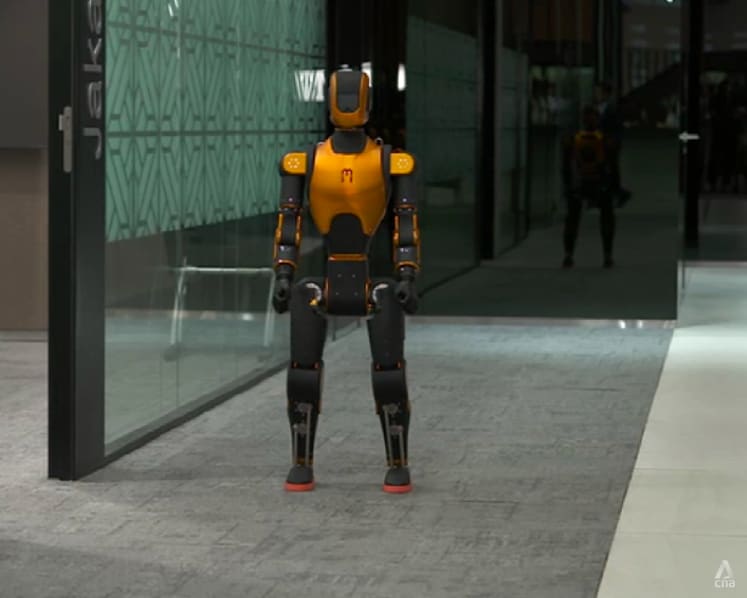
Among this year's honourees is Singapore-based Menlo Research, which is developing an open-source humanoid robot named Asimov, as well as an AI agent called Jan.
Asimov has attracted an international community of developers and enthusiasts who are customising and improving the open-source robot, according to the company.
But putting the advances seen in generative AI into a physical machine presents a very different challenge, said the firm's founder Daniel Ong.
While AI systems can process enormous amounts of information, robots still struggle with tasks humans perform intuitively, such as interacting with objects, he added.
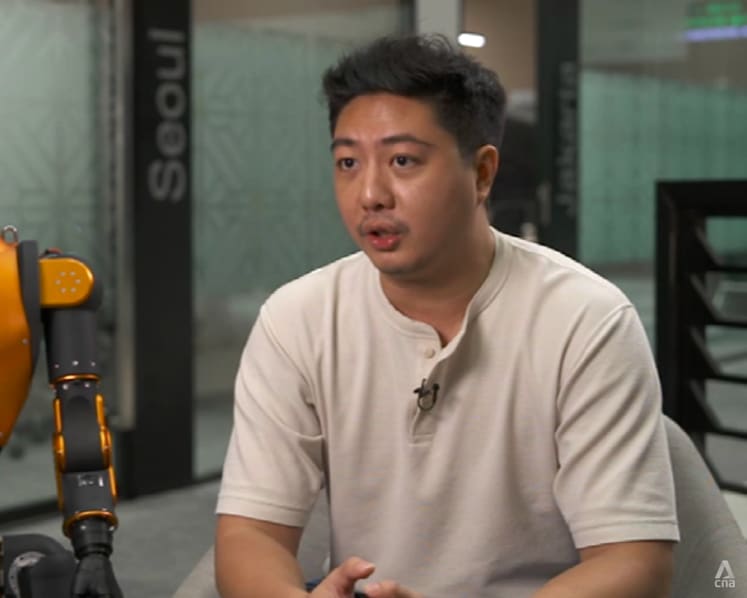
“To put AI into a robot body and for it to understand physical space is actually really difficult,” Mr Ong said.
“How do we train an AI with an intuitive understanding of physics … and be able to navigate the world and do real things like ... pick up something from the floor?”
AI & EARLY CANCER DETECTION
Another firm in this year’s lineup is Japanese startup Craif, which is applying AI to cancer screening.
The company has developed technology that extracts microRNA from urine and uses AI to analyse its profile for signs associated with multiple cancers, including pancreatic, lung and breast cancer.
CEO and co-founder Ryuichi Onose said the technology can detect cancer with about 90 per cent accuracy.
Having already launched its test in Japan and expanded to the United States, the firm is now eyeing Southeast Asia.
"We've been preparing to launch our product in Singapore," said Mr Onose. The company hopes to make the test available here next year.
Mr Onose sees NGT30 as a way to help Craif expand beyond Japan.
“Asia is the most important market for us, and outside Japan, we need support, we need partnerships in terms of medical institutions and healthcare providers,” he said. “So, this platform is very important for us to step outside of Japan.”
CAPITAL FOR THE NEXT STAGE
As companies grow, access to capital becomes another part of the scaling challenge.
Mr Chee said companies’ financing needs change as they develop, from early-stage investment to larger pools of growth capital and, for some, eventually the public markets.
“We are working to strengthen Singapore’s growth capital ecosystem and connect promising companies with the pools of capital they need as they scale,” he said.
Earlier this year, MAS and the Ministry of Trade and Industry convened the Growth Capital Workgroup to look at ways to strengthen Singapore’s growth capital ecosystem.
Mr Chee also pointed to increased IPO activity and other efforts to strengthen Singapore’s equities market as potential avenues for companies seeking capital as they mature.
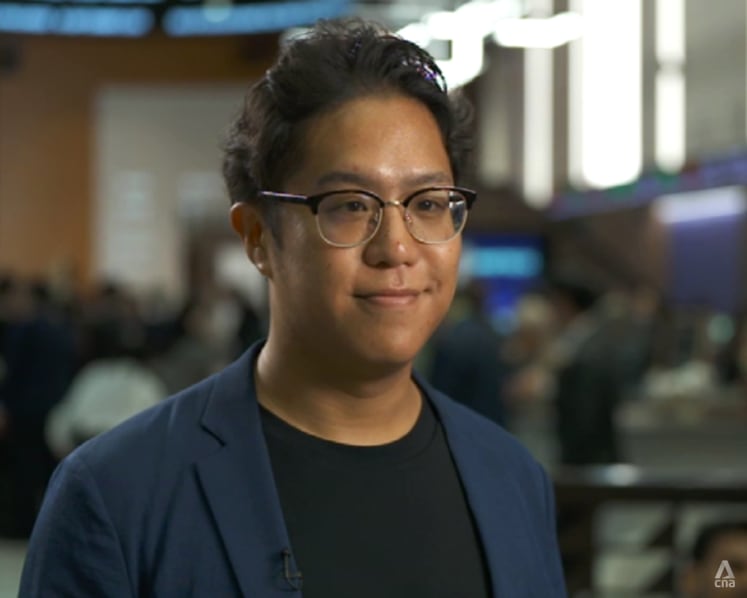
SGX Group senior managing director Pol de Win said Singapore offers companies access to global investors, alongside a local investment community familiar with markets across Southeast Asia and the wider region.
Public markets can also provide growing companies with “very efficient access to permanent capital”, he added.
Mr de Win said recent efforts to strengthen the market were showing early signs of progress, but would take time to have their full effect.
“We’re still early days,” he said. “But I’m very optimistic for, let’s say, the next three to five years ahead.”
A STRONGER ECOSYSTEM
Capital, however, is only one part of what emerging technology companies need to scale.
Menlo Research’s Mr Ong said companies need to be surrounded by suppliers, talent and other businesses developing complementary technologies.
He pointed to robotics clusters such as Shenzhen in China and Odense in Denmark as examples of the density needed to support the industry.
Singapore has some advantages, he said.
“It’s a meeting point … where eastern hardware excellence and manufacturing know-how meets Western brains,” he said. “(But) what I worry about is whether we can have a sufficiently dense robotics ecosystem.”
He added that targeted government support and investors willing to take risks on emerging technologies can provide a platform for entrepreneurs to succeed.
“One swallow does not a summer make, it takes a village,” he said.
KioskNews shows a cleaned-up reading view extracted from the publisher’s page — the original always lives on their site, not ours.