Pompeii's grandest house gets €1.4m restoration paid for by private donor
An ancient residence believed to be the grandest in the Pompeii archaeological site is being restored with a $1.6 million budget (1.4 million euros), entirely covered by a private sponsor, officials announced on Tuesday.
Part of it is expected to open to guided groups by Christmas, said officials of the Archaeological Park of Pompeii.
House of Marcus Fabius Rufus
The house of Marcus Fabius Rufus, modelled after Rome's imperial palaces and buried in the eruption of Mt. Vesuvius that destroyed the famous ancient city in 79 A.D., has been inaccessible to the public since 1980. Originally built on Pompeii's city walls, it features four floors connected by a maze of corridors and staircases.
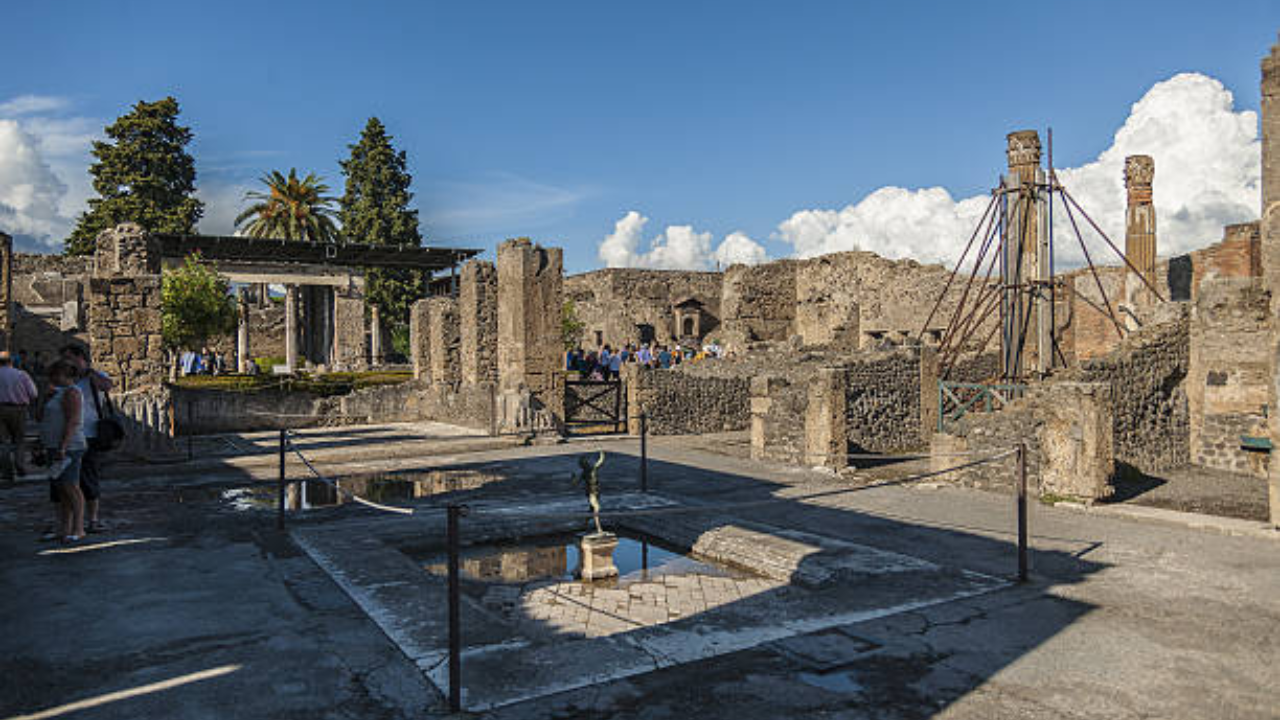
The owner of the abode was believed to be a magistrate or a freedman of the imperial household.Covering over 3,000 square meters, the House of the Faun in Pompeii is one of the largest and most opulent residences unearthed in the ancient city. Its name comes from the bronze House of the Faun statue, a dancing faun, that once stood in the atrium's central pool. The villa had dual atriums, spacious courtyards and formal reception rooms, along with lavish floors, water features and architectural symmetry, pointing to a lifestyle of affluence.
The most iconic feature of the home is the Alexander Mosaic from the House of the Faun. Depicting the Battle of Issus between Alexander the Great and Persian King Darius III, this mosaic is a celebrated example of ancient craftsmanship. Composed of over a million tiny tesserae, it captures dynamic action, lifelike expressions, and intricate detail.While the original mosaic is now displayed at the Naples Archaeological Museum, a detailed replica remains in place, giving visitors the chance to admire this masterpiece where it originally captivated Roman guests.
A $1.6 million restoration
The renovation is being paid for by a German entrepreneur, Frank Hoefer, who contacted the Archaeological Park of Pompeii after reading superintendent Gabriel Zuchtriegel's 2023 book "Pompeii: The Enchanted City." “Restoring the spectacular residence of Marcus Fabius Rufus … is a project I find exciting,” Hoefer said in a release, according to NY Post. “I also have the impression that Pompeii is very open to innovative approaches to preservation and public access.
”Zuchtriegel said the goal is to expand such sponsorships. “This does not mean that from tomorrow on if we had 50 such sponsors we would be able to abolish the entrance ticket, putting it at just a symbolic one-euro price, but it is a perspective towards which we have to work to develop the site,” Zuchtriegel said in a video statement.Structural work was carried out on the house from 2021-2023, and current renovations are focused on the frescoes, including the famous Venus of Pompeii located in a chapel within the residence. Zuchtriegel said work was also being done to make the complex more accessible, and digital technology was being developed to help people grasp the “incredible labyrinth” that makes up the house.“At times, you feel like you are in a 19th-century palace in Naples, yet this is a Roman house from 2,000 years ago,” he said.
KioskNews shows a cleaned-up reading view extracted from the publisher’s page — the original always lives on their site, not ours.