Japan’s university defence bids surge as post-war taboo fades amid China concerns
Japanese universities and other educational institutions more than doubled their applications for defence ministry research funding this year to a record 291, up from 123 last year, as Tokyo moves to strengthen its defences.
The increase is the clearest sign yet that academia’s decades-long resistance to military-linked work is easing.
The bids accounted for more than half the record 560 applications received by the ministry this year, up from 340 last year, with the rest coming from public research institutes and companies.
Trump praises Takaichi ahead of Xi’s US visit
Of the 47 projects selected for funding under the 12.9 billion yen (US$82 million) programme, 30 will be led by university researchers, with 11 universities – including Osaka, Nagoya and Keio – winning grants for the first time.
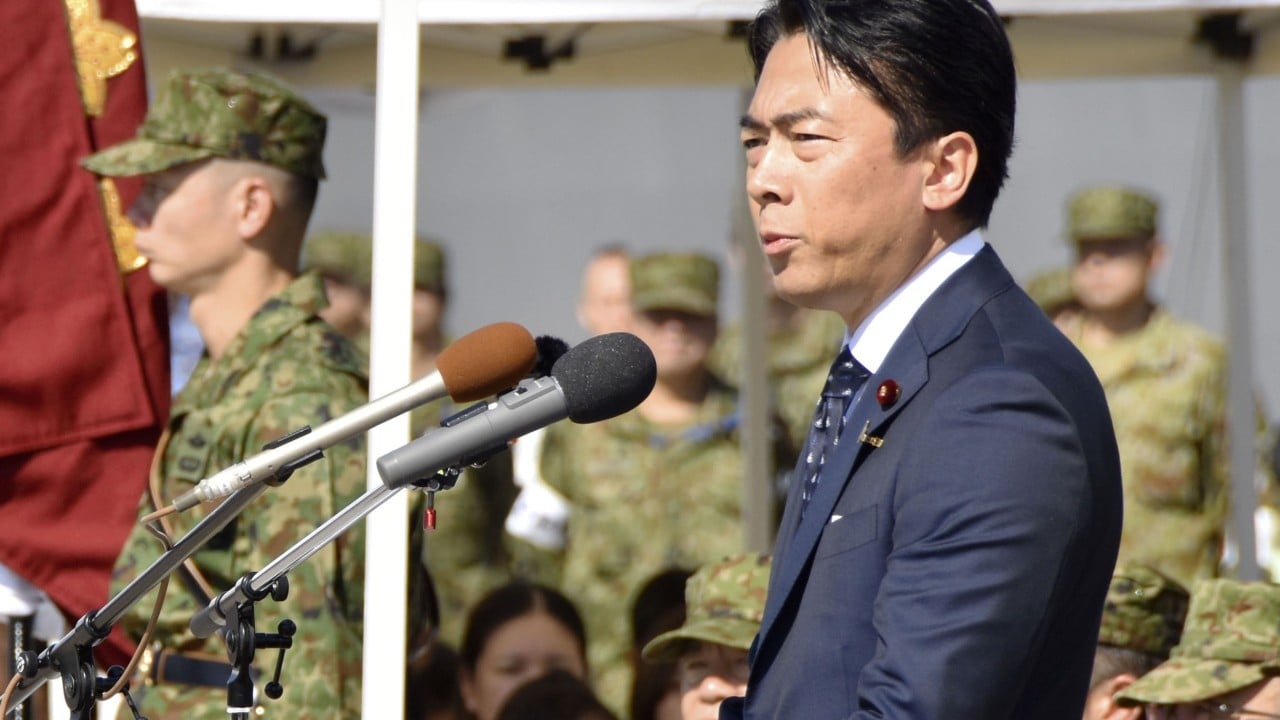
Speaking on Tuesday, Defence Minister Shinjiro Koizumi welcomed the figures, saying the attitude of universities had “clearly changed”. He said civilian and defence technologies could no longer be clearly separated, making closer cooperation with universities “essential to protecting Japanese lives”.
The shift could have important implications for Tokyo’s efforts to counter Beijing’s growing military capabilities, potentially opening up a wider pool of civilian scientific expertise for the development of advanced sensors, communications systems, drones and other defence technologies.
Beijing has long drawn on universities and civilian research institutions to support military modernisation through its military-civil fusion strategy. However, in Japan, whose post-war constitution renounces war, concerns rooted in the country’s militarist past have traditionally limited cooperation between academia and the defence establishment.
In 1950, the Science Council of Japan pledged to never conduct research for war, reaffirming that position in 1967.
In 2017, it again opposed military-linked research, citing concerns about academic freedom and the potential military use of scientific findings. University applications fell from 58 in the programme’s first year in 2015 to just nine in 2019.
Sebastian Maslow, an associate professor at the University of Tokyo, said the recent surge reflected a broader erosion of “antimilitarist norms” as well as institutional changes encouraging military-related research. He pointed to a younger generation of scholars with different perceptions of Japan’s security environment, alongside growing competition for civilian research grants.
For cash-strapped universities, the defence ministry’s research grants offer an increasingly attractive alternative.
The programme’s annual budget, boosted sharply in 2017, has risen from 10.4 billion yen in 2024 to 11.4 billion yen last year and 12.9 billion yen this year, more than 40 times its initial allocation of about 300 million yen in 2015.
Still, military research “remains a key controversy” at many national universities, Maslow said, particularly given the role of academia during World War II.
Misato Matsuoka, an associate professor at Teikyo University, also cautioned against viewing the increase as a “sudden embrace of military research”.
Rather, she said, the “institutional, financial and normative barriers” to seeking defence grants had weakened because of three “mutually reinforcing” factors: university funding pressures, the science council’s more nuanced stance on dual-use technologies since 2022 and the ministry’s campus outreach.
While China’s military build-up provided “an important strategic context”, Matsuoka added, changing security perceptions were not necessarily the main explanation.
The shift comes as Tokyo prepares to revise its main security policy documents by year-end. Japan’s most recent defence white paper presented China as its “greatest strategic challenge”.
Although the defence ministry’s grant programme supports basic research rather than weapons development, several projects selected this year could eventually help to strengthen Tokyo’s ability to counter Beijing’s growing military capabilities.
Hokkaido University, for instance, received funding for research combining infrared and visible-light imagery using artificial intelligence, which Matsuoka said could contribute to “surveillance and situational awareness”.
At Nagoya University, researchers secured support for advanced millimetre-wave transistors, which Koizumi said could eventually contribute to ultra-high-speed communications.
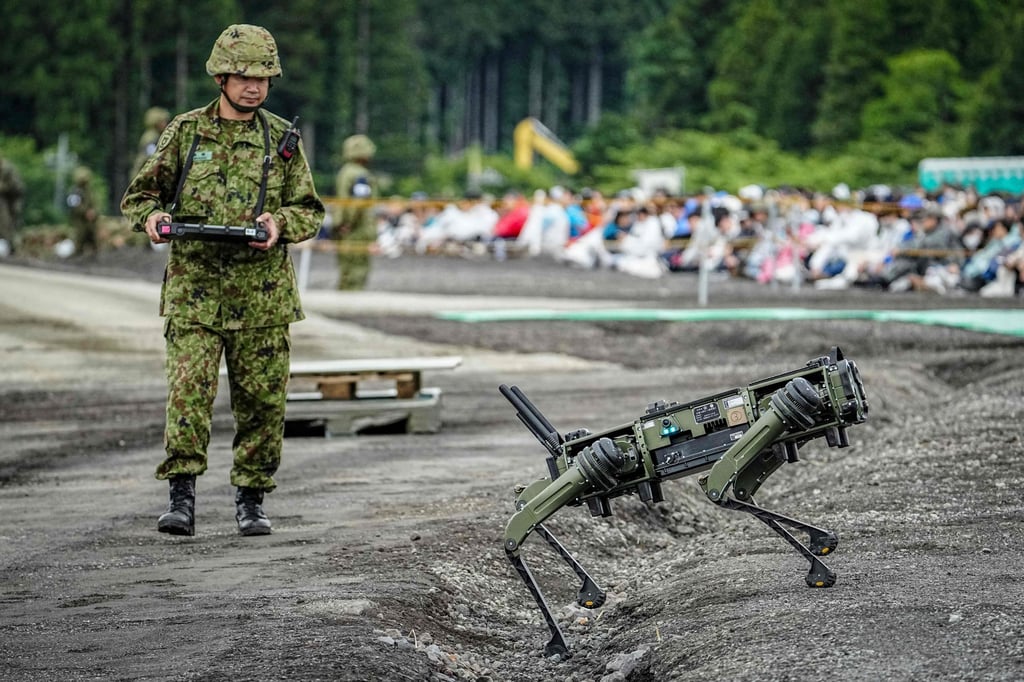
Gifu University will study lightweight carbon fibres for drones, while Osaka University is developing high-output batteries for uncrewed aircraft.
Other funded projects relate to quantum communications, heat-resistant aerospace materials, satellite tracking and space debris observation, as well as rare earth-free materials that could help reduce Japan’s dependence on Chinese-dominated supply chains.
01:06
Japan finds rare earths in deep-sea mud off remote island
Although none of the projects identifies China or any other country as its intended target, the research illustrates the growing role of universities in Japan’s defence sector.
Maslow said closer cooperation between universities, companies and government pointed to a “new dynamic ecosystem” for defence innovation, even as opposition within academia persisted.
Matsuoka cautioned, however, that translating successful university research into deployable military capabilities could take five to 10 years, or longer.
The key question, she said, was whether Japan could “translate that research into practical capabilities” while maintaining the “institutional autonomy and openness” of its civilian research sector.
KioskNews shows a cleaned-up reading view extracted from the publisher’s page — the original always lives on their site, not ours.