China builds the world’s smallest wearable brain monitor with a cortex-wide view
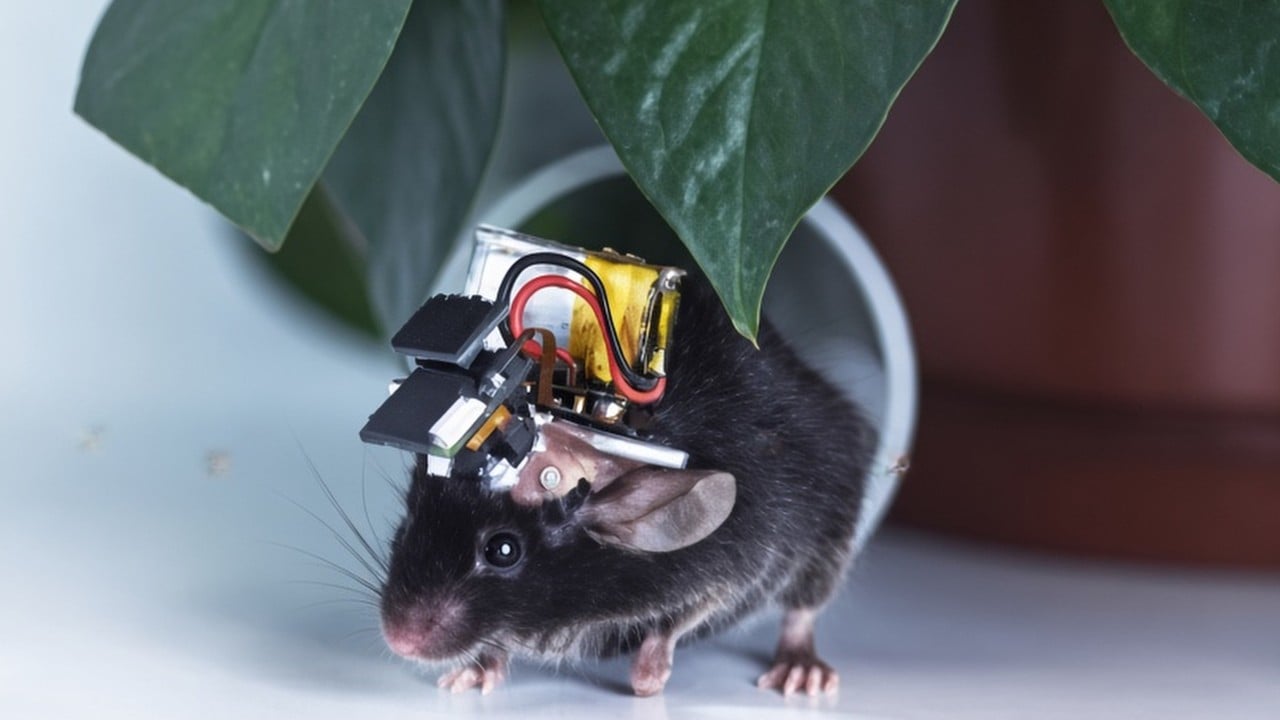
Chinese scientists have developed what they say is the world’s smallest wearable mini brain monitor that can track the activity of thousands of neurons at the same time.
Weighing in at one gram (0.35 oz), the wireless “Airscope” is the lightest device of its kind and enables researchers to track a wider range of brain activity in untethered laboratory animals.
The device was jointly developed by scientists from Tsinghua University and the Chinese PLA Medical School, and detailed in a paper published in the peer-reviewed journal Nature on Monday.
“This microscope will push optical brain-computer interfaces towards more precise neural detection,” said Dai Qionghai, the paper’s corresponding author from Tsinghua’s automation department.
In a social media post by Tsinghua University on Tuesday, Dai noted that the technology’s potential extended far beyond brain research.
“In the future, its application is expected to expand from neuroscience to fields such as immunology and oncology, enabling the complete tracking of the disease development process,” he was quoted as saying.
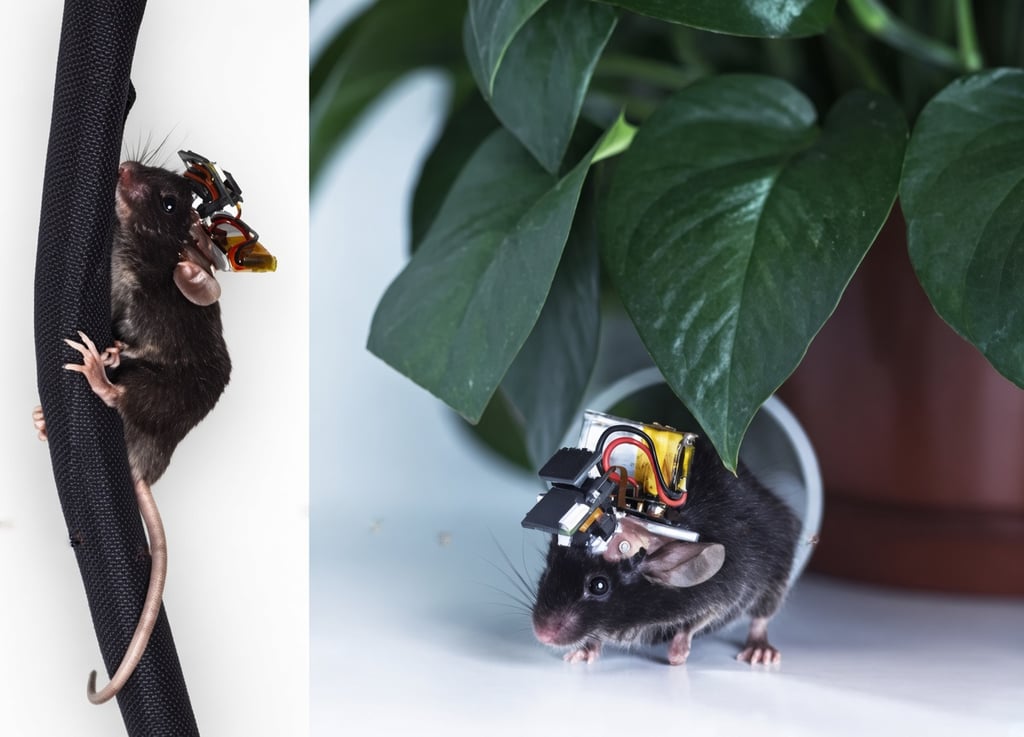
The Airscope is a mesoscope, a high-end optical instrument designed to observe biological tissues, such as cortical neural activity, at an “intermediate” level.
It plugs the gap between a microscope and a macroscope, enabling researchers to observe cell activity over a wide field of view.
For years, scientists have sought to clearly observe how brain neurons regulate complex behaviours during natural, group interactions – a crucial step in understanding the nature of intelligence.
To do this, they must track a relatively large area of animal tissue while still distinguishing the activity of individual cells.
Previously, devices that could do this required animals to have their heads fixed in place or be tethered by cables. And, devices small enough to allow free movement typically had a restricted field of view, often less than 1mm (0.04 inches).
Dai’s team shrank the volume of their device by nearly five orders of magnitude compared to conventional benchtop microscopes, with “comparable” quality of recorded neural signals.
They also used a two-megapixel image sensor that compresses data, enabling the wireless transmission of megapixel-grade images.
The whole project meant optimising optical, illumination, electronic and wireless transmission systems.
The team used artificial intelligence to design the lenses and developed a computer vision model that can identify and continuously track individual subjects from video footage, preventing target loss or confusion.

Using the Airscope, the team studied neural signal changes across various mouse behaviours.
The team fitted their devices to mice and allowed them to roam a custom-built micro-habitat featuring ramps, tree holes and shelters.
The mice were able to burrow and climb freely because the entire set-up was light enough not to interfere with the mice’s natural behaviour.
While the animals explored their surroundings, researchers used the ultra-lightweight headset to record the activity of more than 8,500 individual neurons in a single mouse’s cerebral cortex, all at one time.
Their findings include identifying how cortical activity patterns in dorsal brain regions influence an animal’s social competitive advantage.
The team hopes to use this technology to further investigate the neural mechanisms underlying social behaviour and emotional states, potentially providing vital clues for research into conditions such as depression.
According to the Tsinghua article, Dai’s team has been researching mesoscopic imaging technology since 2013.
In 2024, Dai’s team from Tsinghua announced the development of a super intravital microscope that could clearly image the entire three-dimensional interactions of a large network of cells.
The microscope – called the RUSH3D system – features subcellular resolution over a field of view that is centimetres-wide. It is capable of high-speed 3D imaging at 20 frames per second, allowing for many hours of continuous observation.
KioskNews shows a cleaned-up reading view extracted from the publisher’s page — the original always lives on their site, not ours.