As Singaporeans live longer, a look at how they manage their retirement savings
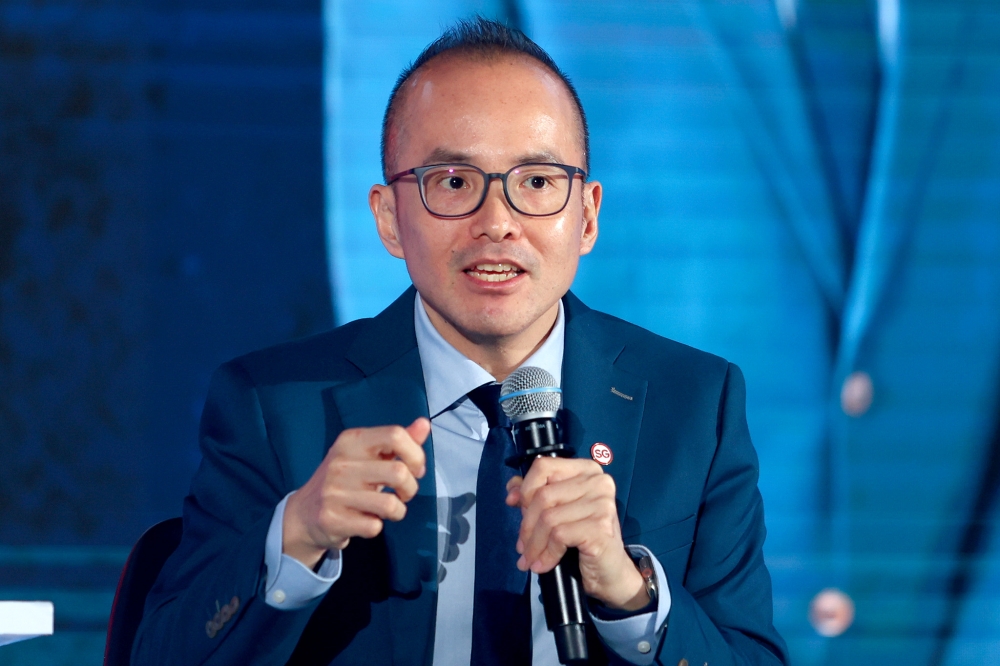

Singapore’s CPF Board deputy CEO Wong Yan Jun said CPF Life helps Singaporeans manage the risk of living longer than what they had saved. — Picture by Firdaus Latif
By Ida Lim
First Published: Thursday, 22 Oct 2026 7:00 AM MYT
KUALA LUMPUR, Oct 22 — Singapore’s Central Provident Fund Board (CPFB) deputy CEO (services) Wong Yan Jun said Singapore’s CPF — the equivalent of Malaysia’s EPF — had in 1987 introduced a phased withdrawal scheme.
The Retirement Sum Scheme (RSS) splits up monthly payouts of a Singaporean’s retirement savings over a fixed duration of 20 years to make it last longer.
This was because the government realised the lump sum withdrawal option at age 55 was less suited to support retirement over many years, as Singaporeans were living longer.
Singapore in 2007 recognised that more than half of Singaporean men and women would live past 82 and 85 respectively, which led to the 2009 introduction of the national longevity insurance annuity scheme, “CPF Lifelong Income for the Elderly” (CPF LIFE).
Back in 2007, many Singaporeans wrote to CPFB to challenge the idea that half of Singaporeans would live past 85, pointing out that most obituaries then showed people dying at ages like 75 and 80.
“But the truth is what we are preparing for is not for that moment. CPF LIFE is preparing for the future generation to come,” he said, adding that Singapore ultimately managed to push it through.
He said CPF LIFE pools the longevity risk to give Singaporeans the confidence that they can have income for as long as they live.
When asked at the Employees Provident Fund’s (EPF) International Social Wellbeing Conference 2026 (ISWC 2026) panel session if CPF LIFE would need government subsidies to sustain lifetime payouts, he said the scheme is fully self-sustainable as the entire CPF LIFE funds are invested in Special Singapore Government Securities (SSGS) with a guaranteed risk-free return of about four per cent.
He also said CPF LIFE has very low expenses as compared to annuities provided by the private sector, as CPFB is a non-profit organisation and does not have intermediary fees such as agents’ commissions.
He said CPF LIFE’s monthly payouts are not a guaranteed or fixed number, which provides flexibility to adjust monthly payouts if necessary to ensure that the scheme can continue to be self-sustaining.
According to CPFB’s website, CPF members can join CPF LIFE anytime from age 65 and up to one month before turning 80.
CPF LIFE automatically includes those born after 1958 and with a minimum S$60,000 in CPF retirement savings by age 65, with Wong telling Malay Mail that nine in 10 CPF members are expected to reach this savings level by 2035.
Wong said those who do not meet the minimum S$60,000 level would be on the RSS plan (where payouts are only while savings last), but noted they can still opt in for CPF Life.
Those automatically included under CPF Life cannot be exempted from it, unless they have a pension or commercial annuity that gives the same or higher monthly payouts.
Recommended reading:
KioskNews shows a cleaned-up reading view extracted from the publisher’s page — the original always lives on their site, not ours.