'Some optimism' in US-Iran negotiations despite major disagreements, sources tell 'Post'

“Some progress” has been made in efforts to reach an agreement between the US and Iran, several sources familiar with the negotiations told The Jerusalem Post. However, the sources stressed that "significant gaps remain between the two sides".
“There is some optimism that an agreement can be reached. But there is still work to be done,” one source said.
Another source said no progress had been made on the nuclear issue and that the advances concerned other matters, including the timeline for implementing a potential agreement.
In recent days, Qatari mediators have intensified indirect diplomatic efforts between the US and Iran amid growing fears of a potential military escalation following the US midterm elections.
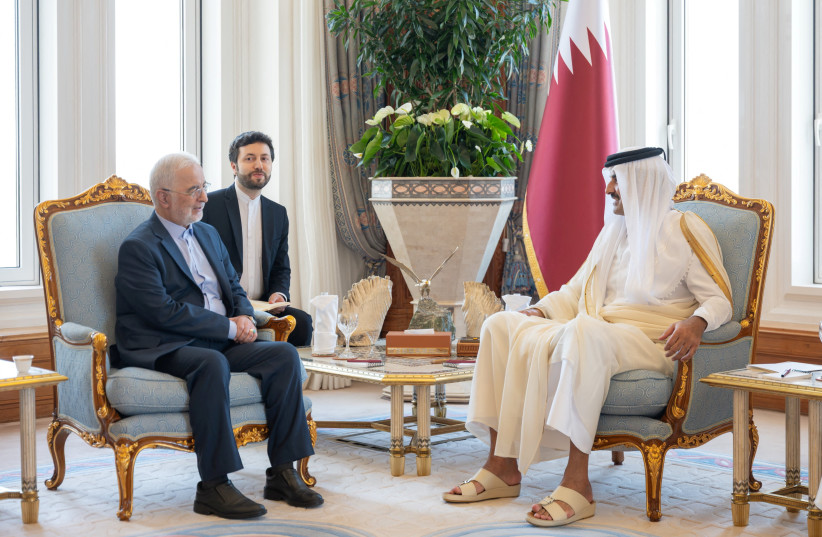
An Iranian delegation traveled to Doha for several days of talks, coordinated closely with Washington, following intensive consultations in Tehran. The discussions reportedly focus on proposals to de-escalate the eight-month-old conflict, including a potential two-day framework for reopening the strategically vital Strait of Hormuz and resuming broader peace negotiations.
Significant gaps remain over Iran's nuclear program
Despite these diplomatic efforts, significant gaps remain between the two sides. Tehran is demanding that Washington lift recent sanctions, reinstate oil waivers, reduce its regional military presence, and end port blockades before addressing restrictions on Iran's nuclear program.
By contrast, US officials, following recent outreach by Vice President JD Vance to Iranian security chief Mohsen Rezaei, insist that any comprehensive agreement must address nuclear concerns from the outset.
On Sunday, US President Donald Trump was asked how negotiations with Iran were progressing.
“They're going fine, but they're not very reliable. They make a deal and then they back out,” he responded.
Trump also said there were “one or two sites” in Iran's nuclear program that the US needed to address.
“But we can do that in 10 minutes,” he added.
A source familiar with the matter confirmed to the Post that Prime Minister Benjamin Netanyahu and Trump spoke by phone on Saturday. The call came days after Trump was briefed by US Central Command (CENTCOM) commander Adm. Brad Cooper on military options for a possible operation against Iran.
Meanwhile, Iranian Deputy Parliament Speaker Ali Nikzad said Iran had no intention of negotiating over its nuclear program, regardless of the pressure exerted on it.
Can Washington and Tehran overcome the nuclear deadlock?
Dr. Raz Zimmt, head of the Iran and Shi'ite Axis Research Program at the Institute for National Security Studies (INSS), told The Jerusalem Post that each side currently needs something from the other that cannot be reversed, while neither is willing to make what would constitute an irreversible concession.
“The Americans are prepared to lift the naval blockade and some of the sanctions, since these measures can be reinstated, and in return they are demanding something on the nuclear front, such as an inspectors' visit and/or action regarding the enriched uranium. The Iranians, meanwhile, are prepared to reopen the Strait of Hormuz and perhaps even allow inspectors to visit certain sites, but they are unwilling to give up their enriched uranium. Instead, they are demanding something permanent, such as the unfreezing of Iranian assets.
“I find it difficult to see how this deadlock can be resolved,” Zimmt said.
Nevertheless, he added that, given the risks of another round of military confrontation, he would not rule out the possibility that the two sides could ultimately reach a compromise, even if only a temporary one.
KioskNews shows a cleaned-up reading view extracted from the publisher’s page — the original always lives on their site, not ours.