Marshals Protects Taylor Sheridan's Biggest Yellowstone Lie

Cathal Gunning has been writing about movies, television, culture, and politics online and in print since 2017. He worked as a Senior Editor in Adbusters Media Foundation from 2018-2019 and wrote for WhatCulture in early 2020. He has been a Senior Features Writer for ScreenRant since 2020.
One exchange between Tate and Kayce in Marshals season 2, episode 2, proves that Taylor Sheridan’s Yellowstone franchise stays whitewashing one character’s questionable legacy years after their death. It is fair to presume that viewers don’t come to Taylor Sheridan shows in search of moral guidance. While his vision of the West might owe something to classic Westerns like Sheridan’s favorite Lonesome Dove, the writer/director’s work doesn’t offer an idealized image of Western life akin to The Waltons or Little House on the Prairie.
Instead, Sheridan shows like Landman are beloved by viewers precisely because their characters are imperfect, flawed, morally complex, and, in some cases, just straight up vile. Much has been made of Sheridan’s usage of Western tropes and imagery, but the prolific writer/director’s love of twisty, unpredictable serialized narratives, dysfunctional multi-generational families, extremely wealthy and morally dubious protagonists, and baroque death scenes owes as much to the soap opera format as it does to John Ford and Sergio Leone.
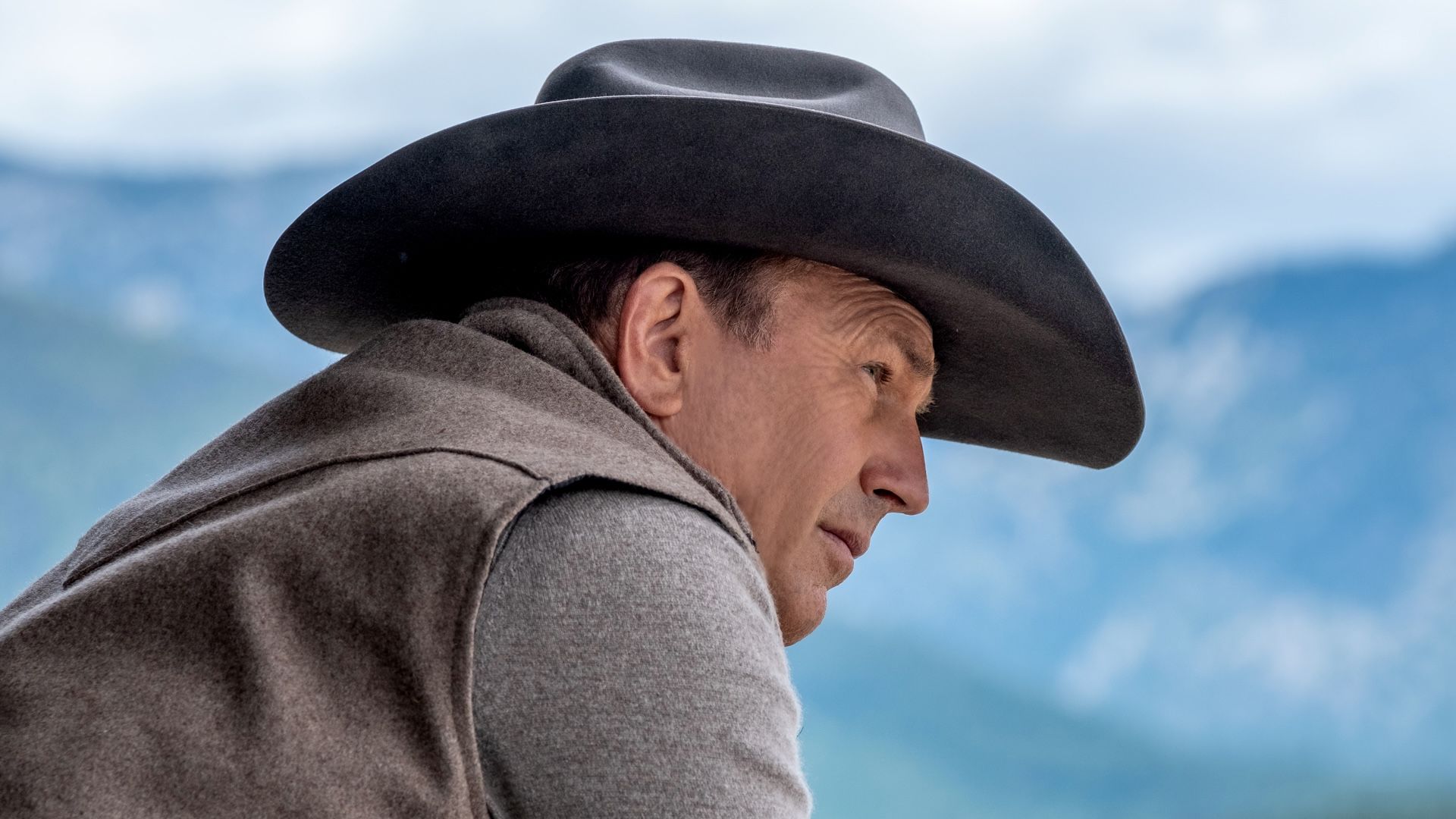
As Dutton Ranch’s Beth storyline proves, viewers come to Sheridan shows to see rich characters behaving badly, with both Yellowstone and its franchise spinoffs operating like an R-rated, updated take on Dallas or Dynasty. To this end, it shouldn’t be controversial to note that Yellowstone’s patriarch and original protagonist, Kevin Costner’s John Dutton III, was a fairly unambiguously terrible person. However, in Marshals season 2, episode 2, “End of Watch,” this observation appears to be contentious.
Tate Believes John III Was Good In Marshals Season 2

In the season 1 premiere, “All Hat No Cattle,” Kayce successfully saves Tate from the evil land baron Weaver, who tried to use Kayce's kidnapped son as leverage in an attempt to buy East Camp from Tate’s father. However, Tate is understandably traumatized by the entire ordeal, something Kayce notes when he finds his son sitting by a creek contemplating life.
Tate notes that "Mr. Weaver was evil,” and says he “can't believe I ever thought he was anything like Grandpa,” which will ring some alarm bells in the ears of any viewers who remember the events of Yellowstone. For those who might require a refresher, throughout the original show’s five seasons, John routinely ordered Rip to murder numerous business rivals and dump their bodies in a private ravine. The practice was so commonplace that the pair had a cutesy euphemism for corpse disposal, calling it “Taking them to the train station.”
John lied about Jamie’s parentage to maintain control over him, attempted to force Monica to obtain an abortion, permanently branded his own son when Kayce refused to go along with this, and had a medical examiner killed for coming close to the truth about his dirty dealings. As if Yellowstone’s John didn’t do enough to royally screw up the lives of his children and violently end the lives of others in cold blood, he also repeatedly left his grandson Tate himself at risk of kidnapping (or worse) by antagonizing his rivals.
Notably, however, in “End of Watch,” Kayce simply replies to Tate that, "Weaver had us all fooled.” Rather than challenging Tate's view of John and noting that, for example, Kayce himself preferred to go to an active war zone than live under his father’s roof after the branding incident, Kayce lets the comment lie between them and doesn’t correct the record on his father’s misdeeds.
Why John III Was Technically Not A Good Man (& That's Okay For Yellowstone)

To be clear, there are practical, pragmatic reasons for Kayce to choose against describing his father’s worst crimes to his son. Tate is still young enough to potentially share these details with others, and the Dutton family’s reputation is on the line. However, given how often Marshals posits Kayce as Yellowstone’s new John, it feels more like “End of Watch” is co-signing Tate’s ahistorical view of John rather than setting up a chance for Tate to someday later correct him.
While John was the protagonist of Yellowstone and its ostensible antihero, he was no more heroic than, for example, Tony Soprano of The Sopranos or Walter White/Heisenberg of Breaking Bad. He repeatedly insisted that he only ever committed crimes to protect his family, but he alienated Kayce by branding him, turned Beth into a paranoid bloodthirsty clone of himself, and ended up mistreating Jamie so badly that Jamie’s lover eventually hired assassins who killed John.
Like the main characters of the classic HBO cop drama The Shield, Vic Mackey and Shane Vendrell, Costner’s John is initially introduced as a hard but fair man doing right by his family in a cruel world. Like The Shield, and Training Day before it, Yellowstone’s five seasons gradually reveal that John himself is the problem, as his greed, avarice, intimidation, cruelty, sadism, and short-sighted mistreatment of his children combined to sign his own death warrant.
In this regard, Costner’s casting is a moment of meta genius, as viewers are accustomed to seeing the blockbuster star play heroes, and are predisposed to viewing his actions as morally sanctioned. It isn’t until the final seasons of Yellowstone that it becomes clear John is the show’s true villain, as none of the buyers hoping to purchase his ranch are as odious and reprehensible as him.
Will Kevin Costner's John III Ever Appear In Marshals?

This, of course, creates a problem for CBS’s Marshals when it comes to John. By the time Yellowstone killed him off, the original show had revealed that John was the source of all his family’s woes, as his wendigo-esque hunger to accumulate ever more land and money eventually drove him to an early grave and left his children’s lives shattered.
However, Marshals has since posited Kayce as the heir to John’s legacy, so the spinoff now needs to present Costner’s character as something more than a mere monster disguised as a hard-working family man. By repeatedly comparing the morally fraught Kayce to his late father, Marshals feels like it is sowing the seeds of an on-screen comeback from John later in the show. This is only exacerbated in season 2, episode 3, “Falling Sky,” when Kayce sees a buffalo.
Mo tells Kayce the buffalo may represent self-sacrifice, further implying that Marshals is setting up a cameo from Kayce’s late father in a vision or a dream. If Marshals does try to bring back Yellowstone’s John as a symbol of sacrificing one’s self in the name of family, this will be a pretty tough sell since Costner’s patriarch wouldn’t even be dead if he hadn’t treated his family (specifically Jamie) with such blatant disrespect and disregard.
- Release Date
- 2026 - 2026-00-00
- Network
- CBS
- Showrunner
- Spencer Hudnut
- Directors
- Christopher Chulack, Greg Yaitanes, Gonzalo Amat, John Erick Dowdle, Guy Ferland, Ruben Garcia, Darren Grant
- Writers
- Spencer Hudnut, Maggie Schroeder, Lyle Mitchell Corbine Jr., Jim Adler, Dana Greenblatt, Tom Mularz
KioskNews shows a cleaned-up reading view extracted from the publisher’s page — the original always lives on their site, not ours.