Blimps, burlesque and brass bands: America takes flight – in pictures

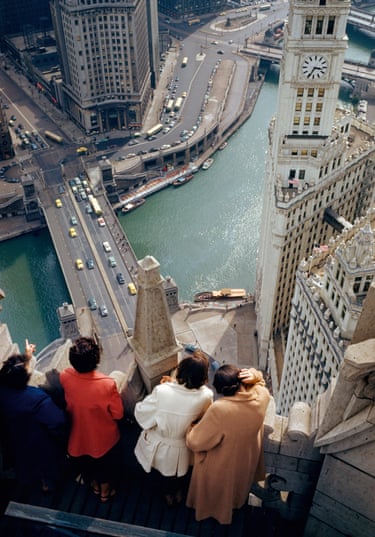
Illinois, 1950s, B Anthony Stewart
A new photographic collection presents a distinctly American story from the National Geographic’s illustrious archives, curating more than 700 captivating images, charting a century of growth and change, from Alabama to Wyoming, Alaska to Wisconsin. Here we see tourists gazing down on the Chicago River from the roof of the Tribune Building. National Geographic: The United States of America is published by Taschen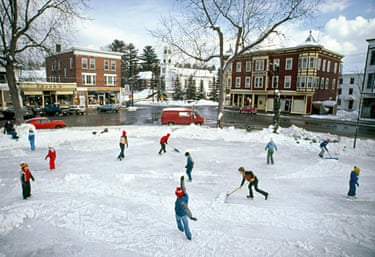
New Hampshire, 1982, Andy Felsenthal
Until the 1920s, National Geographic stories focused on American industry, agriculture and public works. But soon after they started to give way to stories that put more emphasis on images of Americans at leisure, enjoying the fruits of their labours. The images, increasingly shot and reproduced in colour, offered readers a temporary escape from the struggle and monotony of everyday life. Here, local kids shovel the hockey rink on the Whitefield common, flooded by the town, so they can play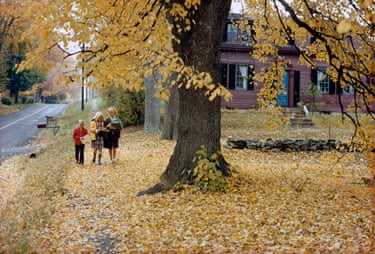
Maine, 1968, B Anthony Stewart
‘There was an aspirational aspect to the way National Geographic viewed and covered America,’ says Thomas Kennedy, the magazine’s director of photography in the 1990s. For most of the 20th century, the editors portrayed America’s best self-image, as seen through the lens of white middle-class and middle-American sensibilities. National Geographic photography reinforced these idealised narratives that were familiar to almost every schoolchild. Here, Autumn’s golden glory surrounds children returning from school in Wiscasset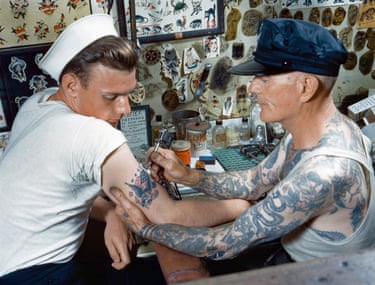
Virginia, 1939, Paul L Pryor
Getting some ink in Norfolk, Virginia, back when sailors were tattoo parlours’ best, and virtually only, customers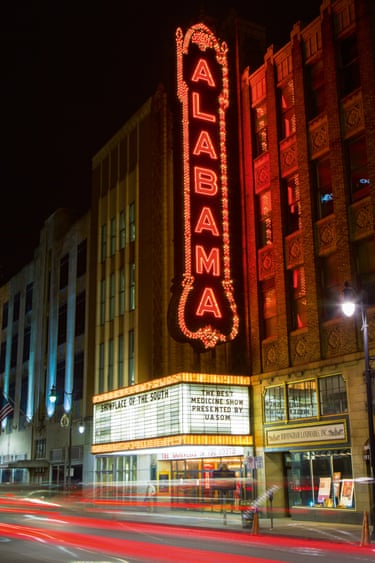
Alabama, The Historic Alabama Theater in Birmingham, 2014, Susan Seubert
‘Showplace of the south’, and indeed it was when those doors first opened in 1927. The theatre was Paramount’s showcase movie palace, beckoning patrons from across the southeast into its plush, gold-leafed interior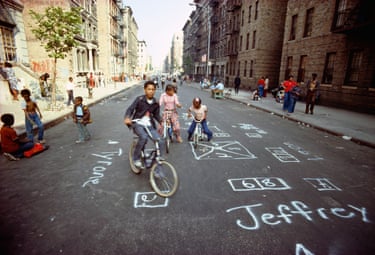
New York, 1977, Leroy Woodson Jr
West 138th Street in Harlem on Memorial Day, closed to traffic but open to the neighbourhood’s inhabitants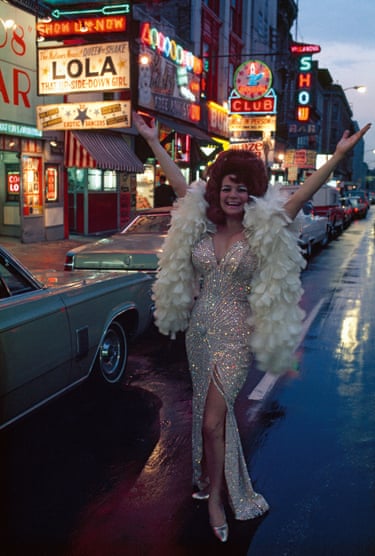
Maryland, 1972, Robert W Madden
Burlesque legend Blaze Starr reigns over Baltimore’s bawdy ‘block’ of strip-clubs and grindhouses. Characters like Starr, John Waters and Divine drew the attention of the world to their city, the quirky metropolis of Maryland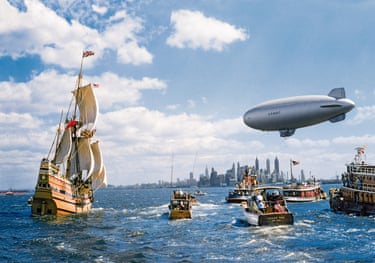
New York, 2009, B Anthony Stewart
Mayflower II entering New York Harbour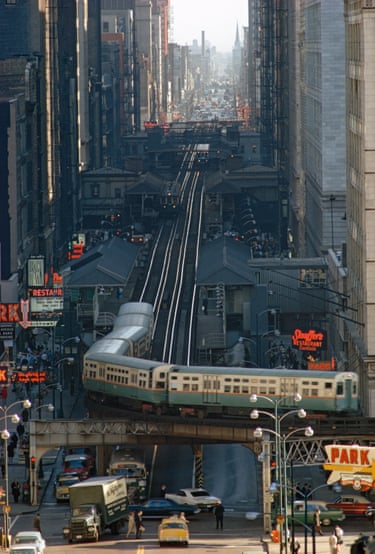
Chicago, 1967, James L Stanfield
The historic Chicago ‘L’ elevated rapid transit system encircles 35 blocks of shops, offices and hotels, as it navigates downtown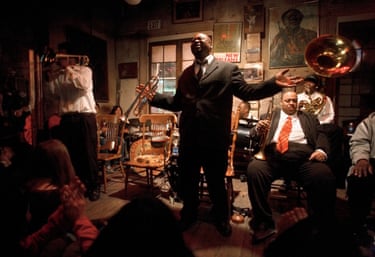
Louisiana, 2007, Tyrone Turner
Trumpeter Kenneth Terry and the New Birth Brass Band play at Preservation Hall, two years after the devastation of Hurricane Katrina. ‘What we do in New Orleans you can’t find anyplace else,’ Terry told Geographic writer Joel K Bourne Jr. ‘The jazz we play comes from the soul’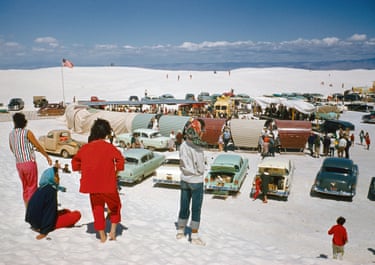
New Mexico, 1957, William Belknap Jr
Picnickers gather at Great White Sands, where snowy-soft gypsum forms a 140,000-acre sandbox. Curving shields protect picnic tables from the blowing wind and glaring sun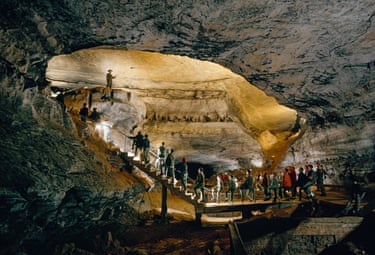
Kentucky, Booth’s Amphitheatre, 1964, David S Boyer
From an otherworldly pulpit, a National Parks Service guide addresses visitors to Mammoth Cave, the world’s longest known cave system at 390 miles of passageway. Standing on the same rock in 1876, actor Edwin Booth delivered Hamlet’s soliloquy, giving the chamber its name: Booth’s Amphitheater Photograph: unknownKioskNews shows a cleaned-up reading view extracted from the publisher’s page — the original always lives on their site, not ours.