World’s tallest Day of the Dead sculpture erected in Mexico City

Mexico City has broken a Guinness World Record during its preparations for this year’s Day of the Dead (Día de los Muertos) celebrations. At nearly 110 feet tall, the colorful sculpture of a female skeleton currently standing in the capital city’s town square (the Zócalo) is officially the world’s tallest La Catrina monument. The roughly 11-story project made from steel and fiberglass required about 140 people to assemble, and overshadows the town of Puerto Vallarta’s 92.3-foot Catrina built back in 2023. The height isn’t the only impressive aspect, either. Her purple dress measures over 88 feet long, while the memorial altar (called an ofrenda) is surrounded by an estimated 70,00 marigold plants grown in the nearby Xochimilco borough.
Observed each year on November 1 and 2, Mexico’s Day of the Dead is famously dedicated to celebrating and honoring deceased family members and loved ones. Historians are divided on its exact origins—while some researchers contend it possesses genuine Indigenous pre-Hispanic roots, others argue the holiday is a more recent rebrand of Spanish traditions intended to promote cultural pride. Regardless of the answer, Day of the Dead has evolved into one of the country’s most popular and iconic observances. Every year, celebrants often wear skeleton-themed costumes and construct ofrendas, while families and friends gather to fondly recall the departed.
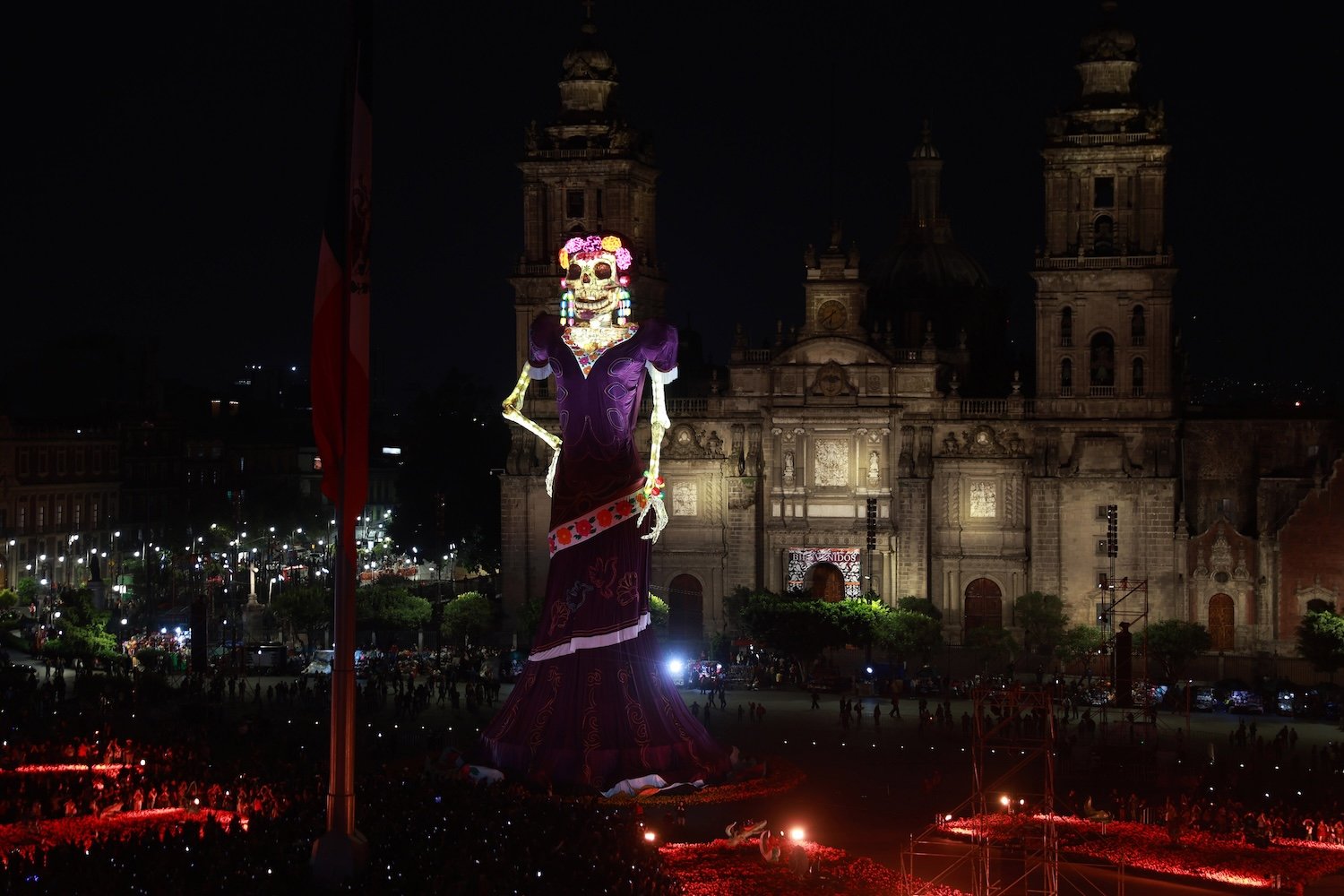
Apart from its size, Mexico City’s record-breaking sculpture is a relatively traditional example of La Catrina, one of Day of the Dead’s most recognizable figures. It’s also much easier to trace La Catrina’s history compared to the holiday’s origins. The figure is based on early 20th century Mexican illustrator José Guadalupe Posada’s most famous work, “La Calavera Catrina” ( or “The Elegant Skull”). Posada’s illustration was released posthumously, and depicts a woman’s skeleton dressed in stylish clothing. Art historians widely view “La Calavera Catrina” as a critique of upper-class Mexican women who attempted to mirror European fashions of the era. Posada’s piece was later expanded upon by the muralist Diego Rivera in 1946-1947.
Similarly inspired iconography has since become a mainstay of Day of the Dead celebrations. La Catrina sculptures like the new record breaker in Mexico City are frequently surrounded by marigolds. Also known as cempasúchil, the flowers are traditionally believed to help guide spirits home with their scent and colorful petals.
Like life itself, Mexico City’s building-sized La Catrina is only temporary. Admirers will be able to visit the installation and its altar only until November 2.
KioskNews shows a cleaned-up reading view extracted from the publisher’s page — the original always lives on their site, not ours.