Justice Sudhanshu Dhulia at Idea Exchange: ‘If decisions were being taken only by CEC, it is serious… We must have reliable, democratic institutions’
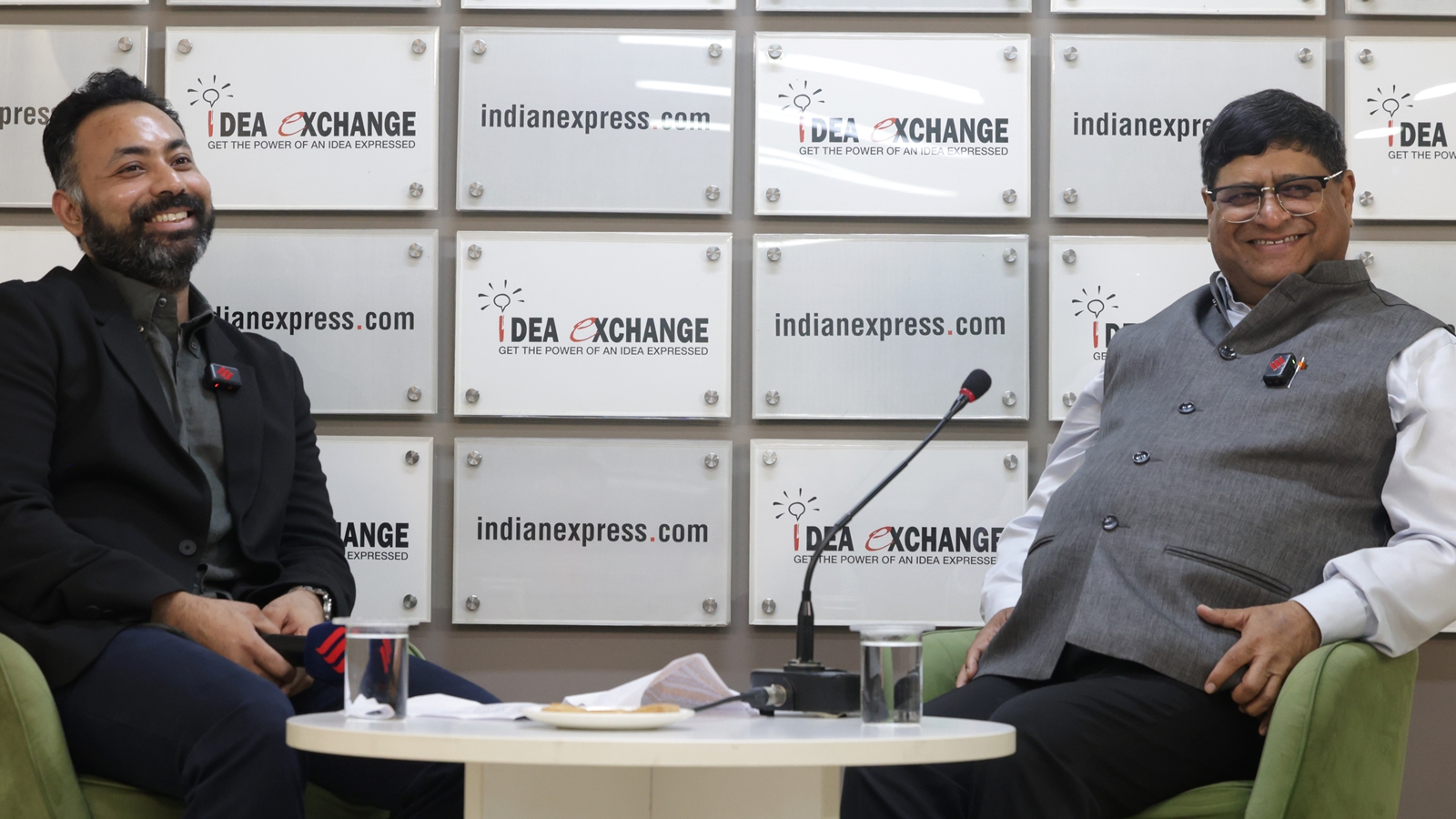
Justice Sudhanshu Dhulia on importance of protecting Election Commission’s independence from Executive dominance, burden of proving citizenship and why prolonged incarceration of Umar Khalid raises questions of liberty. The conversation was moderated by Aamir Khan, Head – Legal Project, The Indian Express (Digital)
Aamir Khan: The Indian Express recently reported on the Election Commission and the internal rupture. In something this significant, what should the judiciary’s role be? Should the apex court take suo motu cognisance in matters of such public importance?
If the decisions of the Election Commission of India were taken only by the Chief Election Commissioner (CEC), the way it has been presented by The Indian Express, then it becomes a serious matter. But we do not know, and it’s too early for anyone to say. The other side has not been heard. But if it is what you said it is, then it is, of course, serious. I am not denying it. The judiciary, in a related matter, has already taken cognisance of it. So this matter may go there. The matter is sub judice. On its own, the judiciary can, but it depends on case-by-case basis. The judiciary should also exercise a lot of restraint, so unless and until there are very compelling reasons, the judiciary normally would not.
Aamir Khan: There was a split verdict in the Supreme Court on the appointment of the Chief Election Commissioner and Election Commissioners. During the arguments, the government compared the Collegium system with appointments to the Election Commission (EC), which Justice Dipankar Datta called disquieting. Should there be any comparison at all between Collegium appointments and appointments to the EC?
In 2023, a Constitution Bench, in the Anoop Baranwal vs Government of India case, decided that although Article 324 clearly states that the appointment of the Chief Election Commissioner and Election Commissioners will be made by the President, subject to the law made by Parliament, the law was not made for more than 70 years. It is a very scholarly, detailed judgement, an almost unanimous judgement. One judge differs on a minor aspect, but that says that there must be some law on it, and these appointments cannot be made by executives alone. So what the Supreme Court said in that is: till a law is made, the Prime Minister, leader of Opposition, and the Chief Justice will be there. The idea behind it was that it should not be merely a Cabinet decision, considering the independence of this body.
On bail for Umar Khalid | Umar Khalid should have got bail earlier because, in that case, certain parameters were set for the five people granted bail. Umar has done much less, yet it has not been explained why he was left out
Democracy is not just about voting for a political party, which comes to power and replaces the earlier one; we must have stable, reliable democratic institutions, and the Election Commission must inherently be an independent body. So, at the root of it was: how can we have an independent Election Commission? The procedure was absolutely important, and there should be absolute independence, with no political executive dominance in it. It was said with that spirit.
Now, in that judgement too, this was subject to the law made by Parliament. Parliament then made the 2023 law, which says it should be the PM, leader of Opposition, and one cabinet minister nominated by the PM. Justice Dipankar Datta repeatedly asked the Attorney General whether the cabinet minister could differ, and even the Attorney General said no. So the matter was being looked into and there were several petitions arguing that the selection committee should reflect independence from the Executive. That matter was in the court for two years, and pleadings were exchanged. Initially, the government never said that it had to be referred to a larger Constitution Bench; that came at a later stage. Secondly, Justice Datta said what was required was an application of settled constitutional principles. Under Article 145, only a matter involving a substantial question of law relating to the Constitution — one that has not been settled — should go to a Constitution Bench. But here, everything was settled; nobody can deny that the Election Commission should be independent. Whether the procedure is fair or the people involved have independence can be seen through settled judicial pronouncements. So I agree with Justice Datta that there was no reason to refer this to a Constitution Bench. As for the comparison with the Collegium system, Justice Datta said this was only an oral submission by the Solicitor General, not part of the written pleadings. He said he would not have addressed it, but since it is repeatedly argued that judges appointing judges is not fair, the comparison was made: if that can be justified, so can this — no interference from outside. First, it is not true that whatever judges decide always happens. He gave examples where the collegium recommendations have not been followed, and even routine matters like transfers of judges from one High Court to another have, in some cases, not been complied with.
Story continues below this ad
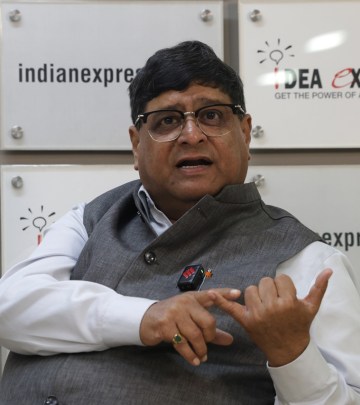 Justice Sudhanshu Dhulia. (Express photo by Renuka Puri)
Aamir Khan: You have dealt with the question of language in your judgement in the context of Urdu and Marathi. We recently saw the Vande Mataram debate, with Carnatic vocalist TM Krishna moving the SC against penalising those who cannot sing all six stanzas. Drawing from your own jurisprudence on liberty and freedom, what is your view on this?
It is already a law that is settled by the Supreme Court in one of the most important judgments called Bijoe Emmanuel & Ors. vs State of Kerala. It is the 1986 judgement by one of my most favourite judges, Justice O Chinnappa Reddy. There were three girls in Kerala studying in a government school who belonged to a religious minority called Jehovah’s Witnesses. In their sect, they take what is said in the Bible literally and are not allowed to sing for anybody but Jehovah. So when the National Anthem was sung in the morning, these three girls didn’t sing, but stood up respectfully. They were compelled to sing; they refused and were removed from the school. They filed a writ petition before the Kerala High Court, which was dismissed. A writ appeal before the division bench was also dismissed. Finally, they came to the Supreme Court. Justice Reddy and another judge allowed the petition and said it was not an insult to the national anthem. The entire Prevention of Insults to National Honour Act, 1971, was discussed in the judgment. It says, how do you insult a national flag? When you burn it, by an overt act, you disrespect or insult it. There was no such thing here. When the national anthem was being sung, these girls respectfully stood up. Since their religion banned it, they didn’t sing. Justice Reddy said that at the bottom of it is the spirit of tolerance in our Constitution. Religions teach tolerance, our culture preaches tolerance, our Constitution practises tolerance; let us not dilute it. I think this is the law, and this is how it should be taken. There is absolutely no doubt that Vande Mataram is the national song. The controversy is whether the first two stanzas have to be sung or all six. That will be decided by the Supreme Court. What happens if somebody doesn’t sing? On that, there is already a law.
On former judge Yashwant Varma | The matter could have been dealt with in a better way, perhaps… On one hand was transparency, because of which this became known. But independence of the judiciary also has to be taken into consideration
Aamir Khan: Delhi saw several incidents of sexual violence, including a recent gang rape and the students of Lady Sriram College (LSR) have been holding protests over it. The university association has since asked students to attend classes online. Where is the disconnect in ensuring safety and protecting their right to attend college?
It is like saying if food poisoning happens, don’t eat. Who can disagree with this proposition that the life and liberty of every citizen is of prime importance? The Constitution of India gives it to you; Article 21 protects life and liberty. This particular remark about asking girls seems totally absurd. As far as courts are concerned, you are saying that they should interfere in this matter. The court will interfere when the matter comes to the court.
Story continues below this ad
Saurabh Dwivedi: In the case of Justice Yashwant Varma, what happened, and could the Supreme Court have dealt with it in a better way? Should the court not have taken suo motu cognisance of the matter?
The reports of two inquiries are in front of you. And he has resigned. I don’t think there is any scenario of impeachment left, because he is no longer a judge of the High Court. And the law on that is the Supreme Court’s law that the moment a judge resigns, acceptance is not required. Yes, it could have been dealt with in a better way, perhaps. When this incident happened, the Chief Justice at that time, Justice Khanna, had the alternative where all these video recordings did not go into public domain. But he said, no, this should go out. The independence of the judiciary also has to be taken into consideration. On one hand was transparency, because of which this became known; otherwise you wouldn’t have known at all. Everyone found out this happened, and this news was not banned. But at the same time, it was the police’s procedure, which was stopped. An in-house inquiry took place. In the inquiry too, it came out that this happened, and he resigned. Appreciate this too.
On precedents not being followed | A definite, settled opinion must come from the SC because all other courts depend on its verdict on what the law is. If that keeps changing, it unsettles many things. That should not happen. Unfortunately, it is happening more
Saurabh Dwivedi: In the initial hearings of SIR regarding its legality and validity, in the bench that heard it; you were also there. Do you agree with the final verdict?
I can’t say because when I was there, I was only a vacation judge for a day or two. After hearing it, we passed an interim order regarding the Aadhaar card and other things. But the actual arguments did not take place before me. So this question is better asked to those before whom the full arguments took place and who then took the decision.
Story continues below this ad
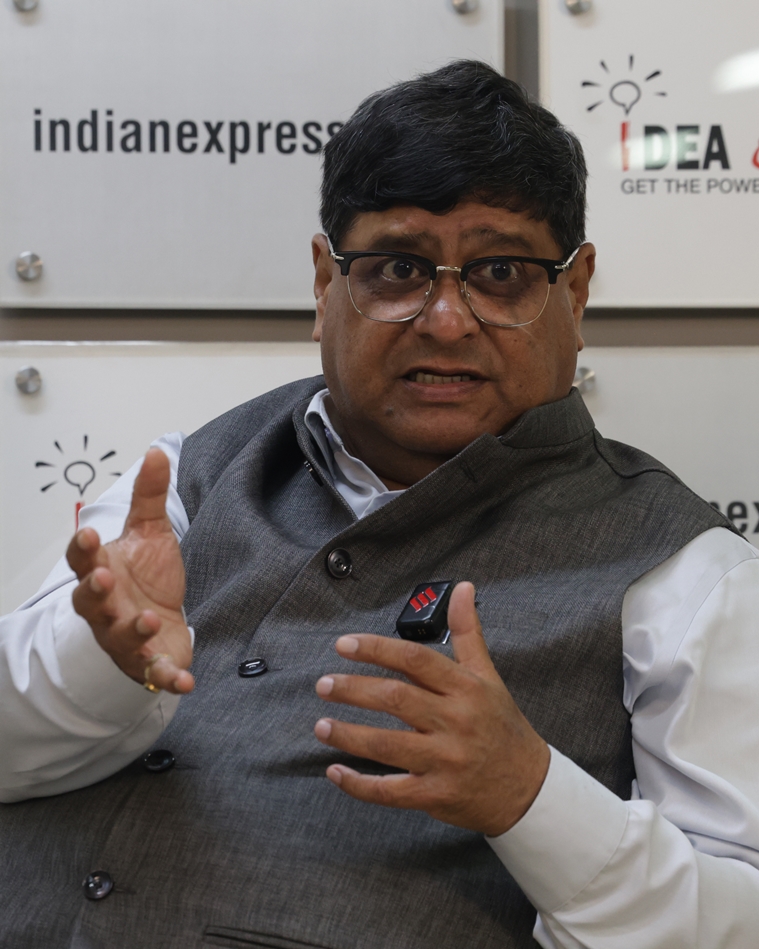 Justice Sudhanshu Dhulia. (Express photo by Renuka Puri)
Jagriti Rai: There seems to be a gap between the legal principle of bail and how society perceives it. Why is bail so often seen as a victory for the accused, rather than simply a legal right pending trial?
Bail is the rule and jail is an exception is the established principle. Justice VR Krishna Iyer said it in one of his judgements. Jail should be an exception, particularly in an ongoing trial, where the verdict has not been pronounced as yet. Now, as far as celebration is concerned, probably you are referring to those heinous offences where people should not have been released. That’s the unfortunate part of it. Like the people who came out after that rape in Gujarat. Society has degenerated. You can’t blame the courts and the system for it. It is a societal issue.
Somya Tyagi: What is your take on precedents not being followed in the Supreme Court? There was a seven-year ban on crackers, and then it was partially removed. There was also the Governor of Tamil Nadu case, which was later overturned.
It shouldn’t happen, but it does. About the Tamil Nadu case, the first judgement by Justice J B Pardiwala and Justice R Mahadevan on how long the governor can keep it, was a judgement required under the circumstances. It was later reviewed and went to five judges. The first judgement brought a solution to a problem. The second judgement, which almost overturned it, though not fully, creates a problem for the solution. That’s the difference. Many conclusions in the later judgement leave the problem unresolved. Though that judgement was very bold, even unprecedented, it was required under the circumstances. By and large, a definite, settled opinion must come from the Supreme Court because all other courts depend on its verdict on what the law is. If that keeps changing, it unsettles many things, and that should not happen. Unfortunately, it is happening more often than not.
Story continues below this ad
Tista Roy Chowdhury: On September 13, Umar Khalid completed six years in jail without trial. In this kind of difficult case under UAPA, what should the State’s duty be to ensure the trial is not endlessly delayed?
In Umar Khalid’s case, I have read that judgement which denies bail to him and Sharjeel Imam and gives bail to others (Gulfisha Fatima, Meeran Haider, Shifa-ur-Rehman, Mohd. Saleem Khan, and Shadab Ahmed). Before doing that, certain parameters have been set. Bail should be given to Umar Khalid, and yet it is denied to him. If you read the judgement, the word chakka jam (road blockade) comes at least a dozen times. For students, how many times has one done some kind of a small-time chakka jam? Chakka jam doesn’t mean six years in jail! A lot of people have reservations about that, and also about the fact that towards the end of it, it says he can apply only after one year, which at least the court should not have said. He should have got bail earlier because, in that case, certain parameters were set for the five people granted bail. Umar Khalid has done much less than that, yet it has not been explained why he was left out.
Ritika Chopra: When the SIR matter first came to the vacation bench, you made an intervention. The moment the question of citizenship came in, you told the lawyer, ‘Be careful, don’t go into that question. That’s not the Election Commission’s job.’ When you zoom out, it has become a citizenship exercise. What do you think of it?
This is the law laid down by the Supreme Court in several earlier judgements: this is not the Election Commission of India’s job. But a voter has to be a citizen of this country. The problem is the enormous conditions that have been imposed. When I was hearing the matter, nobody had asked for a stay, so why give one? They were only asking for Aadhaar and voter cards to be accepted, so we said fine. That’s all I did, which they agreed to.
Story continues below this ad
Ritika Chopra: During the SIR exercise, the Supreme Court had said that everyone flagged as having a ‘logical discrepancy’ should be heard, given an opportunity to make their case, and then have a decision taken accordingly. Our investigation found that Goa did that and felt that 97 voters should be brought back onto the rolls, but then its CEO kept writing to the Election Commission asking it to reverse those decisions. Yet these voters were still left off the rolls. Does that amount to contempt of court?
Contempt of court is a deliberate and wilful disobedience of a court order. So, first of all, whether some order has been violated has to be proved, and whether that violation was deliberate and wilful also has to be proved. It’s quite possible that they may say, and I’m playing the devil’s advocate here, ‘No, instructions were given, but some lower-level officers have not followed them.’ Contempt of court is not an easy path to tread here.
Khushi Sinha: You’ve said in the past that ‘if someone is living in India, then that person should be presumed Indian’. Should the State, therefore, bear the burden of proving otherwise?
That was said in the context where the Ministry of External Affairs had taken out a circular saying that a passport is only a travel document and not proof of citizenship. Very technically, it may be correct, because a passport is to show other countries that you are a citizen of this country. There are various other parameters of citizenship which you have to fulfil in India to avail the laws and the benefits… If I am staying in India, then I am an Indian. The burden of proof to prove that I am not a citizen is on who is asking. It may be CBI, police, whatever. So you can’t put the burden of proof on me to state my citizenship. Let’s say I will give some proof. But what about a villager who has not gone to any school? What proof will he get? His name may not even be registered in the Gram register. There may be some people like that. We don’t get a report even from authorised agencies for years.
Story continues below this ad
Aamir Khan: Which is your favourite film of Tigmanshu Dhulia, your younger brother?
I really liked Haasil (2003). I think Paan Singh Tomar (2012) is a complete film.
KioskNews shows a cleaned-up reading view extracted from the publisher’s page — the original always lives on their site, not ours.