‘Second ball’ may be a Sunday league mantra but Yates showed its top-flight relevance

Modern football is more systematised and data-driven than ever but some things never change. Winning the first ball is important but the second ball – the Holy Grail for Sunday league footballers – is often more so.
Nottingham Forest’s 3-1 win against Manchester City last weekend featured a classic example. Forest led 2-1 inside the last 20 minutes but City, lifted by Rayan Cherki’s sweet half-volley, were pushing for an equaliser.
Another City attack comes down their right: after Jair Cunha’s clearing header from a deep Matheus Nunes cross, the ball loops up in the air before descending inside the home penalty area.
Ryan Yates, Forest’s old-fashioned midfield general, is being pressed from behind by the Argentina international Enzo Fernández as the ball drops. Yates stands his ground, using his strength to hold off his opponent’s muscular challenge. Fernández tries to impose himself, too, but ends up on the turf.
Not only does Yates win that crucial one-on-one, by cleverly improvising an overhead kick to shift the ball away from danger he inadvertently begins a counterattack that arguably changes the course of Forest’s season.
Liam Delap shepherds the ball to Morgan Gibbs-White. Enzo Maresca’s team are hopelessly exposed and Gibbs-White devours the space in front of him with a driving run.
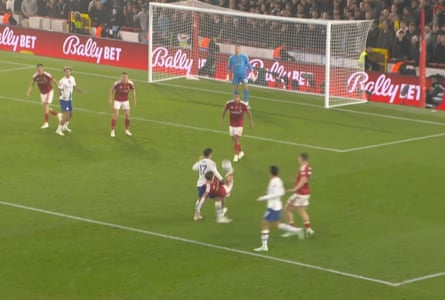
He lays a pass off to Delap, who takes one touch before swerving a sensational shot into the far corner for 3-1. It is a memorable move that will surely compete for goal of the month. But none of it would have been possible without the dirty work of Yates: a show of strength and desire from the captain at the other end of the pitch.
Oliver Glasner understands the importance of the moment and sprints to celebrate with his players. After a barren scoring run Delap suddenly has two goals in one afternoon. The home fans are delirious. Twelve seconds after Yates won the duel, Forest have a two-goal cushion rather than a desperate fight to maintain their lead.
The second ball is a pleasingly old-school term but remains of paramount importance. Visit your local amateur club and you are likely to hear it being shouted as a motivational mantra.
At grassroots level it’s a reminder to teammates that finesse and creativity are all very well but it’s hard work, desire and a refusal to let your opponent get the better of you that win matches.
And it remains part of the elite game’s lexicon. Premier League managers sometimes point to an upcoming opponents’ second-ball prowess – a back-handed compliment if ever there was one. The hidden meaning: “They feed off scraps at set pieces. They don’t create from open play.”
after newsletter promotion
After seeing Southampton Under-21s lose to Wealdstone in the National League Cup a couple of years ago, I mentioned to the then Saints manager, Simon Rusk, that his goalkeeper had been shouting “second ball” throughout.
“To be honest,” Rusk replied with amusing frankness, “I’m not sure some of them even know what second ball means.”
Managers like relying on data. They like predictable outcomes. They prefer to remove risk, reduce chaos and exert control over as much of the game as possible. But while the outcome of a one-on-one duel can never be certain, the consequences can often be far-reaching. That’s why second balls matter.
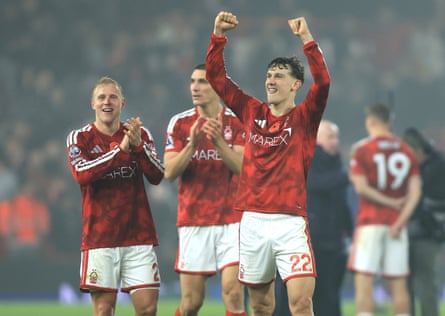
Against City Yates was named in Forest’s starting lineup, and given the captain’s armband, for the first time this season. Glasner, asked how he had motivated his players, revealed: “Ryan Yates spoke. I played more than 500 games as a player, I’ve managed, I don’t know, 500 games … and I’ve never heard such an inspiring speech.”
Glasner’s captain backed up stirring words with action. If there was a sense Yates’s star was fading – that his attributes of graft, tenacity and box-to-box drive were losing currency – then it was emphatically extinguished at the City Ground.
Win the first one if you can. But it’s the second ball that often makes the difference.
KioskNews shows a cleaned-up reading view extracted from the publisher’s page — the original always lives on their site, not ours.