The Scottish Ensemble review – singular sounds from an ever-adventurous string orchestra
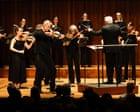
It’s not every day a concert promises “Bach & Blood”, nor delivers it so thoroughly. There were no massacres from the Scottish Ensemble, mercifully, just a characteristically singular bit of programming from this ever-adventurous string orchestra that framed Irish composer David Fennessy’s 2024 Blood with music by Bach and Arvo Pärt.
On 7 July 1720, while JS Bach was away in Carlsbad, his wife Maria Barbara died suddenly, buried before he could return. She was just 35. “Sei solo” – you are alone – the composer wrote at the top of his collection of Sonatas and Partitas for Solo Violin completed soon after. A slip of pen, misspelling “Sei Soli” (six solos), or a deliberate play on words? The intensity of the works – particularly the monumental 15-minute D minor Chaconne, with its weeping chromatic theme – suggest the latter.
How touching, then, to hear it (performed with disarming directness by Jonathan Morton) haloed by ghostly chorales, the violin no longer solo but one half of an other-worldly duet. Helga Thoene’s arrangement extrapolates these hymns from fragments within the piece, and the effect is uncanny. The nine talented voices of the Chamber Choir of the National Youth Choir of Scotland (directed by Christopher Bell) weren’t helped by an imbalance among parts, remaining a delicate but distant presence.
Voices are just a memory in Pärt’s Greater Antiphons – the composer’s own arrangement of his Sieben Magnificat-Antiphonen for string orchestra. In the absence of counterpoint all emphasis is on texture and gesture, and the Scottish Ensemble mined every relationship between bow and string – percussive, bell-like, husky and half-breathed – to characterise these tiny prayers.
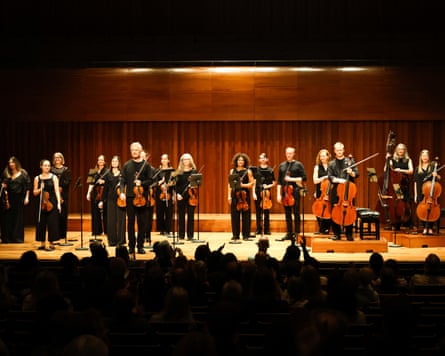
In many ways the Pärt was the musical dock, leading us gently forward before we were pushed out to sea by the Fennessy. There’s no sight of land to orient the ear in this not-concerto for solo violin, strings and voices, whose seven movements take a Hildegard of Bingen chant “O ruby blood” as their starting point. Morton was a fierce soloist, refusing to tame the composer’s “hard-earned virtuosity”, sending out little pulses of musical electricity that sparked around the ensemble. But for all the work’s prickly complexity, it shares Pärt’s urge towards a single unison pitch – a quest never quite fulfilled, but tantalisingly close in the smudgy echoes of violin and voices that bring Blood to its whispered close.
KioskNews shows a cleaned-up reading view extracted from the publisher’s page — the original always lives on their site, not ours.