How natural disasters are putting China’s neighbourhood diplomacy to the test
Cross-border disasters along China’s frontiers are putting Beijing’s neighbourhood diplomacy to the test as climate shocks grow and expose strategic vulnerabilities.
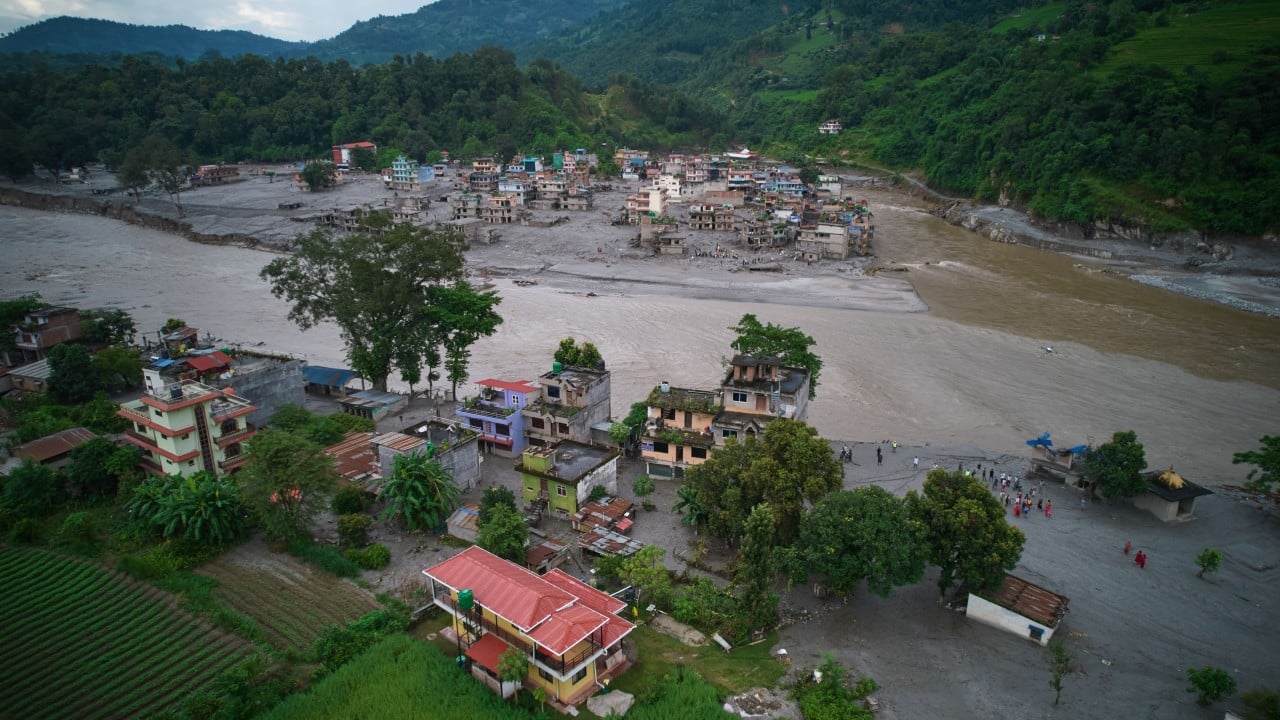
The stakes were highlighted last week after a sudden glacial collapse in the Himalayas unleashed a torrent of mud and flooding that ravaged nearby villages and the Gyirong Port between China and Nepal, leaving more than 1,250 dead in Nepal and 21 dead in the Tibet autonomous region. Thousands also remain missing.
Beyond the Himalayas, a wave of extreme weather also battered China’s southern frontiers, with torrential rain triggering severe flash flooding and landslides on China’s borders with Vietnam and Laos last week.
02:00
Symbolic funeral held for Nepal flood victims as police collect DNA to help identify remains
The record floodwater level submerged economic zones and forced the closure of a crucial checkpoint between China and Laos, as well as several key highways and an airport in the developing Southeast Asian country, over the weekend.
Liu Zongyi, a senior fellow and director of the Centre for South Asia Studies at the Shanghai Institutes for International Studies, said dealing with climate-driven disasters would be a “new subject” for China’s foreign policy.
Amid the bitter power rivalry with the US, China has in recent years shifted its focus to ties with neighbouring countries, which it sees as crucial to national security and a buffer against pressure from the West.
At a high-profile central working conference on neighbourhood diplomacy last year, Chinese President Xi Jinping said neighbourhood was the “foundation of security and development” and that maintaining stable ties with immediate neighbours would be a top priority in China’s overall diplomatic strategy.
KioskNews shows a cleaned-up reading view extracted from the publisher’s page — the original always lives on their site, not ours.