Aboard BRP Diego Silang: Warding off interlopers, exercising with partner navies
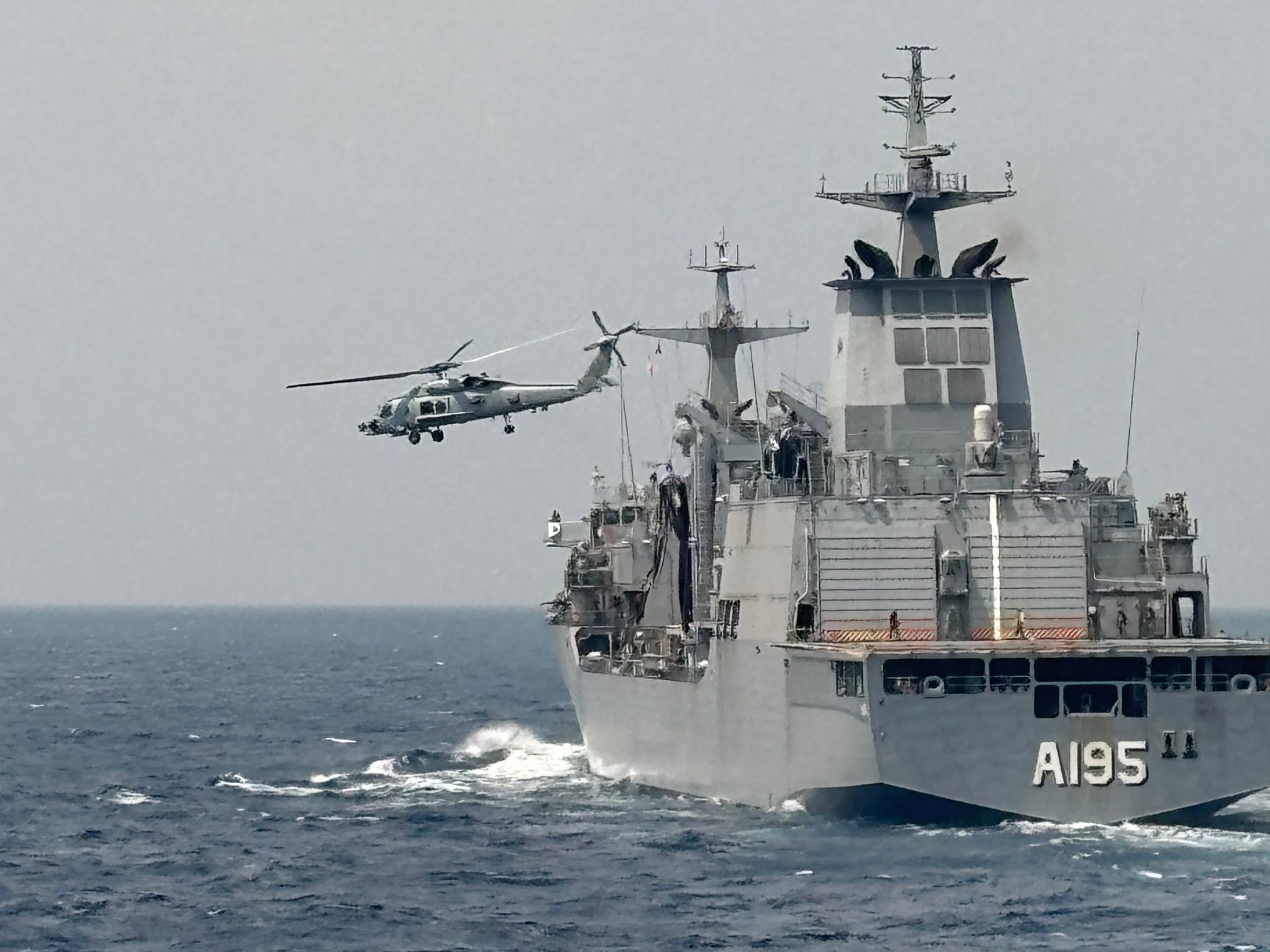
- The BRP Diego Silang participated in the 19th Multilateral Maritime Cooperative Activity (MMCA) off the coast of Palawan, enhancing its operational capabilities alongside the US and Australian navies.
- Captain John Pierce Alcos emphasized the importance of real-time information and precision during complex operations, particularly during a replenishment at sea exercise with the HMAS Supply.
- The Silang's crew demonstrated strong cohesion and discipline, successfully executing challenging maritime exercises despite rough sea conditions, marking a significant step in the Philippine Navy's modernization efforts.
This is AI-generated. Read the article for full context. Report any errors.
ABOARD BRP DIEGO SILANG — After days of issuing challenges to Chinese vessels that insisted on entering opera boxes it shouldn’t, complicated formations that involved four ships from three nations, and a mid-sea refueling simulation, Captain John Pierce Alcos had a stern but gentle reminder to the bridge of the BRP Diego Silang: out at sea, the accuracy of real-time information is of utmost importance, especially when you’re sailing in close quarters with warships of partner countries.
It is proficiency in executing complicated operations out at sea and the lessons to be learned after those operations that are at the core of the many Multilateral Maritime Cooperative Activity (MMCAs) the Philippines has carried out, including the 19th iteration that took place off the coast of Palawan in the West Philippine Sea from August 19 to 25.
“MMCAs give us the opportunity to enhance our capability and competence in the conduct of combined maritime operations with other navies such as the Royal Australian Navy and the United States Navy. And this is an invaluable avenue for us to seamlessly integrate with them in terms of HADR or even during actual war,” Alcos, commanding officer of the Silang.
After the Silang finally docked at the Philippine Naval Operating Base Subic (NOB Subic) after almost a week out at sea for the MMCA, Alcos would commend a larger group of the Silang’s crew — all of its exercises, including the tricky replenishment at sea or RAS, were executed with near-perfection, despite the rough conditions at sea.
It has been an exciting and grueling freshman year for the Silang, a South Korea-made guided-missile frigate, that was inaugurated in December 2025. It spent more than a month in Australia for Exercise Kakadu, was called to duty to provide support for international summits in the Philippines, and has been part of several MMCAs since its commission.
Of needles and giants
Inside the Silang is a community bound by both formal hierarchy and ties akin to a family.
The team under Alcos has been together even before her commission, as batches underwent training in South Korea. The Silang is only the second of the Malvar-class frigates, and the latest asset in the Philippine Navy’s long-delayed modernization.
It’s the kind of cohesion and discipline that becomes especially important in a military that’s finally pivoting in focus to external defense. The shift is happening after years of grueling modernization efforts and a quick expansion of its defense and security ties.
The 19th MMCA showcased the capacity of the Silang to work with the Philippine Coast Guard’s (PCG) BRP Teresa Magbanua, the United States’ USS Sta. Barbara, and Australia’s HMAS Supply in conditions that are, admittedly, less than ideal.
In the West Philippine Sea, it’s only really in the summer months when the waters are calm.
On August 22, as the Silang sailed in the area of Escoda (Sabina) Shoal, she worked with both the USS Sta. Barbara, the HMAS Supply, and the two countries’ Boeing P-8 Poseidons. Together, the three countries conducted an Anti-Submarine Warfare (ASW) exercise.
In both rounds of the series, the three countries were able to detect and destroy the decoys that were stand-ins for a submarine.
ASW exercises are akin to finding a needle in a haystack. One of the ships deploys a submarine decoy, which both the Poseidons and Silang then try to locate.
Both the US and Australia are long-time partners of Manila. The US is its sole treaty-ally while Canberra, for the longest time, has been the only other country with which the Philippines has a military training agreement with.
Ties with Australia have only deepened further under President Ferdinand Marcos Jr. In September 2023, bilateral ties were elevated to a strategic partnership — a signal of both Manila and Canberra’s commitment to each other politically, economically, and strategically.
It was with the HMAS Supply, a replenishment oiler, that the Silang practiced the most complicated of exercises for this MMCA iteration — a replenishment at sea (RAS).
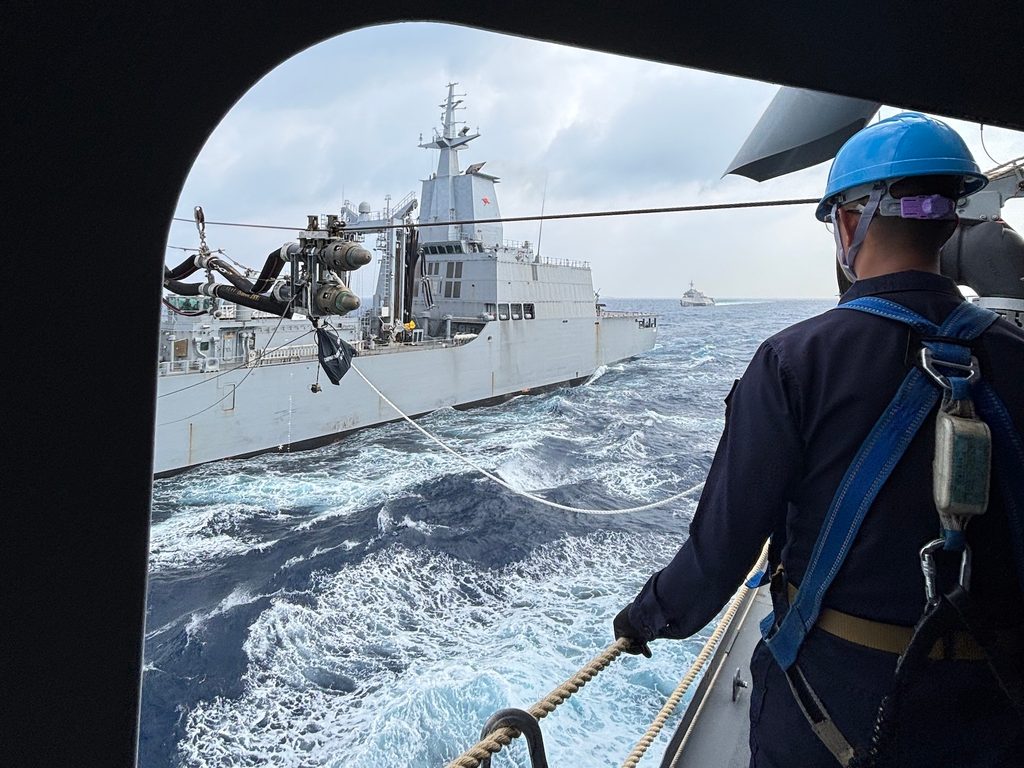
On August 25, the Silang and Supple were meant to simulate both refueling at sea and the transfer of dry goods. It’s a complicated and intricate procedure involving giant vessels over 100 meters long (170 meters, in the case of the HMAS Supply) and tonnage in the thousands or tens of thousands.
Days prior to the exercise itself, both crews worked in close coordination for the planning.
On the day itself, the ships’ bridges and communication centers were abuzz with activity as the vessels continuously updated one another on their speed, direction, and distance.
Over and over, the Supply confirmed with the Silang if it was her intention to head west. Over and over, the Silang confirmed those intentions.
To practice refueling at sea, the Supply first shoots two thin strings — one right at the Silang’s bow and other toward midship, where a receptacle for fuel is located. Once the smaller strings are secure, a heavier steel cable is hauled from the Supply to the Silang before a fuel pipe from the Australian carefully and slowly inches closer to the Philippine ship.
The whole time, both the Silang and Supply must maintain their “range, bearing, and distance,” explained Alcos. For the whole time that the two ships are linked by cables and strings, they must sail as one.
It was not an easy feat. Two of the Supply’s personnel transferred to the Silang to help coordinate the refueling exercise. Another officer was a guest on the Silang from the beginning as the expert on the complicated procedure.
Even as the Supply’s and Silang’s crew were alternately tightening the lines or giving it more slack, the bridge was also coordinating on whether the Philippine ship should inch forward or back.
The whole time, the two massive ships were just between 60 to 30 yards apart from each other — roughly the length of a professional basketball court.
It was the precision required for the activity that Alcos later emphasized to personnel on the bridge. During a RAS, mistakes could be catastrophic.
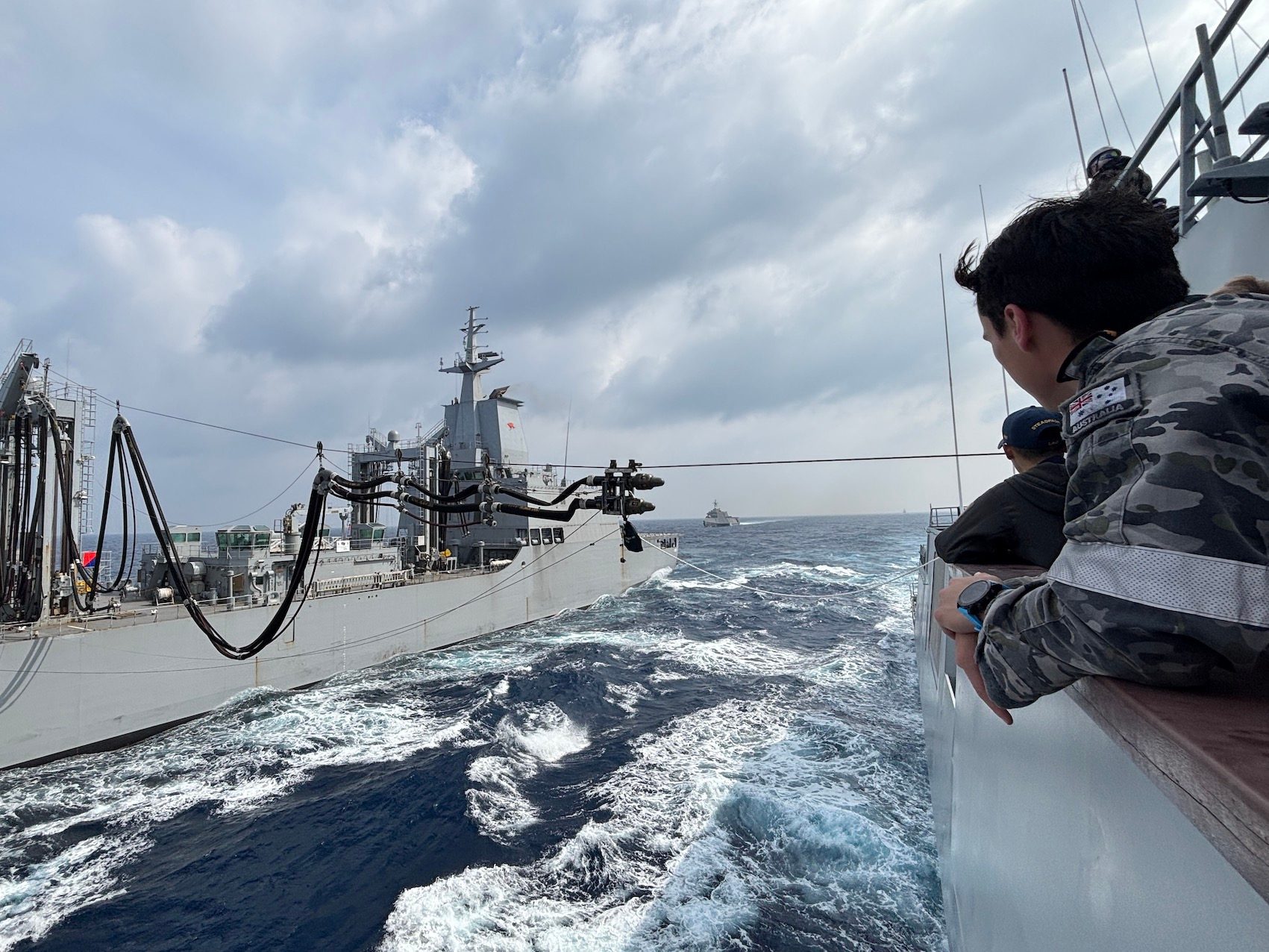
As the RAS was taking place, one officer quipped that having a supply ship of their own would mean going home less often. A supply ship like the HMAS Supply allows a fleet to remain at sea for longer periods. The Silang is designed to stay at sea for up to a month at a time.
After days of challenging Chinese vessels — both the white and gray kind — that insisted on tailing the Silang or the Magbanua, and conducting complicated procedures with US and Australian forces, it was finally time for the Silang and her crew to head back to Subic.
There were a couple of days, and hopefully a whole weekend, of rest to look forward to before the next possible mission.
What had been an action-packed week at sea for journalists embarked on the Silang was, ultimately, just another work week for the Philippine Navy’s newest frigate. – Rappler.com
KioskNews shows a cleaned-up reading view extracted from the publisher’s page — the original always lives on their site, not ours.