NFL sets penalty record through Week 4 as tensions flare between teams, officials
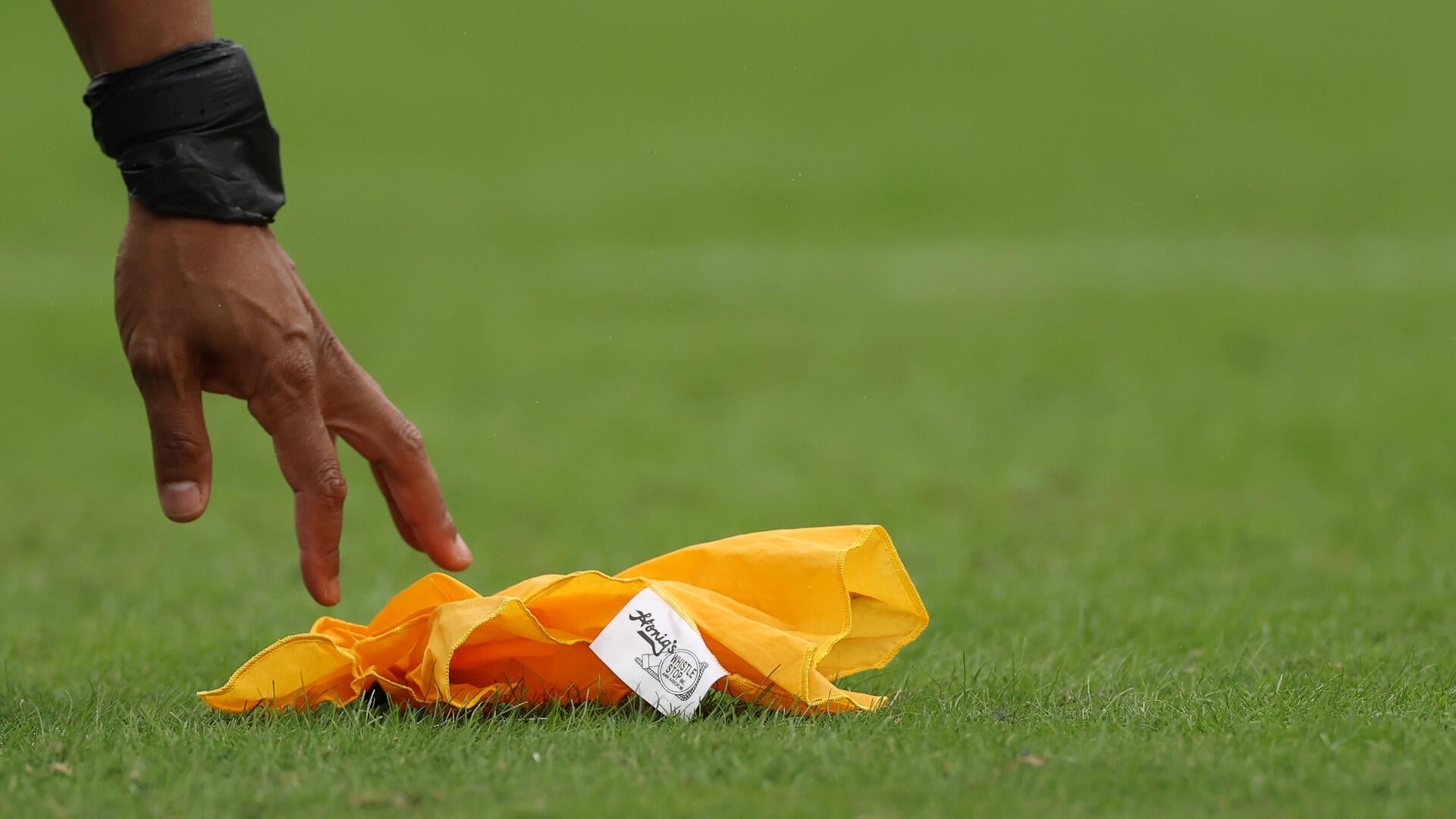
Coaches, players and officials have not seen eye to eye during a flag-happy start to the season

• 3 min read
As important as officials are to the game of football, there is no world in which referees and their decisions should overshadow the players in NFL games. At times over the first four weeks of the 2026 season, it felt as though there was an imbalance in the focus on officials and the teams they moderated. Whether it was a product of poor calls or a lack of discipline from players, the NFL saw a record number of penalties in Weeks 1-4.
According to ESPN, the 963 accepted penalties thus far are the most through Week 4 since play-by-play data became available in 1978. And the 271 accepted penalties in Week 4 alone were the second-most in any week during the play-by-play era.
The following teams last week picked up double-digit infractions.
| Team | Penalties | Yards |
|---|---|---|
16 | 130 | |
14 | 88 | |
14 | 150 | |
13 | 131 | |
13 | 125 | |
13 | 90 | |
12 | 76 | |
11 | 108 | |
11 | 85 | |
10 | 84 | |
10 | 57 | |
10 | 68 |
Twelve teams with at least 10 penalties is an astronomical number. The outlier-level volume of fouls goes beyond just Week 4, though. Perhaps the officials are doing exactly what is asked of them and honing in on points of emphasis. Maybe their quality of performance is at a low. Or possibly teams have been less disciplined in the early going this year than in seasons past. Any of the explanations is possible, or it could be a combination of all of them.
Especially frustrating for teams is that the penalties are not just prevalent but also ill-timed.
According to Warren Sharp, the number of penalties called on third or fourth down in the second half of games is the most in any Weeks 1-4 stretch since at least 2000. The volume of penalties inside the red zone is also a new high. And the 17 touchdowns nullified due to penalties are extremely out of proportion; only five were called back through Week 4 last year, and only four came off the board the year prior. The average over the previous decade was 8.3.
These high-leverage calls halted drives and took points away from offenses. In fact, the uptick in penalties this year strictly impacts the offensive side of the ball. Sharp says the defensive penalty rate is lower in 2026 than in years past, and pass interference calls are below average.
Tensions flare between players, coaches and officials
The impact of the rise in penalties — and in some cases, the absence of calls — has been visible through players' and coaches' frustration with officials. In the New England Patriots' Week 4 win over the Buffalo Bills, coach Mike Vrabel received an unsportsmanlike conduct penalty for arguing a pass interference flag that awarded the Bills a first-and-goal situation. Vrabel called referee Bill Vinovich "sensitive" for penalizing him for the use of profanity.
The NFL suspended two other officials for what it deemed "unprofessional conduct" toward players in Week 4.
A league review of line judge Jeff Seeman's interaction with Trey McBride determined that the line judge used vulgar language at the Arizona Cardinals tight end. McBride initially pleaded for a pass interference penalty he thought should have been called on a third-down incompletion. CBS Sports sideline reporter Aditi Kinkhabwala said McBride was heated in his plea for a penalty flag but did not use profanity toward the official. Seeman faces a two-game suspension.
The league also issued a one-game suspension to referee Adrian Hill for an incident involving Vikings linebacker Eric Wilson. Miami Dolphins running back Ollie Gordon II shoved Wilson into the referee, who then fell backward to the ground. Wilson saw the referee take the tumble and extended his arms to help him up, but instead of taking the assistance, Hill stood up under his own power and began yelling at Wilson.
The NFL Referees Association plans to challenge both suspensions.
"NFL officials have a responsibility to conduct themselves professionally on the field, and the actions in these incidents fell short of that standard," NFLRA executive director Scott Green said in a statement. "Accountability matters, but that should not result in discipline that is excessive or inconsistent with established precedent."
KioskNews shows a cleaned-up reading view extracted from the publisher’s page — the original always lives on their site, not ours.