Why Thailand Needs Historical Pluralism on the 6 October Massacre
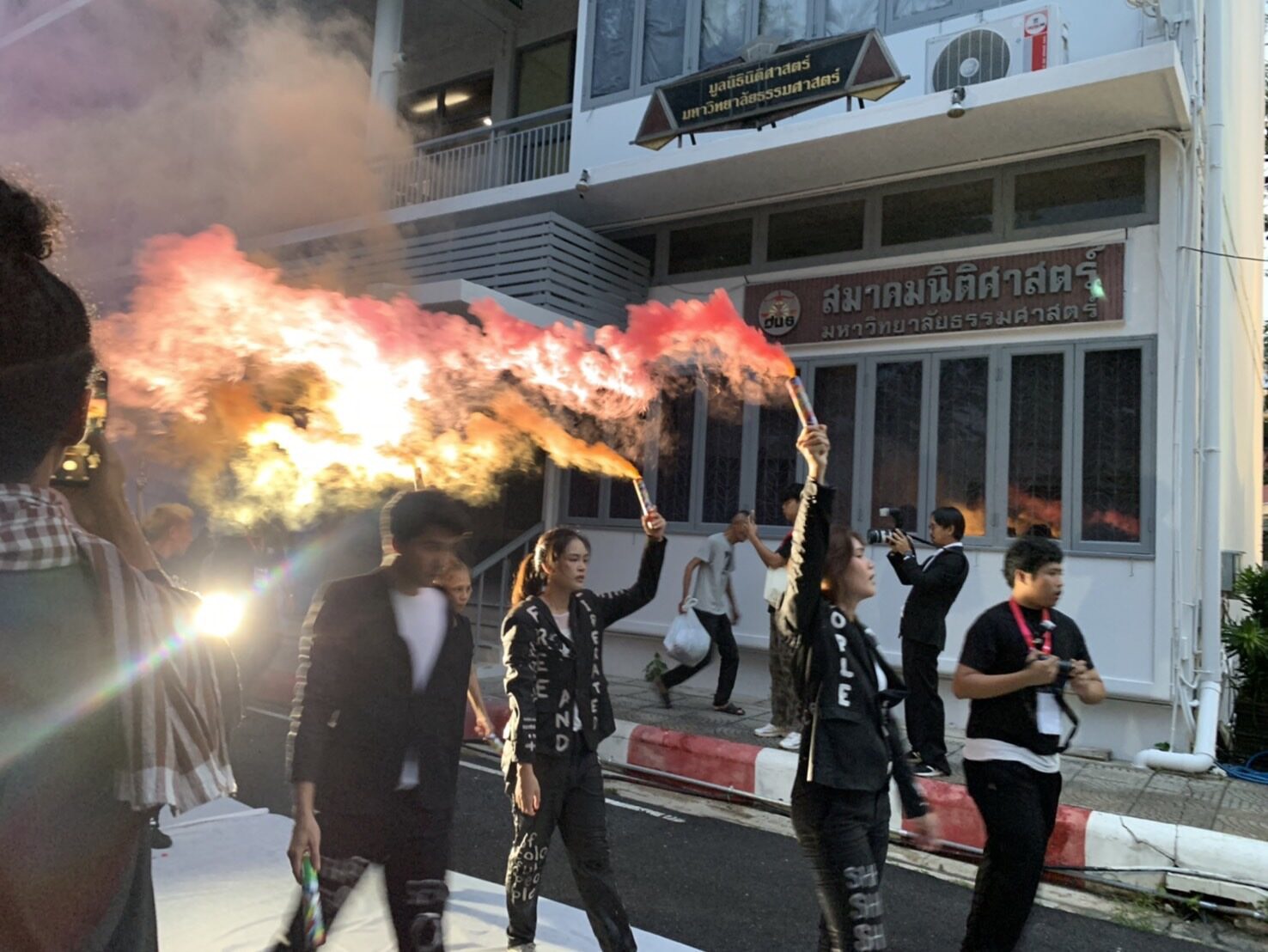
For five decades now, the 6 October 1976 massacre has been a controversial and dark part of the modern political history of Thailand – arguably the darkest.
On that fateful day, armed right-wing ultra-royalist groups and paramilitaries stormed Thammasat University at dawn to suppress student protesters. This ultimately led to the killing of more than 40 people at and around the university, including the lynching of several at Sanam Luang, with some of the bodies set on fire. A military coup subsequently took place; many students were arrested, while thousands fled into the jungle to join the Communist Party of Thailand (CPT).
For five decades, our understanding of what happened then, and why, has fallen into two broad versions.
Two competing narratives
The first is the far-right royalist version, which argues that if the Thai state and right-wing groups had not acted and cracked down decisively at the time, Thailand would have fallen to communism; many more people would have died; there would have been “boat people” fleeing communism as happened in Vietnam after the fall of Saigon in April 1975; and there might not exist a monarchy in Thailand today. Essentially, it is a narrative that it was ‘either we kill them first or they eliminate us’. The fears were real and as a boy at the time, I recalled my father, who then served the Thai Foreign Ministry, saying we should prepare for the worst – that we might have to flee Thailand.
The left-wing version, which sees the students as victims of the brutality of that day, ultimately left them with little choice but to be arrested, hunted down, or to flee into the jungle to join the Communist Party of Thailand (CPT). Theirs is a narrative of right-wing inhumane barbarity—where some laughed while watching the lynching of university students at Sanam Luang, where dead bodies were mutilated, some women were raped, and perpetrators enjoyed complete impunity to this day.
While conservative royalists don’t talk much about 6 October 1976, the other camp reproduces its own set of memories, at the risk of turning them into a rigid account that borders on dogmatism.
Somsak challenges the prevailing account
Enter exiled historian Somsak Jeamteerasakul, who has made this year’s commemoration a particularly contentious one.
A former student activist during the 1976 incident, Somsak was detained in the aftermath of the killings and subsequent military coup. The former history lecturer at Thammasat has been living in exile on the outskirts of Paris since the 2014 coup. Now 68, he likely won’t be able to return to Thailand without facing prison—or a worse predicament—due to his criticism of the Thai monarchy as an institution.
Over the past many months, Somsak, who has a very large following of over 897,000 on Facebook, has been arguing that crucial parts of the left-wing narrative regarding the history of 6 October 1976 have been left out, thus creating a distorted understanding of the incident and its context. Additionally, Somsak posits that the role of the CPT in secretly organising the student demonstrations prior to the massacre has been unacknowledged by those trying to cement a single version of history from the liberal and pro-democracy camp.
He argues that the important role of the Communist Party of Thailand has been edited out, along with his argument that members of the student movement members in 1976 were not simply victims but subsequently exacted deadly revenge for at least five years by joining the CPT and killing hundreds of security personnel, government officials, and even rural villagers.
Although I am obviously not a historian and do not wish to be an ultracrepidarian, I must stress that no one should have a monopoly over history. Perhaps we should be open to a third narrative on the 6 October 1976 massacre.
Somsak can be a rebarbative person, but Thai society shouldn’t simply ignore his call for a more honest and less edited understanding of this vital episode of Thai political history. We should be open-minded.
Here is a translation of Somsak’s Facebook post, originally published in Thai on Wednesday:
”I have thought this way about 6 October [1976] for many decades, and I admit that I still do not really know what the way out is.
“On the one hand, I accept that the struggle that led to 6 October was my life. I can never erase it from my heart. The friends who died were my friends.
“But at the same time, I have come to realise that 6 October was part of a people’s war that was wrong — including in terms of the lives lost on the side of the authorities. Hundreds of them died each year. How many more lives did we destroy? There was no end to it and no benefit to anyone. Sometimes we ‘accidentally’ killed more than a dozen people at once. They were all villagers.
“Those who organise ‘6 October commemorations’ do not consider its surrounding context, because they use a method that ‘edits out’ the event and discusses only that, treating the event itself as the most important thing while ignoring everything else.
“As I have already pointed out, almost all the student leaders had gone into the jungle before the event took place (some of them a year earlier). You cannot say that the event itself caused the students to go into the jungle (and blame the perpetrators [of 6 October] for it). Moreover, we had been fighting them for hours that day. Five of them were killed. They did not simply come in out of nowhere.
“Those who organise the ‘commemorations’ really do not pay attention to anything else.
They raise the slogan of ‘impunity’ and nothing else. (But five years later, ‘taking revenge for our 6 October friends’ was not considered wrong.) Everything ‘stops’ on that day, stops with the brutal killings. Or, if the background is mentioned at all, it is described only roughly, leaving the Communist Party of Thailand out, and then building to the ‘climax’ of 6 October.
“There was a time when I also liked organising things this way. We put on plays, performed poetry, and ended with brutal photographs, then congratulated ourselves that we had done something good.
“But the event happened half a century ago. Isn’t it long past time for us to speak the truth in a comprehensive and straightforward way? I know more than enough about who gave the orders on 6 October. (In fact, I have never let this matter go. Unlike many people who ‘commemorate’ the event so much, I consider this a separate issue.)
“As I have written before, after 50 years, 6 October has become something that stands alone as an atrocity. For younger generations, when they think of 6 October, this is all they think about. (This year there is a court and there are plays, making it even more ‘immersive’.) Meanwhile, other things — the story of the Communist Party of Thailand — are gradually fading away. The people we also killed. Forgotten. Not spoken about. Even though 50 years ago, all these things were part of our lives.
“I thought about this and felt saddened. The organisers might say: Isn’t it good that people ‘remember’ 6 October, so that it will not happen again? Hmm. What about the people’s war? Forget it? Or is it simply something to sing and dance about when we are lonely? Do the lives we took, even if they were the lives of authorities, have so little meaning?
“That is why I like the phrase I quoted the other day:
“The best way to forget an event is to commemorate it.”
The case for a fuller history
Unless you have a direct interest in defending the current mainstream narratives being reproduced annually during the ritual of commemoration at Thammasat University, you should support Somsak in digging deeper into this issue, perhaps by encouraging him to develop it into a full-length book. It would give younger generations another interpretation of 6 October history beyond the two dominant black-and-white versions we have today.
Time may be running out as contemporaries of the incident and the years prior and since grow old and face their mortality, while many in the younger generation—who don’t know or understand the context of what actually happened—engage in the annual ritual of commemoration.
I am not suggesting that the commemoration is insincere for all participants. One survivor from that fateful day sobbed as she read out the names of 40 who were killed, some burned to the point where their bodies could not be identified. Yet there must be free riders and impostors placing a wreath or speaking at Thammasat every 6 October just to bathe in the aura of being pro-democracy and righteous despite the fact that some have since supported military coups over the decades because they hate politicians like Thaksin Shinawatra.
Perhaps the commemorative narrative is more like a photo being heavily edited or cropped to suit the purposes of those engaging in the commemoration ritual. My feeling is that it has become like a Thai version of a political jamboree, although not always festive. That may be why maintaining, guarding, and even regurgitating a black-and-white narrative of the 6 October 1976 massacre is seen as crucial.
Perhaps a third version of history, or a third narrative, is what the younger generation deserves after 50 years have passed. It could become one of Somsak’s most important academic works, his magnum opus, even.
Different interpretations of history do not negate the pursuit of truth; they encourage a society to mature.
As to why the role of the Communist Party of Thailand may have been heavily edited out, people who lived through the 6 October 1976 massacre will naturally want to remember and interpret the past in ways that serve their positions in the present.
Former comrades, present-day politics
Some of the former comrades have been wearing new hats and holding new statuses for a long time now. Some have become ultra-royalists, some are prominent politicians, and others are pro-democracy protest leaders. None want to talk about the Communist Party of Thailand because the current environment is not conducive to speaking critically about the monarchy as an institution, particularly as there are prisoners of conscience serving long sentences with little or no hope of bail, such as former monarchy-reform movement co-leader Arnon Nampa.
Arnon has been imprisoned for more than three years, since 26 September 2023. His combined sentences total approximately 31 years and nine months, including multiple lese majeste convictions. He remains in prison while pursuing appeals.
No one wants to recount or admit that perhaps they, too, have killed others.
Some ex-communist insurgents became prominent politicians, such as former acting prime minister Phumtham Wechayachai and key Pheu Thai MP Chaturon Chaisaeng.
This writer recalls introducing one such politician to a senior European diplomat at a recent embassy reception in Bangkok and ending up debating with him whether he was a senior ex-communist insurgent or not. The politician strenuously denied he had ever been anything close to a senior cadre in the past, but my understanding differed. Well, who am I to claim I know more about the man than the man himself, right?
These politicians now operate within a constitutional monarchy, so it is understandable why they may not wish to publicly dwell much on their more adventurous past as communist insurgents or CPT members.
Some former comrades probably still do not want conservatives to dub the commemoration event a gathering of “former anti-monarchists”.
I generally agree with Somsak, and I’d like to see him invited as the keynote speaker for next year’s annual commemoration — zooming in from Paris, if possible. A book by him could be invaluable, although he is physically frail after a stroke in exile.
In the end, no one should monopolise our understanding of history. Just as dictatorship is against liberty, we should not allow anyone to dictate to us how we learn about the 6 October 1976 massacre.
At the commemorative ritual I attended at Thammasat University on Tuesday morning, 6 October 2026, not all were enamoured by Somsak’s insistence on a new narrative, however. One former communist comrade, who is a public figure today, even told me that Somsak sees things this way because he now considers himself a “prophet” and therefore feels compelled to think differently from everyone else.
KioskNews shows a cleaned-up reading view extracted from the publisher’s page — the original always lives on their site, not ours.