From the Mekong to the world: National Geographic Society and ThaiBev partner to amplify storytelling in Southeast Asia
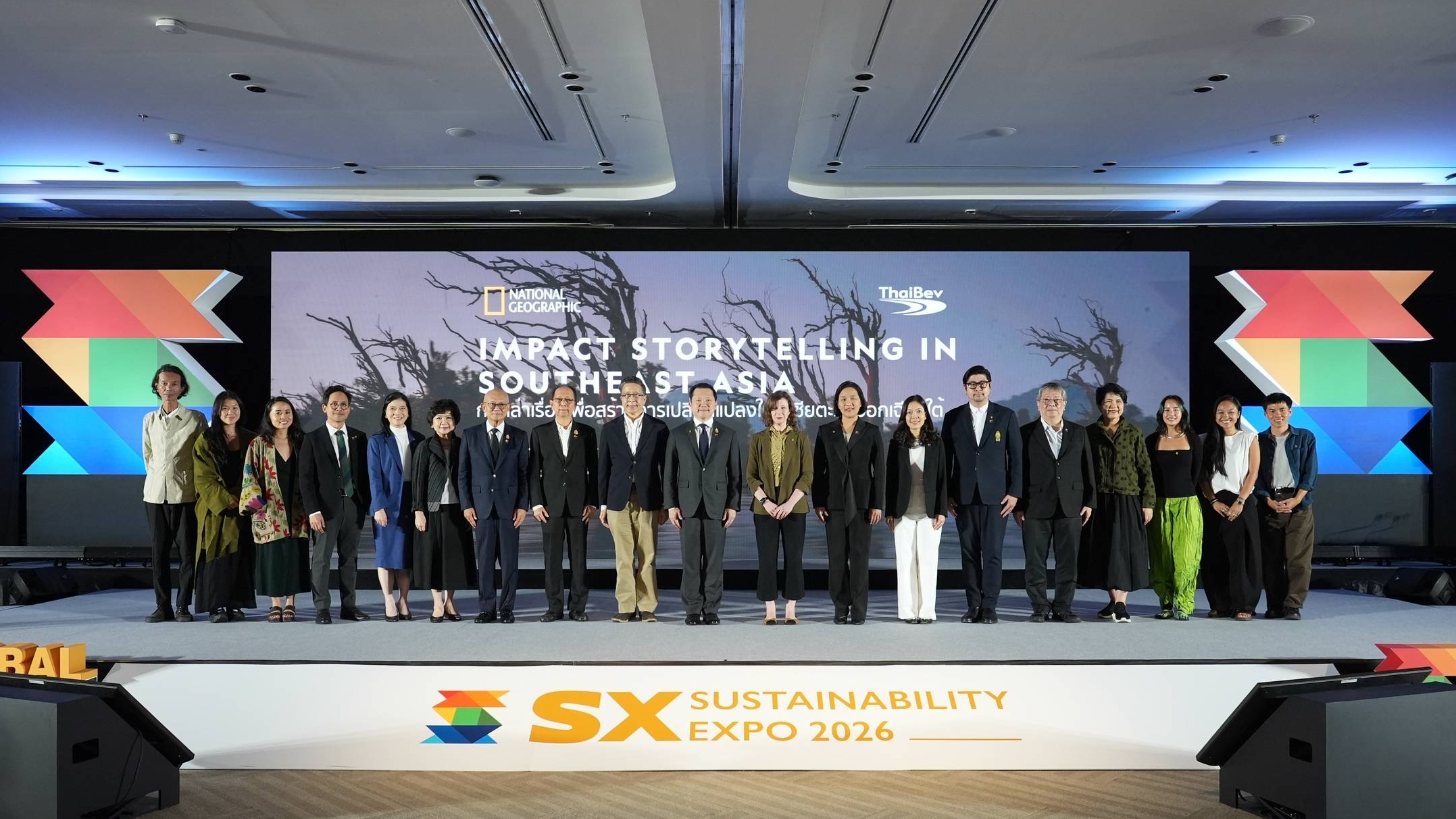
BANGKOK / WASHINGTON, D.C. (November 16, 2026) — As rapid development reshapes the Lower Mekong River Basin and the lives built around it, the National Geographic Society and Thai Beverage Public Company Limited (ThaiBev) announced a new partnership today to put the region’s own storytellers at the center of the conversation. By investing in local talent to tell local stories, the partnership will deepen Southeast Asia’s role in shaping global conversations on conservation, culture and community, and help turn understanding into pride and action close to home.
Led by National Geographic Explorers, the initiative will support storytellers working across film, photography, writing and multimedia to tell hyper-local stories across the Lower Mekong, where ecology, wildlife and human culture form one connected whole. Protecting nature, preserving culture and honoring knowledge go hand in hand here, and storytelling is what makes those ties visible to the world. When the people closest to the river tell its story, the work carries a specificity and credibility that outside perspectives can’t, and it can inspire the local pride and regional action that lasting change depends on.
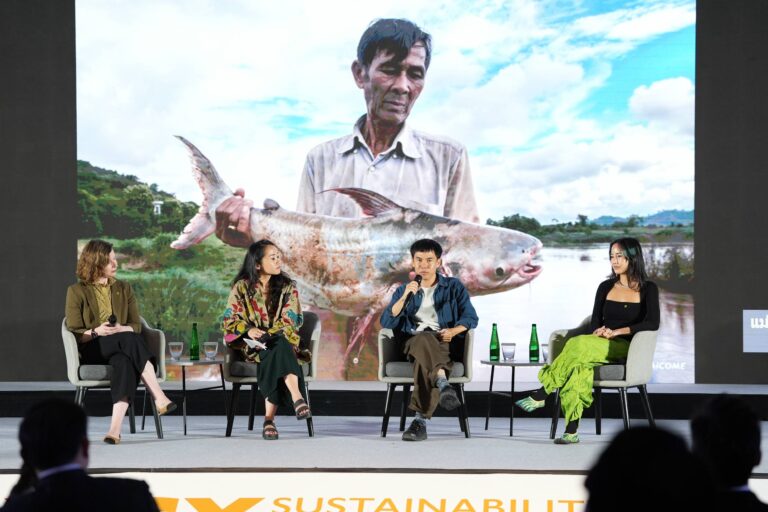
“Southeast Asia has a deep and growing network of storytellers telling important stories about nature and community,” said Kaitlin Yarnall, chief storytelling officer at the National Geographic Society. “This partnership supports storytelling by investing together to equip local talent, tell local stories and amplify local impact — building regional capacity for more in-depth, more rigorous work.”
Why the Lower Mekong River Basin
The Lower Mekong — spanning communities in Laos, Thailand, Cambodia and Vietnam — was chosen as the initiative’s focus because it offers a living case study of how nature, culture and knowledge are bound together. What happens to the river shapes the harvests, traditions and know-how of the communities that depend on it, making the basin a place where well-told local stories can show what is at stake for the whole region.
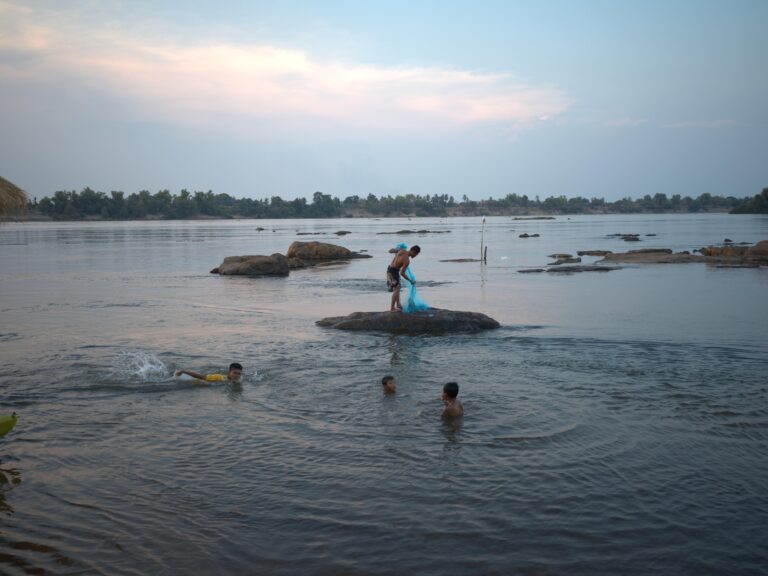
The initiative aligns with ThaiBev’s water stewardship approach and will support regional storytellers in highlighting critical environmental priorities, including preserving the Mekong River Basin, to foster local pride and drive regional action. Through its “Water of Life” sustainability initiative, ThaiBev is dedicated to safeguarding water resources and the communities and ecosystems that depend on them. This commitment extends from the forests, rivers, canals and riverine areas surrounding its operations worldwide to the Lower Mekong River Basin, a vital source of livelihood and a shared lifeline for communities across Southeast Asia.
A Partnership Built for the Region, By the Region
The collaboration builds on the Society’s decades-long presence in Southeast Asia and its Explorers’ longstanding work in regional communities, harnessing the power of storytelling to help Southeast Asia’s own storytellers share the region’s stories with the world.
Beginning with this first cohort of Explorers, this partnership will build and sustain a growing storytelling community in Southeast Asia through:
- Grants that fund original, locally led storytelling projects — putting resources directly behind the people closest to the story.
- Storytellers Collective workshops that build technical and narrative skills, so more regional storytellers can produce comprehensive, rigorous work.
- An immersive, multimedia experience honoring the ancient within the modern, bringing the Mekong region’s ecological and cultural stories to new audiences.
Together, these elements showcase Thailand’s leadership in bringing world-class storytelling capacity to the region and ensure that as the Lower Mekong changes, the story of that change is told, in large part, by the people living it.
Introducing the First Cohort of Explorers
Place-based storytelling matters because the most urgent environmental and cultural questions play out in specific places, and the people who live there hold knowledge that data alone can’t capture. The first group of Explorers was selected for their ability to capture a genuine “sense of place” — stories that could only happen in one village, one urban canal or one stretch of the Lower Mekong River Basin. Reviewers looked for the “extraordinary within the ordinary”: local chronicles of survival and wisdom that prove deeply local knowledge holds answers for a rapidly changing world. They join the Society’s global community of Explorers.
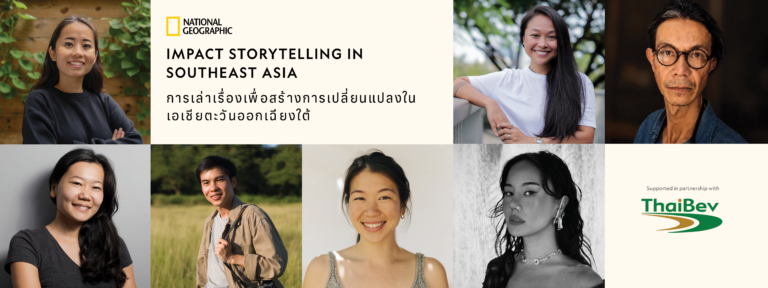
Tami Banh, landscape architect, will document eroding local water intelligence along the coastal provinces of Vietnam’s Mekong Delta, using illustrations, mapping and photography to create accessible engagement tools and a culturally rooted, community-led framework for climate adaptation.
Jittrapon Kaicome, photographer, will investigate cross-border pollution from mining activities that threaten public health, wild fisheries and agricultural livelihoods in the Mekong region, centering the visual narratives and resilient voices of frontline communities.
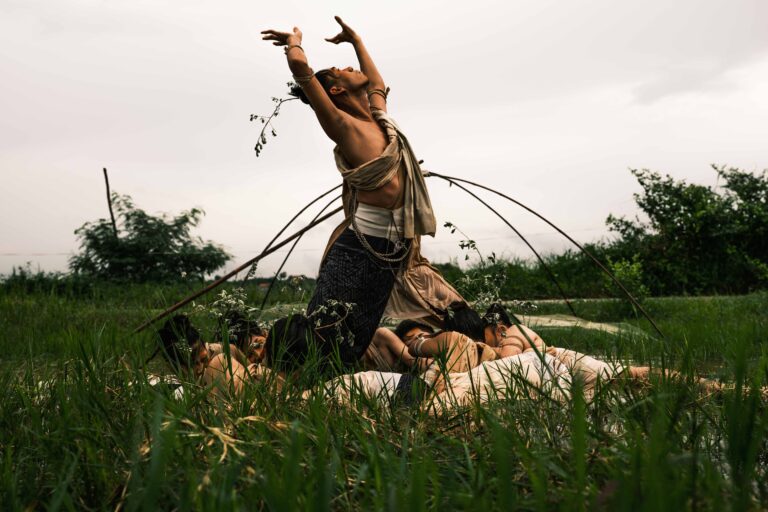
Cat Lau, community storytelling producer, will collaborate with Tai Lue ethnic master weavers in Thailand to create an immersive, mobile art installation and soundscape that leverages ancestral loom weaving as an act of climate resistance and cultural preservation, inspiring action where data alone falls short.
Huiying Ore, photographer, will document how Indigenous river knowledge is being transformed, not lost, in an era of massive infrastructure development affecting the Mekong River in northern Laos, showcasing how villagers are adapting by drawing on centuries of ecological knowledge.
Note Panayanggool, artist, will explore the rapid decline of the critically endangered Irrawaddy dolphin and what it reveals about the ecological transformation of the Mekong River in Cambodia and Laos. She will establish the public Mekong River Sound Archive, alongside an educational documentary told from the dolphin’s perspective, immersive art installations and temple-based listening ceremonies.
Ploy Phutpheng, photographer, will examine the human consequences when development alters ancestral landscapes, focusing on communities in Northern Laos and Chiang Rai, Thailand. Her work approaches the Mekong River as a living cultural system and highlights the central role women play as keepers of ancestral ecological knowledge, food traditions and cultural memory.

Piyavit Thongsa-Ard, documentary photographer, will explore the tensions among traditional wild-capture fishing, economic survival and species conservation, documenting how families in southern Laos draw on inherited river knowledge to sustain local fisheries without compromising the fish migrations their futures depend on.
KioskNews shows a cleaned-up reading view extracted from the publisher’s page — the original always lives on their site, not ours.