River links, AI signaling, and tram revival: Transport and Labour Minister Arjun Singh speaks on 5 month in Cabinet
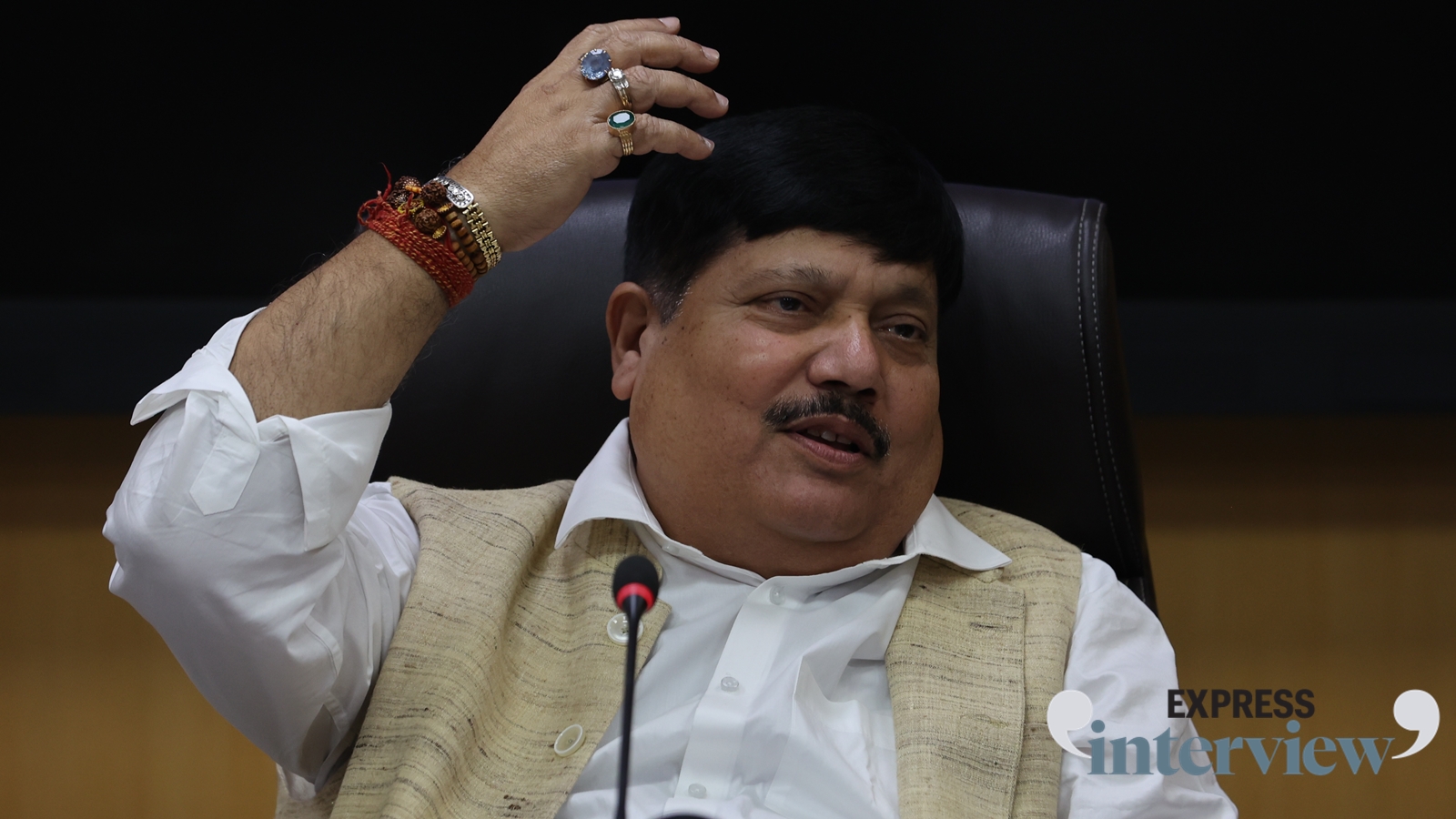
Five months into the Suvendu Adhikari-led government, West Bengal Transport and Labour Minister Arjun Singh speaks to The Indian Express about his plans for the state’s transport and labour sectors, including AI-powered traffic signalling, water taxis, tram revival, e-buses and housing for jute mill workers.
The entire infrastructure has broken down in all these years. There was very little coordination between agencies and the system itself was divided. There is a lot of coordination required to move the system forward. We are bringing it back on track.
Nearly 27 lakh unregistered vehicles used to run in Bengal. We have brought that number down to at least 14 lakh. Even school buses operate without permits and trucks run without registration numbers.
The previous governments, during their 49 years of rule, completely destroyed the transport system. Now, in a state of 11 crore people, there is also a shortage of employees. The number of contractual staff has increased, while permanent officers are few and new recruitments have not taken place.
There is also a shortage of buses, drivers and conductors. But we have to fulfill our commitment to provide free bus service for women. There has been misuse in some places, so, we are now providing body cameras to conductors, installing CCTV cameras and making Vehicle Location Tracking Device (VLTD) compulsory so vehicles can be located at any point.
We have also issued four to five toll-free numbers through which women can contact us since there were occasional complaints about misconduct by conductors.
We are bringing in new buses, several under the Gross Cost Contract (GCC) model. Since our department does not have additional funds, increasing revenue is also a challenge.
Story continues below this ad
Toto (e-rickshaws) have particularly disrupted the entire system. They should operate on inner roads instead of high-speed roads. Illegal autos also run without registration and permits.
We are strengthening RTOs and Motor Vehicle Inspectors, constructing new RTO buildings in every district and replacing old, non-functional computers with modern systems. Better infrastructure is needed to improve coordination.
Illegal commercial vehicles, unauthorized autos, and counterfeit registration plates remain serious concerns. We recently saw how assailants used swapped and fake number plates to execute the high-profile murder of Chandranath Rath. What is the state department doing at border checkpoints and toll plazas to flag such vehicles automatically?
Yes. We are deploying AI-powered Automated Number Plate Recognition (ANPR) systems. Work is currently underway at the RTO.
Once AI-based surveillance is implemented, fake number plates used in crimes can be detected and tracked immediately. We have also activated helplines and body cameras for conductors.
Story continues below this ad
Q. What is your top priority for the transport sector right now?
There is a lot of work underway on multiple fronts. We are modernising and redeveloping transport infrastructure under the Public-Private Partnership (PPP) model. Starting with facilities such as the Kasba Transport Office, we are transforming bus depots and terminuses. Primary bus operations will remain functional while modern commercial facilities, including hotels and restaurants, are integrated.
We are applying this model across 50 official transport sites and are taking steps to bring several unofficial sites under the same framework.
We are also upgrading traffic management by introducing AI-driven signalling to detect traffic violations. On waterways, we are introducing water taxis and preparing a proposal for a high-capacity river link road similar to Mumbai’s Sea Link.
Kolkata currently has only 6% road coverage against an ideal requirement of 17%. A dedicated river link can help bypass land-based bottlenecks and divert traffic from city roads.
Story continues below this ad
Preserving our heritage is another priority. We are committed to restoring Kolkata’s trams, reopening historic routes and expanding tram lines to connect Dakshineswar with Kalighat and extend services to Rajarhat, New Town and Salt Lake.
Q. Please elaborate on the water taxi and river link plans. Is the proposed river link still a conceptual idea?
The river link is currently at the conceptual stage. Every major infrastructure transformation begins with a vision. If we do not conceptualise ambitious solutions today, we cannot build them tomorrow.
We will spend Rs 2,000 crore on the water taxi project. Each water taxi will cost around Rs 4 crore and have a capacity of 75-100 passengers. It will not only change water transport in Bengal but also ease traffic, as a major chunk of commuters come to Kolkata from suburbs along the Hooghly.
Q. With Kolkata’s road coverage limited to 6%, what other measures are being taken to ease congestion?
Addressing congestion on our narrow road network requires a multi-pronged approach. One major step is enforcing the phase-out of commercial vehicles older than 15 years, which will reduce vehicular density and emission pressures.
Story continues below this ad
We have identified seven critical traffic junctions where AI-powered adaptive signalling will be deployed. A comprehensive survey is under way and the project has reached the tender stage. We expect to roll out the system very soon.
Q. It has been five months under the new government, but reports of internal friction among party leaders, MPs and MLAs frequently surface. How do you view them?
Ultimately, citizens care about work, not personal disagreements. People want employment, public safety, robust infrastructure, quality educational institutions and industrial growth. When a government delivers on these priorities, minor internal differences, become irrelevant.
Q. How do you rate the government’s performance so far, and do you acknowledge room for improvement within the party structure?
Criticism is the media’s role and delivering governance is ours. We view constructive criticism as an opportunity to refine our work. Organised syndicates and institutional corruption have been systematically dismantled. Our focus remains our work.
The chief minister has the right mindset.
An Investment Committee was formed within 15 days to bring in investment. It is now in the final stage, and the investment processes have been completed to a large extent. Land was allotted to 37 new industries in a single day and investment of more than Rs 8,000 crore has been announced for at least eight industries.
The process of reopening old industries to provide immediate jobs has also started. Recruitment of 17,000 police personnel has been initiated to strengthen law enforcement. What more can anyone do in five months?
Story continues below this ad
Q. What new plans are there to promote e-buses and electric vehicles?
Mostly e-buses will be introduced. We need to save fuel and gas, so we have to introduce e-buses. Of the buses being added now, the majority will be electric. We will roll out 90 buses before Durga Puja. For now, all the buses that arrive will be AC.
Q. In your manifesto, bringing back migrant workers was pitched as a major objective. Given that you oversee the Labour portfolio, what has been done to bring back migrant workers?
The biggest issue for migrant workers is that wages in Bengal are lower than what they can earn elsewhere. If someone gets Rs 500 here and Rs 1,000 elsewhere, why would they stay?
A large portion of migrant workers from Bengal are from the Muslim community. Many of them were involved in jute farming. Jute farming requires hard labour, but middlemen suppressed prices and farmers did not get fair value for their produce. Many gradually migrated.
Now, as industries arrive and new investments create jobs, wages will increase and migrant workers will stay here. This is a long-term policy. If we give it a year to a year and a half, things will become regularised. If factories run regularly and people get work close to home, why would they leave?
Q. You are from an area where a large number of people work in jute mills. What is being done for the jute sector?
There is currently around a 40% labour shortage in the jute sector, so modernisation is extremely necessary. If modernisation happens, the labour shortage will matter less, wages will rise, production will increase and Bengal’s revenue will grow.
Story continues below this ad
The government should provide financial assistance and subsidies for modernisation. Just as incentives are being given to attract investment, similar incentives for the jute sector can bring in new machinery and technology.
Q. In the last five months, how many jute mills have opened, how many remain closed and by when will efforts be made to reopen them?
We have opened 17 jute mills. Among the old mills that have remained closed for a long time, three are New Central, Gouripur and Kanoria Jute and Industries Limited.
Around 2.75 lakh workers are employed in Bengal’s jute mills. Housing is also a problem. Many workers do not have permanent addresses and those who were provided temporary accommodation by some mills are now leaving.
Q. If housing is a concern, what steps is the government taking to provide affordable housing for industrial workers, particularly in the jute sector?
The Labour Department is facilitating the Affordable Housing in Partnership (AHP) component of Pradhan Mantri Awas Yojana-Urban 2.0 (PMAY-U 2.0) for jute mill workers living in old and dilapidated quarters.
Story continues below this ad
It has been announced as a pilot initiative in North 24 Parganas and Hooghly. It is aimed at Economically Weaker Section workers with an annual household income of up to Rs 3 lakh who do not own a pucca house anywhere in India.
Each house will have a carpet area of 30 to 45 square metres, with at least two rooms, a kitchen and a toilet. Urban local bodies will be the primary implementing agencies, along with district administrations, trade unions and mill managements.
In North 24 Parganas, Bhatpara, Titagarh and Kamarhati municipalities have been tasked with identifying encumbrance-free land. In Hooghly, the Labour Commissionerate is organising camps to help workers submit applications. Around 8,000 workers have already expressed interest.
A house costing around Rs 5-5.5 lakh will be built under the scheme. The Centre will provide Rs 1.5 lakh, while the remaining amount will come from the state and Labour Department schemes. The Labour Department will contribute Rs 71,000 through its welfare scheme, with the worker contributing Rs 50,000.
Jute is the backbone of Bengal’s industry, followed by steel. The jute industry needs greater focus because it is eco-friendly. If corrupt mill owners do not interfere, even residual waste from jute processing can be sold and used as fish feed.
The government has also committed to providing housing to jute workers. The provision existed earlier, but after the government took charge, a pathway was opened to construct four-storey (G+3) concrete homes. This will allow workers to live comfortably and could also encourage their children to remain in the sector.
Q. How big a problem is child labour in Bengal?
Child labour is a problem across the world, including Bengal, and the Labour Department is working to address it. Children are being linked with ICDS programmes, where arrangements are being made for their education and food.
A large part of the problem stems from unemployment. If parents have employment, it becomes easier to prevent child labour.
KioskNews shows a cleaned-up reading view extracted from the publisher’s page — the original always lives on their site, not ours.