Budget 2027 aims to sustain growth while protecting households from subsidy reforms and cost pressures
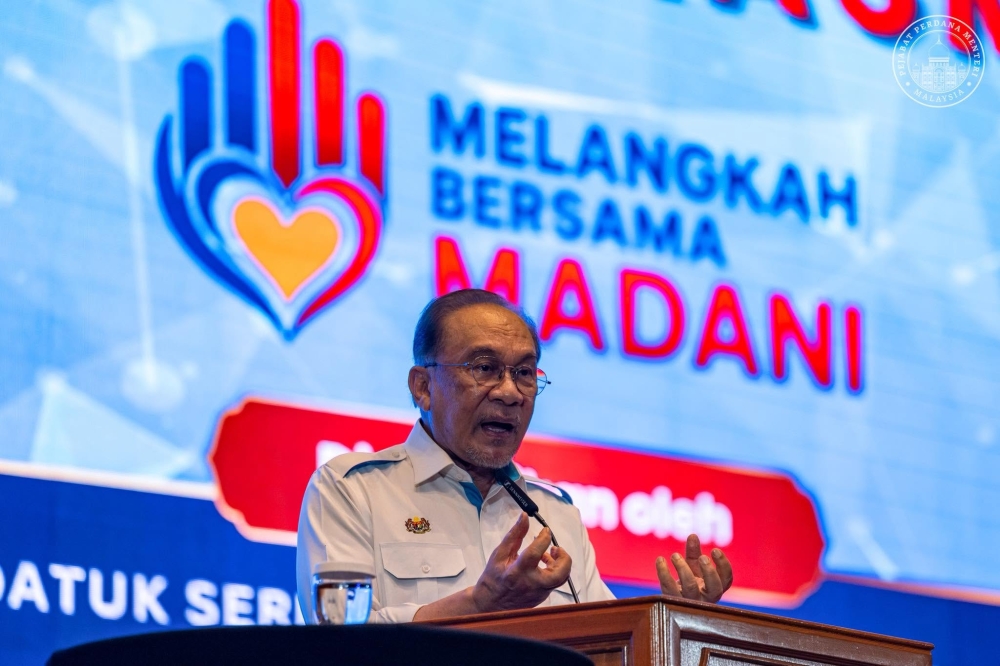

Prime Minister Datuk Seri Anwar Ibrahim, who is also Finance Minister, will table Budget 2027 in the Dewan Rakyat at 3.30pm today. — Picture via Facebook/Anwar Ibrahim
First Published: Friday, 09 Oct 2026 9:23 AM MYT
KUALA LUMPUR, Oct 9 — Prime Minister Datuk Seri Anwar Ibrahim, who is also Finance Minister, will table Budget 2027 in the Dewan Rakyat at 3.30pm today, half an hour earlier than the usual 4pm slot.
The 5th Madani Budget, themed “Malaysia Madani: Menggapai di Langit, Mengakar di Bumi”, is the second Budget under the 13th Malaysia Plan (13MP). The Budget comes at a time when the government seeks to sustain economic momentum while raising the nation’s growth ceiling, improving living standards and strengthening governance.
With the economy on solid ground, the focus leading up to Budget 2027 will be on sustaining this momentum. The economy is projected to grow by 6.0 per cent in the second quarter of 2026, while full-year growth is expected to stay within the government’s forecast range of 4.0 to 5.0 per cent.
Against this backdrop, fiscal policy will remain crucial in supporting economic growth while strengthening fiscal resilience, particularly amid external uncertainties, elevated energy costs and persistent cost pressures.
Efforts to improve public spending efficiency, strengthen revenue mobilisation and reduce leakages are expected to remain part of the government’s fiscal consolidation agenda.
Subsidy rationalisation, one of the key fiscal tools, will remain an important consideration as the government seeks to ensure public resources are channelled more effectively towards targeted assistance and productive economic activities.
The challenge will be to preserve fiscal space while ensuring that subsidy reforms do not undermine household consumption or raise operating costs for businesses.
Development expenditure will continue to be a vital component for supporting economic activity and addressing infrastructure gaps, with spending expected to concentrate on projects that enhance connectivity and productivity.
Water infrastructure, flood mitigation, rural development, utilities and electricity networks, particularly in Sabah and Sarawak and other underserved areas, could remain among the key areas of attention.
On the investment front, Budget 2027 is expected to reinforce Malaysia’s shift towards higher-value economic activities, with greater emphasis on industries capable of generating higher productivity, quality employment and technology transfer.
Continued investment in digitalisation, artificial intelligence, advanced manufacturing and supporting energy, water and digital infrastructure will be integral to strengthening Malaysia’s competitiveness and position in regional supply chains.
For businesses, particularly small and medium enterprises and micro, small and medium enterprises, measures to improve productivity, facilitate technology adoption and strengthen access to financing will be necessary as they navigate higher operating costs and wage pressures.
A stronger domestic business ecosystem would also help ensure that investment and economic expansion generate wider linkages across the economy.
Ultimately, Budget 2027 will be measured not simply by the size of its allocations, but by how effectively fiscal resources are translated into sustainable growth, productive investment, stronger domestic businesses and quality employment, while keeping public finances on a sustainable path.
The challenge is to ensure that Malaysia’s economic resilience is converted into a stronger foundation for the next phase of growth under the Madani Economy framework. — Bernama
KioskNews shows a cleaned-up reading view extracted from the publisher’s page — the original always lives on their site, not ours.