Opinion: Opinion | BRICS' Climate Question: Who Gets to Write the Rules?
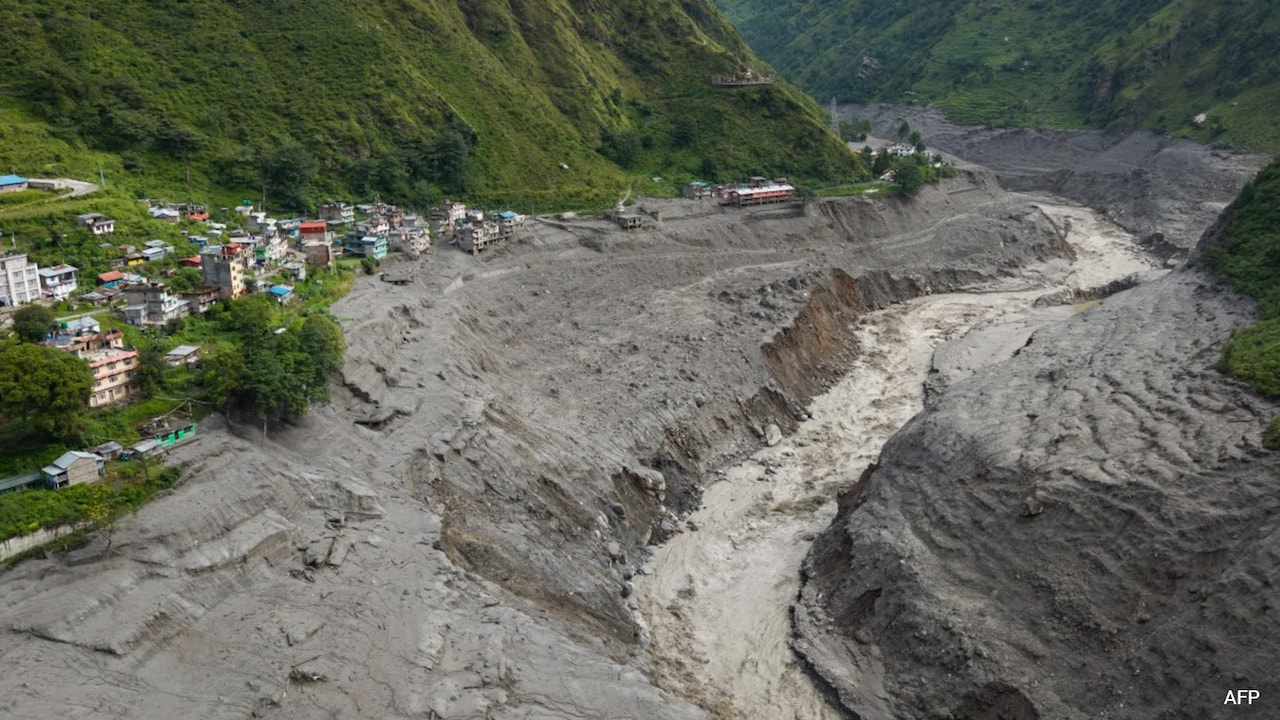
The Fund for Responding to Loss and Damage has issued a media statement on Nepal that treats climate-induced loss and damage not as a future risk but as a present emergency.
The New Delhi Declaration puts debt, trade, and technology at the centre of climate politics, and that is where they belong.
The most important line in the 2026 BRICS New Delhi Declaration is not about climate alone, but about demanding a say in the rules of the green transition. By calling for a more representative international order and reform of global financial institutions, BRICS has placed the climate crisis inside the wider argument over who governs the world economy. What may sound like familiar summit language is, in fact, a first-time declaration that the Global South is no longer willing to be a rule-taker in a green transition it is still expected to finance.
For three decades, global climate diplomacy has survived on a polite lie, that the crisis can be solved without disturbing the economic order that helped create it. The declaration punctures that lie by insisting, even if carefully, that climate action is also about debt, trade, technology, minerals, and fiscal space.
The old bargain was always unfair. Developing countries are asked to decarbonise faster, adapt to disasters they did little to cause, protect forests, and build clean-energy industries, while servicing debts accumulated under an unequal financial system.
Nepal shows the trap clearly. The Fund for Responding to Loss and Damage has issued a media statement on Nepal that treats climate-induced loss and damage not as a future risk but as a present emergency. Yet vulnerable countries are still forced to search for money after each disaster, often by adding to their debt.
The Loss and Damage Fund was meant to correct this injustice, but it risks becoming another symbol of rich-world delay unless it receives adequate, predictable, and grant-based finance. The UNFCCC describes it as a mechanism to assist particularly vulnerable developing countries with economic and non-economic loss and damage, yet, promise without money is only another form of postponement.
In that sense, the BRICS language did not emerge from nowhere; it echoes campaigns by the Asian Peoples' Movement on Debt and Development for public, grants-based and non-debt-creating climate finance and by Climate Action Network for stronger adaptation finance and a workable Just Transition mechanism, both of which have pushed debt, finance, adaptation and justice from activist demands into the language of formal climate politics.
Adaptation is not a soft add-on to mitigation. In fact, a farmer protecting a watershed, a coastal community restoring mangroves, or a village changing cropping patterns is doing climate work as vital as any solar park. After all, forests, wetlands, and biodiversity are infrastructure that hold water, protect soil, and sustain livelihoods.
This is where the New Delhi Declaration is useful, by framing resilience, sustainable development, and climate cooperation as central to the expanded BRICS agenda, it gives adaptation a political footing that has often been missing in negotiations fixated on mitigation. At Antalya, that language will matter only if BRICS and the G77 use it to demand real adaptation finance, protection for ecosystems and local livelihoods, and recognition that survival infrastructure is as urgent as emissions reduction.
The trade fight is already visible in the European Union's Carbon Border Adjustment Mechanism, which is presented as a tool to prevent "carbon leakage". In principle, pricing embedded carbon sounds fair; in practice, it can punish countries that lack the capital and technology to green their factories at the pace Europe demands.
BRICS now brings together Brazil, Russia, India, China, South Africa, Egypt, Ethiopia, Indonesia, Iran, Saudi Arabia, and the UAE, a mix of major emitters, fossil-fuel producers, fast-growing energy consumers, and climate-vulnerable states. Most also sit inside the wider G77 and China grouping of developing countries. That breadth gives BRICS political weight, but it also makes unavoidable the quieter contradiction of heavy fossil-fuel investments that will have to be steadily and inevitably reduced.
When the UNFCCC convenes COP31 in Antalya from November 9 to 20, 2026, the test will be whether these overlapping blocs can carry into negotiations what BRICS has now put on paper. The BRICS declaration should be taken seriously, but not uncritically - it can expose Northern hypocrisy and challenge debt-driven climate finance, unilateral carbon tariffs, and unequal control over technology, but its members must also acknowledge inequity within their own borders, where the poorest communities often pay the highest price for both climate disasters and carbon-heavy development. Otherwise, it risks becoming another statement of state power spoken over the people most affected by the crisis.
The New Delhi Declaration is therefore not the end of the argument, but the beginning of a harder one. If BRICS wants to change climate politics, it must prove that a fairer world order means debt relief, grant-based finance, technology access, fair trade rules, and a real voice for frontline communities, not merely a shift in power from one set of capitals to another.
(Shailendra Yashwant is an environmental researcher and adjunct fellow at Sunway Centre for Planetary Health, Malaysia)
KioskNews shows a cleaned-up reading view extracted from the publisher’s page — the original always lives on their site, not ours.