South Korea’s latest chart sensation has a secret: the singer isn’t human
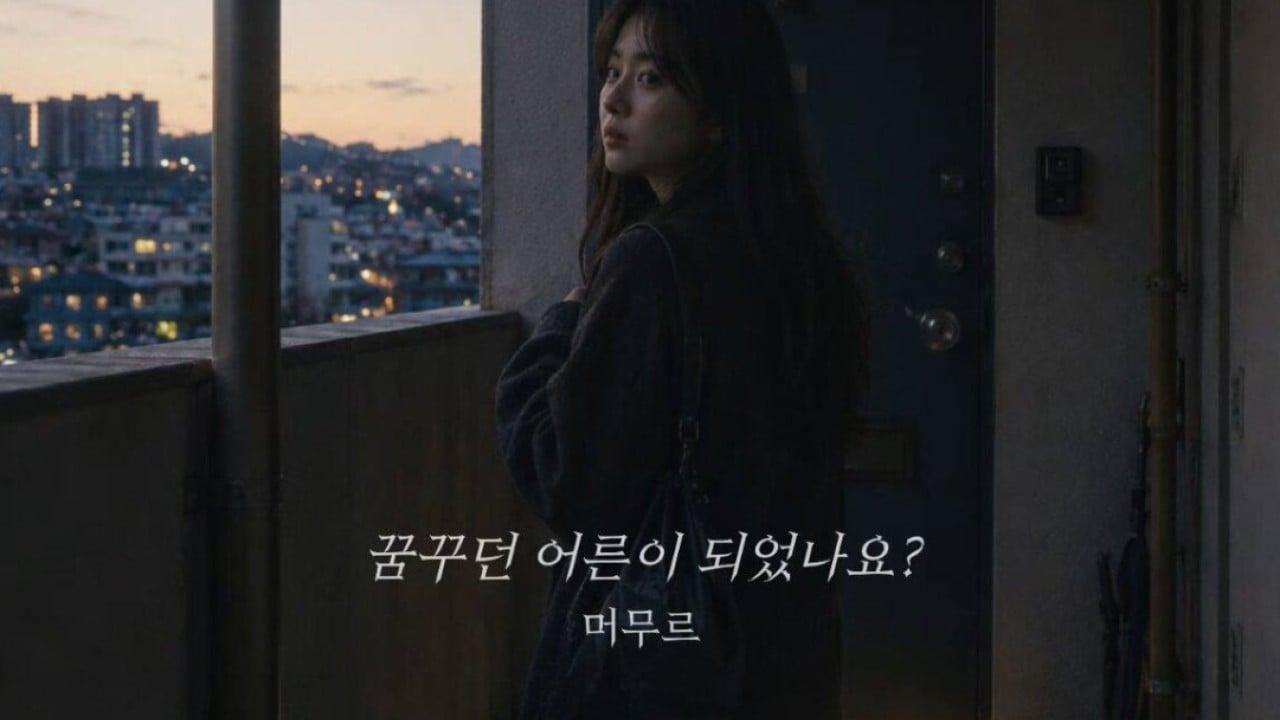
A little-known South Korean music act has climbed the charts with a viral hit that has caught listeners off guard – not just for its sudden popularity, but because its vocals were generated entirely by artificial intelligence.
Meomuru’s single, “Have You Become the Adult You Dreamed Of?”, climbed to No 2 on Melon’s Top 100 – South Korea’s flagship streaming chart – earlier this week. The track’s popularity has turned Meomuru into one of the country’s most-talked-about acts.
The song was created by Glorywave, a songwriting and production duo comprising Lee Yong-seok and Choi Sung-hyuk, who have worked with South Korean artists for more than a decade.
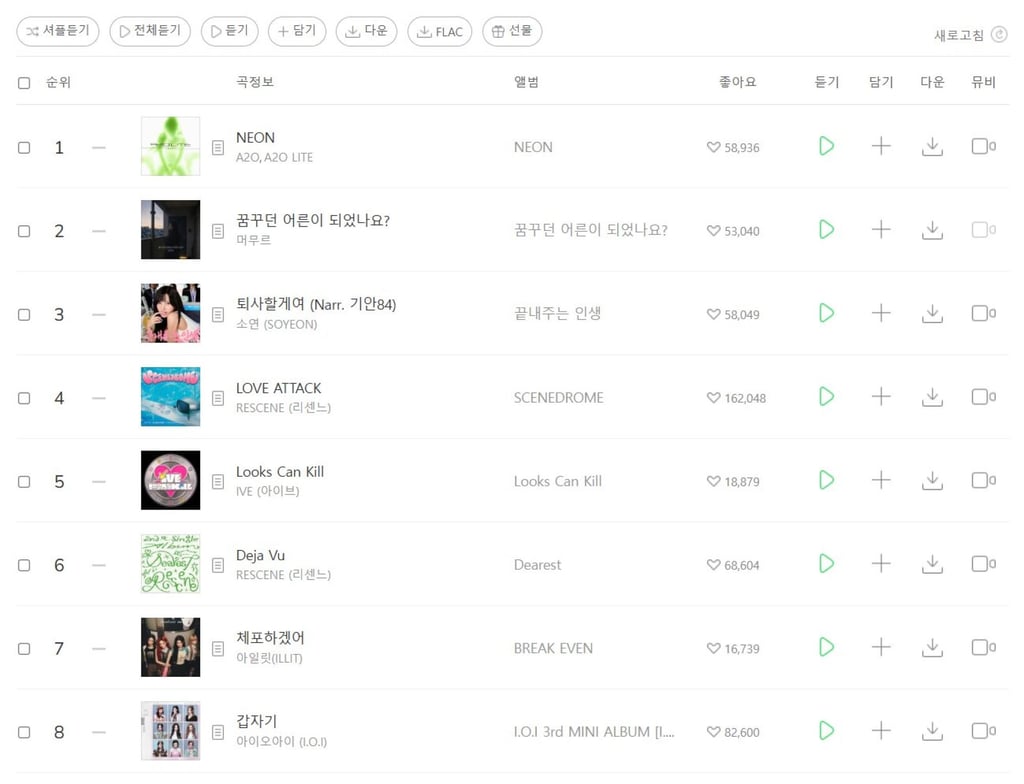
The pair developed the concept, wrote the lyrics and used the generative AI music platform Suno to produce the melody, arrangement and vocal track. They then edited, mixed and mastered the final cut themselves.
The song’s success has renewed calls for mandatory labelling of AI-generated music, with South Korean lawmakers now examining whether the country’s AI Basic Act needs expanding to address the issue.
What makes an artist?
On Meomuru’s social media, which features AI-generated images and videos, one question has filled the comments section: “Is this AI?”
“The song sounded very familiar when I first heard it,” said Lee Sun-mi, a 41-year-old housewife in Daejeon. “When I shared it with my husband, he immediately suggested it might be AI-generated.”
After listening to Meomuru’s other songs, Lee found the novelty wore off quickly.
“The other songs [are] a bit too generic. The melodies sounded familiar, and the lyrics felt like something I had heard many times before,” she said. “I don’t think I’ll actively seek out AI-generated music in the future.”
But younger listeners see things differently. For Shin Ji-hye, a university student in Jecheon, knowing Meomuru used AI did not change her view that the music was “moving and catchy”.
“Depending on the prompts and the person using the technology, AI-generated songs can come together as a cohesive genre, sounding like music created by human artists,” the 19-year-old said.
Shin, who has experimented with AI music tools herself, sees platforms such as Suno as lowering the barrier to entry for aspiring musicians.
“Someone might be interested in composing but lack the ability to sing or the money to produce a song,” she said. “Others might enjoy writing lyrics but struggle to turn them into a finished track. AI can help bridge those gaps and allow more people to create music.”
A global debate
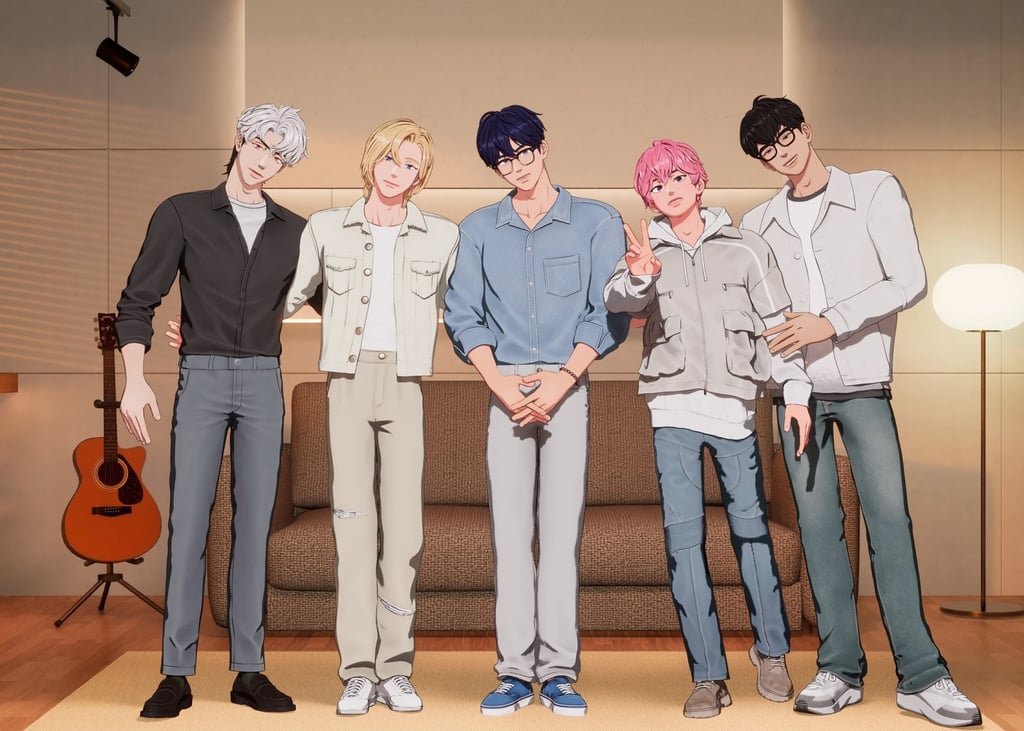
Technology-driven acts are not entirely new to K-pop. The five-member virtual boy band Plave uses real-time motion-capture and facial-tracking to control its animated characters, though human performers sing, dance and interact with fans.
The strategy has paid off: Plave’s album HYPERDRIVE topped Billboard’s Top Album Sales chart last week, and the act sold out Seoul’s 18,000-seat Gocheok Sky Dome last year.
In the United States, the largest music market in the world, AI R&B artist Xania Monet has also entered the mainstream. Monet’s vocals are generated by Suno over lyrics written by American poet and designer Telisha “Nikki” Jones.
Monet signed a multimillion-dollar deal with Hallwood Media last year and has appeared on several Billboard charts, though her success has drawn criticism from established musicians – including Grammy Award-winning singer Victoria Monét – who argue that AI acts undercut the work and livelihood of working performers.
Within the music industry, the rise of AI acts has coincided with growing intellectual property rights clashes. Suno faces infringement lawsuits in the US from major labels, including Universal Music Group and Sony Music Entertainment, over allegations its models were trained on copyrighted recordings without authorisation or compensation. Songs by South Korean artists including Psy and BTS are among those allegedly used without permission.
Similarly, generative AI developer Anthropic was sued last week by Authentic Brands Group – owner of the rights to Elvis Presley’s catalogue and likeness – over the alleged unlicensed use of 274 songs by the late singer.
Under South Korea’s Copyright Act, a work must demonstrate human creative input to qualify for legal protection. But where machine generation begins and human contributions end remains legally ambiguous.
In an interview with the Kyunghyang Shinmun daily, Glorywave said they had not registered “Have You Become the Adult You Dreamed Of?” with the Korea Music Copyright Association (KOMCA) and were not collecting standard songwriting or arrangement royalties.
KOMCA introduced criteria in August allowing registration for AI-assisted music where human creators demonstrated a substantial and leading role, but withdrew the guidelines just 22 days later amid pushback from the creative community and a lack of clear legislative direction.
Can AI music become art?
South Korea’s experimentation with virtual acts dates back nearly three decades. In 1998, Adam debuted to heavy fanfare, selling roughly 200,000 albums. But high production costs and technological limitations, including expensive 3D rendering, curtailed the project, and Adam disappeared from the charts within a year.
Yoo Seung-chul, a professor of media studies at Ewha Womans University specialising in consumer psychology, said another factor behind Adam’s failure was the difficulty of building an emotional connection with fans.
“But seeing the popularity of Plave, we can see that a relationship between artists and fans is possible even with virtual performers,” Yoo said. “As AI services such as ChatGPT and Gemini have become mainstream, people increasingly feel that these virtual agents are their friends. This is particularly true among younger generations.”
Yoo does not believe AI acts will be able to fully replace live performers, but he expects AI music to carve out a distinct genre of its own.
Music critic Kim Sung-hwan sees the phenomenon as an inevitable progression in the recording industry’s drive to reduce production costs, but stresses that creative ownership still depends on human intent.
“The most important thing is the original idea behind an AI-generated song,” Kim said. “What matters is whether that initial idea – the concept that led to the song’s creation – came from a human.”
Kim warned that as AI tools made music production easier, the quality of creative work could suffer if too little human effort goes into the process.
“The real question is whether AI music will remain a mechanical output created simply for commercial purposes and financial returns, or whether it can become a work of art that people can enjoy together and appreciate for its artistic value,” Kim said. “We need a proper institutional framework to develop guidelines for how AI should be used in music creation.”
KioskNews shows a cleaned-up reading view extracted from the publisher’s page — the original always lives on their site, not ours.