Meta AI chief warns: Superintelligence is coming, danger depends on humans
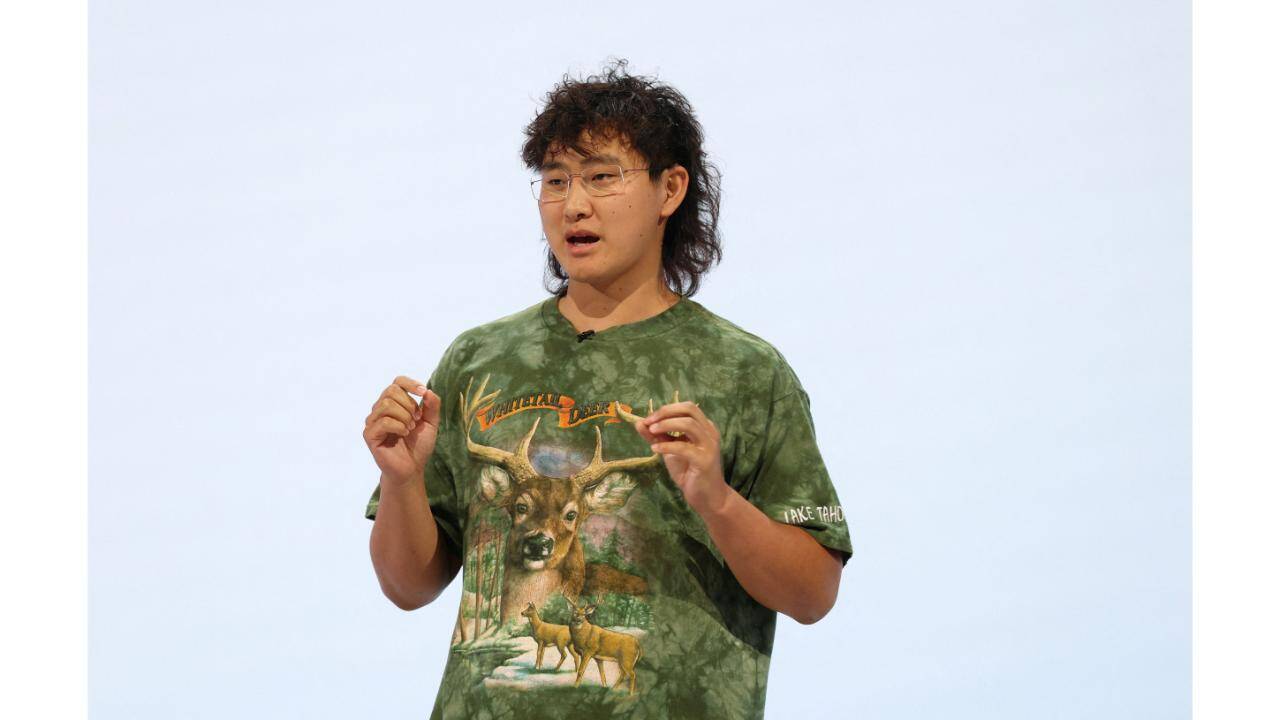
Meta AI chief Alexandr Wang has issued a serious warning about the rapid growth of artificial intelligence, saying that the world may already be entering the era of superintelligence.
In a lengthy post shared on social media platform X (formerly known As Twitter) Wang said that next year could prove critical in determining whether increasingly powerful AI systems benefit humanity or lead to outcomes that are difficult for humans to control. The comments made by Wang come amid the growing debate within technology industry over the pace of the development of AI. He also acknowledged the potential of AI in accelerating scientific and economic progress.
He further emphasised that humanity must remain actively involved in shaping its future rather than enabling the society to be handed over to machines.
Alexandr Wang: ’Superintelligence is coming’
In his post, Wang declared that "superintelligence is arriving" and argued that recent AI breakthroughs suggest machines are rapidly approaching, and in some areas surpassing, the highest levels of human intellectual performance. He pointed to the reported proof of the Riemann Hypothesis, one of mathematics' most famous unsolved problems, as a milestone that demonstrates the scale of change underway.
Wang described the achievement as an intellectual accomplishment unlike anything humanity has seen before and said it showcased the capabilities of what he referred to as an "alien mind" that humans do not fully understand.According to Wang, the development marks a turning point similar to the moment AI models began solving highly difficult American Invitational Mathematics Examination (AIME) problems, signalling that raw intelligence was no longer the primary limitation for advanced AI systems.
AI moving beyond human expertise
Wang argued that many of the toughest mathematical challenges are more intellectually demanding than most real-world tasks performed by engineers, cybersecurity experts or business professionals. He feels that the as the capabilities of AI have improved, the practical limitations have been reduced and the AI models have also become quite effective across coding, cybersecurity and other sectors. He also emphasised that the remaining obstacles for AI systems are mainly related to the domain knowledge, experimentation and implementation rather than intelligence itself.
Wang feels that as a result, AI is expected to become a main contributor to growth across almost every field of human activity."The remaining gaps for models to greatly surpass humanity in every field are no longer intelligence," he wrote, suggesting that future systems could significantly outperform the best human experts in many disciplines.
What he expects next
Wang said the remaining obstacles to AI surpassing humans in every field are domain know-how, infrastructure and experimentation, not intelligence.
He concluded that AI will likely become the largest contributor to progress in nearly every field, outperforming the best humans. That includes AI research itself, which he called less demanding than the Riemann Hypothesis. Models, he said, will be smart enough to automate all of it and to improve themselves in a clearly superhuman way, while speeding up biological, weapons and economics research.
He warned that fields could advance faster than humans can understand or monitor.
A call for a different path
Wang said it is hard to imagine humanity keeping control over unconstrained recursive self-improvement, or over a superintelligence 1,000 times smarter than people in every field. He argued the scientific and technical problems of capability progress are likely solved, so the urgent work is safety, alignment and security, along with deciding how progress should unfold. He criticized what he called lazy thinking in the AI industry: the idea that superintelligence is inevitable and only doing it safely remains.
Society should not accept handing itself over to AI, he said, and should aim for technology that gives all humans greater agency. That likely requires the whole industry to depart from the default path, he added.
Read Alexandr Wang’s complete post here
Superintelligence is arriving. How humanity acts over the next year will have great consequence on what future world we live in. As someone who has spent much of my life in math and science, I see the proof of the Riemann Hypothesis as clearly marking the beginning of a significant change. For most who have studied math, this represents the absolute pinnacle of intellectual accomplishment—nothing humanity has ever accomplished compares to proving the Riemann Hypothesis in terms of sheer intellectual might and strength. As someone who grew up in Los Alamos, New Mexico, many physicists would agree that the discovery of the atomic bomb is a homework problem compared to the Riemann Hypothesis. It is hard to overstate the magnitude of discovery that we have just witnessed—completed with the help of an alien mind that we don’t understand.For those who did math competitions, there was a similar moment of “oh shit everything is about to change” when the models began acing the AIME in December 2024 with o3. The hardest AIME problems are much harder in terms of sheer intellectual difficulty than the problems that even the most advanced engineers and business people need to solve on a day-to-day basis. There of course is domain-specific knowledge, context, know-how, and other tactical constraints that were needed to unlock the models across other areas, but lack of raw intelligence was not the bottleneck. And in fact, the progress across other domains over the past 2 years as we’ve mitigated these non-intelligence factors has been immense—we have seen coding be nearly solved, the emergence of extremely powerful cyber capabilities, and strong agentic capabilities which have enabled the models to become general-purpose useful aides.Again the key insight here was simply that the hardest AIME problems are intellectually very difficult, far more difficult than most coding work, most cyber work, most business work, etc., and over the past two years we have been filling in the gaps to enable the models to accomplish those things.To be clear, AIME is an extracurricular activity for teenagers; the Riemann Hypothesis may be the most intellectually demanding problem humanity has ever devised, which some of the most brilliant humans over the past 150 years have dedicated their lives to. At MIT, my professors would have said the hardest intellectual problems in nearly every major field of human study are “easier” than the Riemann Hypothesis, albeit with other challenges such as experimentation, data, and feedback loops. The remaining gaps for models to greatly surpass humanity in every field are no longer intelligence; they are domain-specific know-how, plumbing, and experimentation. This means it is likely that AI will become the greatest contributor of progress across nearly every field, vastly outperforming the best humans.Notably, this is likely true of AI research. Most researchers would agree that AI research is certainly much less intellectually demanding than solving the Riemann Hypothesis. The models are clearly going to be intelligent enough to automate all of AI research and be clearly superhuman at improving themselves—along with massively accelerating biological research, weapons research, economics research, and more. The implications are enormous. In the same way that the math community has not fully digested the proof of the Riemann Hypothesis, nearly every field could be accelerated at a pace beyond what humans can understand or monitor.It is now incredibly important for us to be thoughtful about the future we want and how we get there. It is hard to imagine a world where humanity can maintain control over fully unconstrained recursive self-improvement. It is equally hard to imagine a world where humanity maintains control with superintelligence that is 1000x smarter and more capable than humans in every field. Now that we are at a point where the scientific and technical problems on capability progress are likely solved, we must not only make progress in the extremely urgent areas of safety, alignment, and security, but we have to start thinking through how we progress thoughtfully.
I notice a particular form of lazy thinking within the AI industry, which is that ASI is inevitable and the only problem to solve is how to do it safely, but there is much more at stake. We should not be okay with a “handover” of society to AI. We should endeavor ourselves to build a technology which delivers a positive future for humanity, where all humans have greater agency and empowerment. I strongly believe this is possible, but likely involves the whole industry taking meaningfully different actions from the “default path” in front of us.
KioskNews shows a cleaned-up reading view extracted from the publisher’s page — the original always lives on their site, not ours.