1 million Hong Kong employees to get ‘full portability’ of MPF funds in December
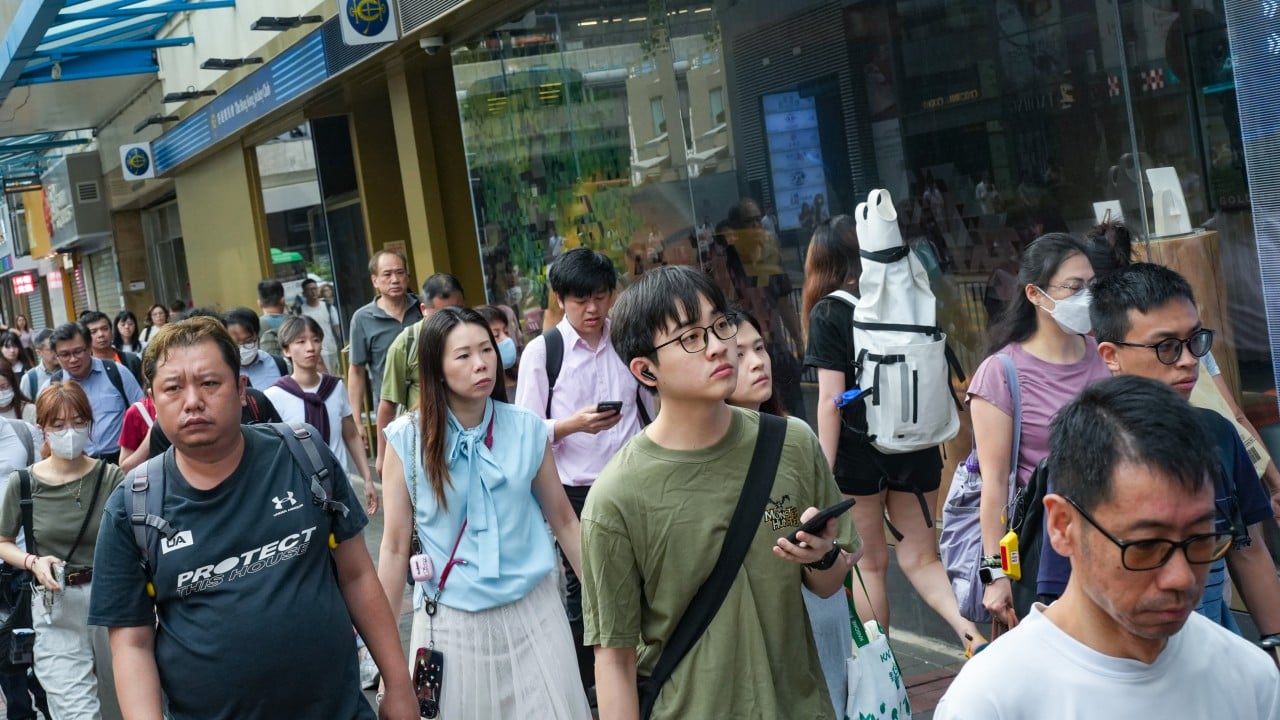
About 1 million employees in Hong Kong will be allowed to move their entire Mandatory Provident Fund (MPF) balance to a different provider once a year under the “full portability” arrangement, effective from December 21 for the first phase of implementation.
The Mandatory Provident Fund Schemes Authority, which manages the city’s mandatory pension plans, said on Sunday that the “full portability” arrangement would be carried out in two phases to ensure a smooth and orderly implementation.
In a blog post, authority chairwoman Ayesha Macpherson Lau said the new arrangement would allow eligible members to transfer both the employer and employee contribution portions to their preferred MPF scheme once per calendar year.
Currently, under the “semi-portability” arrangement, only the employee’s portion can be moved.
“This further enhances scheme members’ control over their MPF and encourages working individuals to manage their retirement savings more actively,” she said.
The first phase, effective from December 21, will cover about 1 million employees who joined the workforce or changed jobs on or after May 1, 2025. As more graduates enter the workforce and employees become eligible after changing jobs, the number of employees eligible for the first phase would continue to grow, Lau said.
The second phase will involve employees who started their current employment before May 1, last year.
As their MPF derived from employer mandatory contributions may still be used to “offset” long service payments or severance payments for years of service before 1 May 2025, additional legislative amendments were required, Lau said.
She said the government would submit an amendment bill to the Legislative Council in mid-2027 to implement the second phase of “full portability”, as mentioned in the policy address in September.
Lau said the eMPF platform, in full operation in April this year, had updated its system functions accordingly to support the implementation of “full portability”. Employees who decide to make a transfer can complete the procedure electronically via eMPF.
They can handle their 2026 transfer between December 21 and December 31 this year, or process their 2027 transfer starting January 1 next year.
Lau reminded members to avoid “switching for the sake of switching” and refrain from transferring funds too frequently, as MPF was a long-term investment.
Before taking advantage of “full portability,” scheme members should weigh various factors, carefully compare the fund choices, performance and fee levels of different MPF schemes, and make prudent decisions based on their life stage, investment goals and risk tolerance, she said.
Only employers could choose the MPF provider until 2012, when the Employee Choice Arrangement was introduced. Commonly known as “semi-portability”, this allows employees to transfer their own contributions – but not those made by their employers – to a new provider once a year.
Employees conducted about 1.1 million transactions involving HK$59 billion under the semi-portability regime from its launch up to September this year, Lau said.
Over the past five years from 2021 to 2025, an average of HK$4.5 billion of MPF was transferred annually to employee-selected MPF schemes under the “semi-portability” arrangement, a 7 per cent increase compared with the annual average of HK$4.2 billion in the preceding five years from 2016 to 2020, according to Lau.
As of September 30, there were 359,600 employers, 2.65 million employees and 221,900 self-employed people enrolled in the MPF scheme, according to official statistics.
KioskNews shows a cleaned-up reading view extracted from the publisher’s page — the original always lives on their site, not ours.