Senate Democrats block Sen. Husted-led bill on data centers, calling it ‘toothless’
WASHINGTON — Senate Democrats blocked legislation Wednesday aimed at protecting consumers from paying higher prices when new data centers are built in their communities.
The vote was 57-43, short of the 60 needed to break a filibuster.
The Ratepayer Protection Act, which passed the House by a vote of 417-3 two weeks ago, sets a federal standard on the issue. It also instructs state public utility commissions to find ways to make developers of data centers that use huge amounts of energy cover their own costs of water and electricity to consumers.
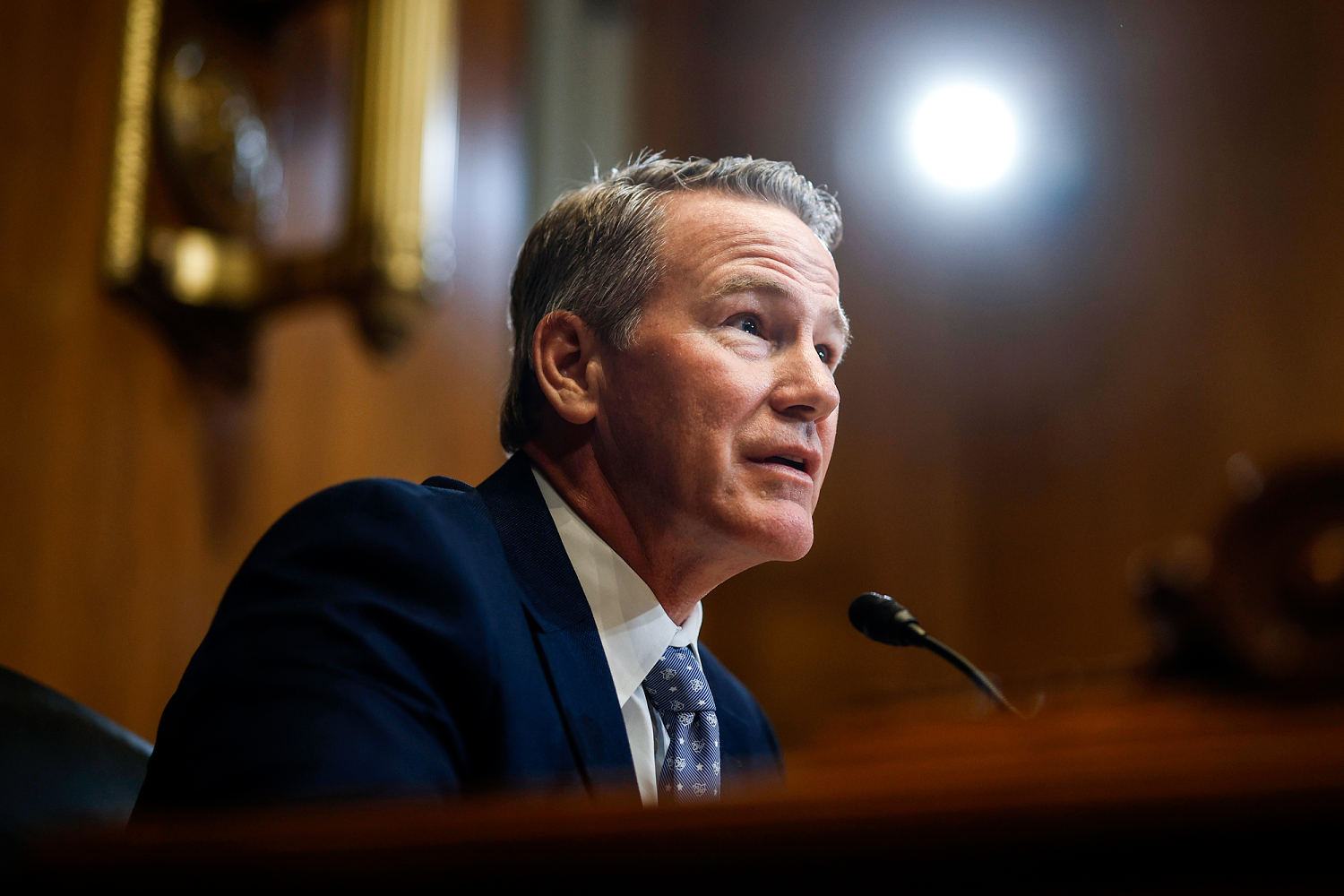
The Senate version is led by appointed Sen. Jon Husted, R-Ohio, who’s locked in a competitive battle as he seeks his first full Senate term. He’s facing heat at home from Democratic rival and former senator Sherrod Brown, who has branded him “the face of data centers” for promoting developments when he was lieutenant governor.
“I heard they said they wanted lower electricity prices,” Husted said of Democrats on Tuesday. “All they have to do is not block it, vote for it, and it will be on the president’s desk, and we will have a bipartisan win.”
Senate Minority Leader Chuck Schumer, D-N.Y., said the bill is merely “optional” for states and won’t achieve much beyond partisan messaging for Republicans.
“Plain and simple, the Ratepayer Protection Act is a fraud,” Schumer told reporters on Tuesday. “It does not require any protections at all. While Americans are demanding real guardrails on AI and data centers, Republicans are offering a toothless messaging bill. We need real action on data centers.”
Schumer said Republicans should instead take up bills by Sens. Chris Van Hollen, D-Md., and Martin Heinrich, D-N.M., that would go further in imposing cost-related rules on data centers.
Senate Majority Leader John Thune, R-S.D., rejected Democratic arguments that the bill is simply a Republican political move to protect Husted’s re-election bid. He noted that nearly every House Democrat voted for the measure.
“I don’t know how you can say something that passed the House of Representatives 417-3 isn’t consequential,” Thune told reporters. “AOC voted for it over there. Hakeem Jeffries voted for it over there. This is a bill that could go to the president and become law. Evidently, a lot of Democrats in the House of Representatives thought it was important to be for and thought that it did exactly what the bill says it does.”
An NBC News poll this month found that data centers are unpopular: By nearly 6 to 1, voters said they’d be less likely to vote for a candidate who supports building a data center in their community. The survey found that voters trust Democrats over Republicans by a margin of 12 points to deal with data centers.
Sen. Thom Tillis, R-N.C., who is retiring, said Husted was “right to get the message out” on data center costs.
But when asked if the bill would achieve much beyond that, Tillis said, “No.”
“I think the best way to deal with this is ... down in North Carolina, most utilities are managed through public utility commissions,” Tillis said. “They’re managed through local and state decision-making. That’s where it should be.”
KioskNews shows a cleaned-up reading view extracted from the publisher’s page — the original always lives on their site, not ours.