Ian Berry obituary
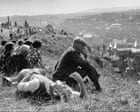
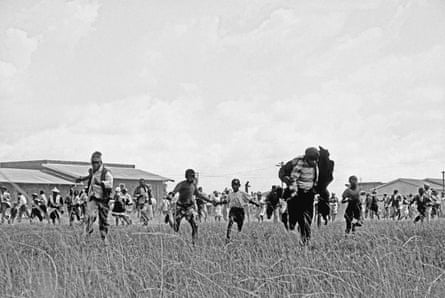
On 21 March 1960, a crowd gathered outside a police station in a Transvaal township, part of a nationwide protest against apartheid pass laws used to control where black South Africans could live, work and travel. A young British photojournalist pushed his way to the front and took a few pictures of police across the fence who were standing atop their armoured personnel carriers. With nothing much happening, he turned back and headed for his car. Then – without warning – there was the sound of heavy gunfire.
The photographer, Ian Berry, who has died aged 92, captured images of the carnage, which soon became known around the world as the Sharpeville massacre. Dozens of demonstrators were killed, many shot in the back as they fled, and hundreds were injured in what turned out to be a turning point in the country’s history.
Berry and his colleague, the Drum reporter Humphrey Tyler, had ignored police warnings that they would be arrested, and were the only journalists there when the shooting started. It was the first time Berry had been shot at, or seen others killed, but it would not be the last in a career that took him to the Congo crisis following independence in 1960-65, the Vietnam war, the Aberfan disaster of 1966, in which coal waste engulfed a Glamorgan village, and the six-day war between Israel and its neighbours in June 1967.
He was tenacious, but his edge was his eye for human moments, capturing the people behind the headlines, often photographing scenes that were off-centre, and yet told a story better by focusing on individuals.
In 1968, when Magnum’s Paris bureau asked if he would go to Prague as Soviet tanks encroached, he took a plane to Munich, rented a car and drove to the Czech border, only to find that journalists were being turned away. With typical guile, Berry talked his way through, persuading a Russian officer that he was on his way to an architects’ conference, which he had read about on the flight. He captured memorable images of peaceful resistance during the first days of the invasion, then smuggled them out in the hubcaps and door panels of his rented Volkswagen Beetle for publication in Paris Match.
Born in Preston, Lancashire, Ian was the son of Walter, who owned garages, and Ethel (nee McKimmings), a housewife. He was a boarder at Rossall school, on the coast at Fleetwood, and from an early age had wanderlust. A postwar assisted emigration scheme took him to South Africa in 1952, when he was 17.
In Johannesburg he worked for a family acquaintance, Roger Madden, who had recently returned home from assisting the photographer Ansel Adams in the US. Madden taught Berry to use a large-format camera and to print in the darkroom, but he would find his own path using a diminutive Leica, the camera favoured by prominent visual journalists of the day.
Berry moved on to studio work and small-town editorial assignments, and worked for the Rand Daily Mail, covering the beginnings of the treason trial in 1956 that included Nelson Mandela as a defendant. After hearing that Tom Hopkinson, the former editor of Picture Post in London, was coming to edit Drum, a newly established South African weekly aimed at a black readership, Berry persuaded him to give him a job. A few months later, Hopkinson sent him to Sharpeville.
He was called to give evidence at the trial of the wounded, who had been charged with obstruction. The pictures also brought him to wider international attention, and through Hopkinson he became acquainted with Magnum Photos, the agency with whom he remained until his death.
When Berry moved to Paris in 1962, he met Henri Cartier-Bresson, one of Magnum’s co-founders, and became a full member five years later. By then, he had left Paris for London to become a contract photographer for the Observer, travelling abroad on reportage assignments while shooting members of the British arts scene for the paper’s weekend magazine.
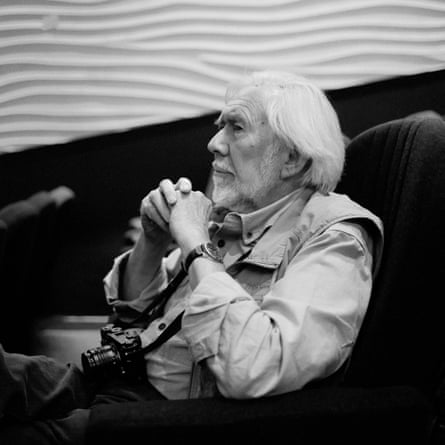
He photographed actors, film people and artists, including John Gielgud, Dusty Springfield, Lindsay Anderson and Henry Moore, and gained a reputation for his observational portrait stories.
Berry’s magazine assignments were accompanied by projects pursued over years, and it is for these that he will be best remembered. In 1972, the Whitechapel Gallery in London commissioned him to photograph its East End neighbourhood, and two years later, an Arts Council bursary (said to be the first ever given to a photographer) led to the publication of The English (1978), a collection that observed class, ceremony and everyday leisure activities.
That seamless transition between commissioned journalism and self-directed work reflected the Magnum model, which allowed photographers to earn a living from magazines while retaining control of their pictures and developing subjects beyond an editor’s brief.
Travel assignments for Life, Paris Match, National Geographic, Geo and others took Berry across the world, and often fed into longer studies. His continuing engagement with apartheid South Africa resulted in Black and Whites: L’Afrique du Sud (1988) and Living Apart (1996), while other projects examined changing daily life in China and the former Soviet Union.
In later years, a commission to photograph Greenland’s retreating glaciers developed into Water, an examination of how water sustains life and how its scarcity, pollution and destructive force expose humanity’s impact on the planet. Drawing on 15 years of work, it was published in 2023, accompanied by an essay by his second wife, Kathie Webber, whom he had married in 1973.
Berry’s first wife was Shirley, a South African, with whom he had a daughter, and he had a son from another relationship; both children predeceased him. He is survived by Kathie.
KioskNews shows a cleaned-up reading view extracted from the publisher’s page — the original always lives on their site, not ours.