‘We need IDs in case something happens’: For Delhi’s homeless, a fight to stay on voter rolls
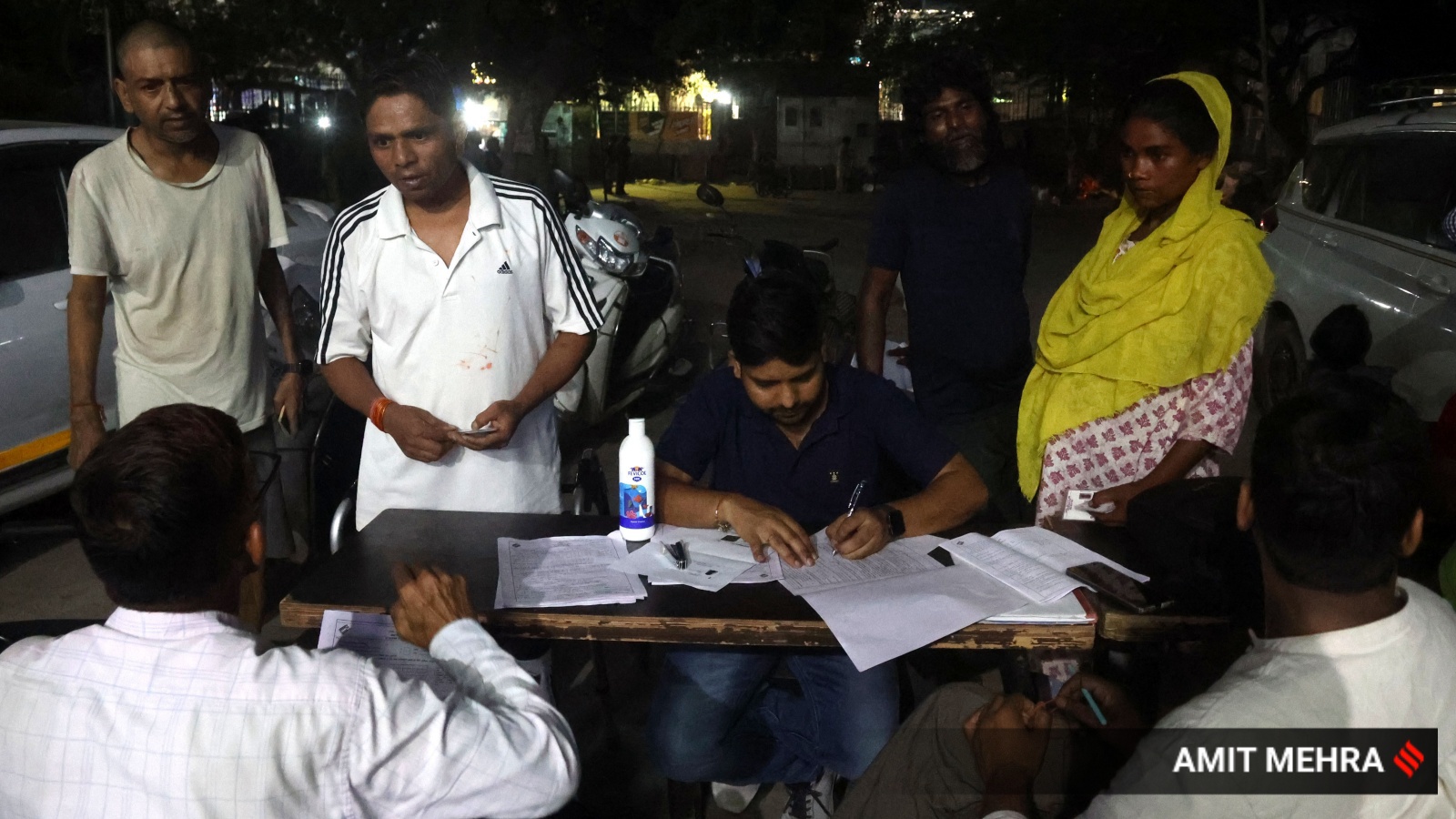
At 5.30 pm on Wednesday, the Sarai Kale Khan night shelter in Delhi was in its usual evening rhythm — children running around unclothed, teenage boys gathered around motorcycles, dinner being prepared in the common kitchen. Working men and women streamed in, tired after a day of physical labour.
Near one of the ship containers that serve as rooms, a special voter camp was underway. Five Booth Level Officers (BLOs) — teachers and bank officials — sat at two tables. They were half an hour behind schedule, held up by traffic and late lunches.
Meena Devi, 40, was among the first to approach them with a Special Intensive Revision (SIR) notice that said she had not provided details of herself or a relative to establish a link to the previous rolls.
She had to appear for a hearing on September 14 between 12 pm and 2.30 pm. “But I couldn’t go because I didn’t get off from work,” Meena, who is a sweeper in the Delhi Metro, said.
The officers told Meena that only her assigned BLO could conduct the hearing. Meena persisted, asking if there was anything they could do to help. There wasn’t.
“Kya kare hum, humre liye voter ID zaruri hai kal ko koi hume Bangladeshi bolke kuchh karde (What can I do, I need the voter ID in case someone does something to me, saying I am a Bangladeshi),” she said.
Originally from West Bengal’s Malda district, Meena shifted to her husband’s place in Aligarh, Uttar Pradesh, after marriage. The couple came to Delhi around a decade ago and have been living at the shelter ever since.
Story continues below this ad
The camp was one of several being held at night shelters across Delhi to “make the electoral roll more inclusive”, according to the office of the Delhi Chief Electoral Officer (CEO). Organised from 5 pm to 9 pm on Wednesday and Thursday, the camps allowed residents to access the facilities after work.
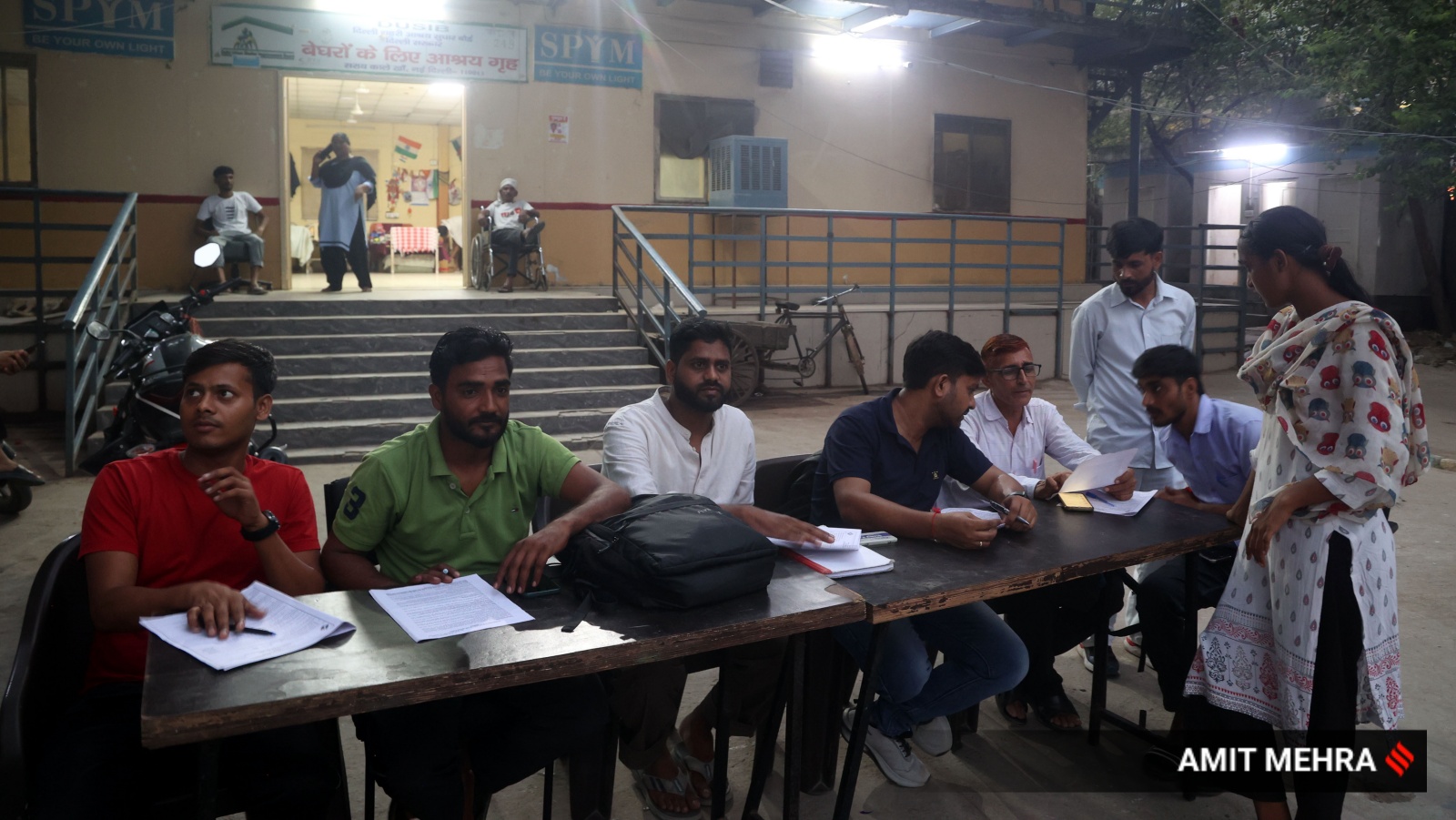 Five Booth Level Officers (BLOs) — teachers and bank officials — sat at two tables to help residents. (Express Photo by Amit Mehra)
One-third, or around 33.1 lakh electors, on the draft roll have received notices to prove their eligibility to stay on the electoral roll: 13.79 lakh got notices because they could not link themselves to the electoral roll of the last intensive revision, 19.33 lakh were picked out for “logical discrepancies” in their enumeration forms.
The final electoral roll will be published on November 4.
The burden of proof
As the evening progressed, more residents, hearing that the “election wale officer” had come, drifted towards the tables clutching Aadhaar cards, PAN cards and voter IDs.
“Kya idhar pehchan patra banega? Kaunse kaagaz lagenge? Kiska ban sakta hai (Will a Voter ID be made here? Which documents are required? Who can get one)?” they asked.
Story continues below this ad
Nearby, Gudia, 30, had an inkling that she might be deleted from the rolls. She had not received the enumeration form that others had, and believed the BLO had come when neither she nor her husband, Chotelal, was at their designated bed.
When her turn came, a BLO scanned the QR code on her Voter ID card — the same one she had used to vote last year — and it showed up as deleted. “This voter ID was the only proof of our address in this shelter. If this gets deleted, someone might kick us out from here,” she said.
Gudia and her husband, who works as an e-rickshaw driver, have been living at the shelter for the past 12 years after their slum, just around 100 m across the road, was demolished for the Delhi Development Authority’s Baansera Park.
Their life now revolves around the daily schedule of the shelter: They get a cup of tea in the morning, brunch at noon, dinner at 7 pm, and two beds — one for their three daughters and a son, one for themselves. The shelter, run by the Delhi government, can house around 350 homeless people.
Story continues below this ad
“We got a place to stay here. We used to avail treatment at the mohalla clinic; all because so many of us voted for Kejriwal,” she added.
The mohalla clinic was now locked and deserted.
Gudia needs to reapply but a letter from the shelter caretaker is required as address proof to fill Form 6, the application for a fresh elector. But the caretaker was not there. She hoped to get the letter by Thursday morning so she could submit the form the following evening.
By then, it had grown dark around the tables. With no additional lighting, the BLOs used their phone flashlights to illuminate the forms as they worked.
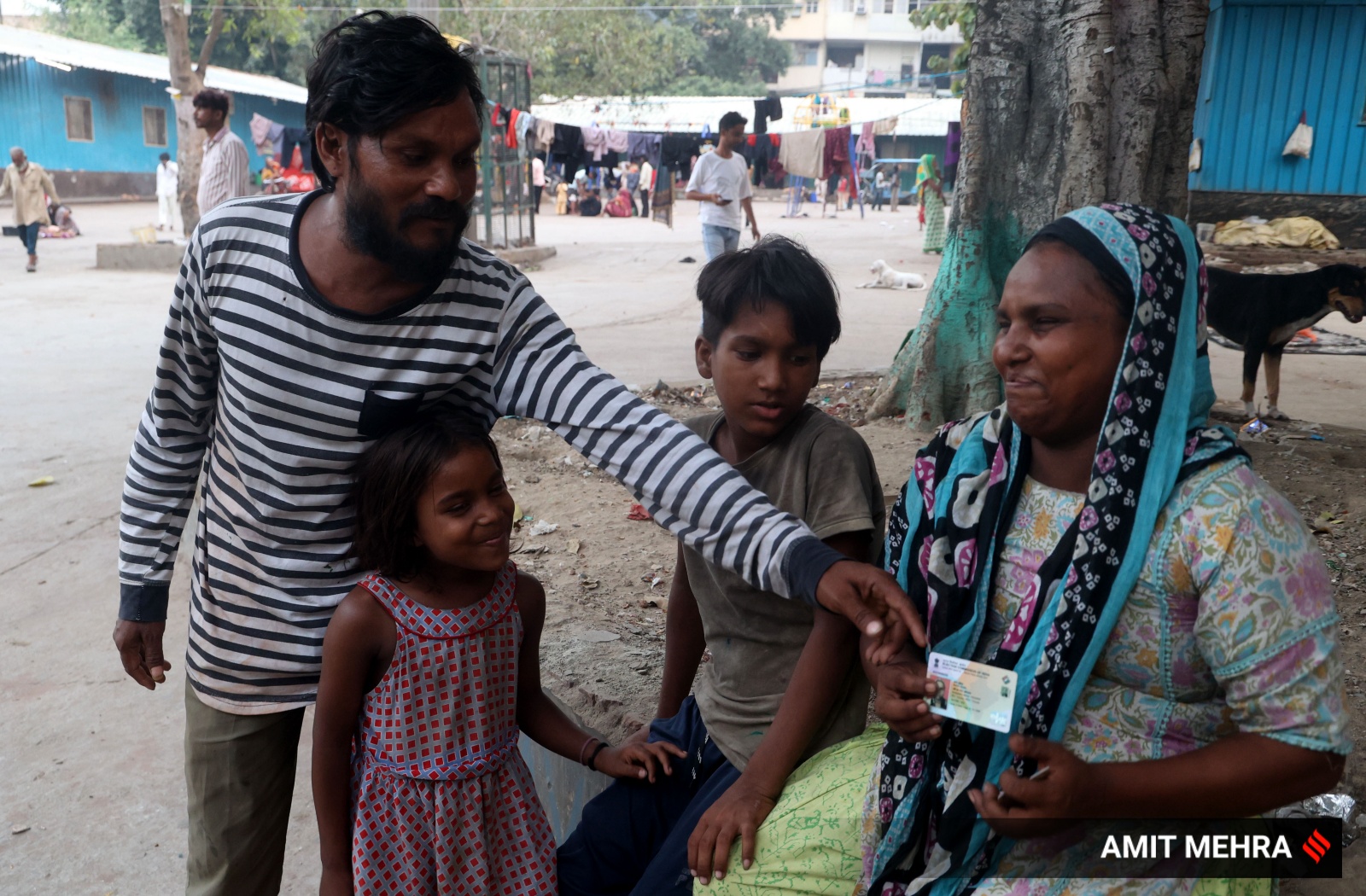 Gudia, her husband Chotelal have been living at the shelter for the past 12 years. (Express Photo by Amit Mehra)
Authorities had not made arrangements for basic stationery supplies: glue to paste photographs on the Form 6s, a stapler to attach the forms to Aadhaar photocopies and a thumb pad for people who did not know how to sign. The BLOs had to request the shelter administration for them.
Story continues below this ad
Standing at one of the tables, Shyam Kumar, 30, said he did not want to miss an opportunity to get his Voter ID made: he uses a walker to move around ever since a road accident during the Covid-19 pandemic left him severely injured.
“I thought this is a golden opportunity for me since I can’t go very far,” he said.
After a volley of questions, his Form 6 was completed.
Kumar, who used to work as an office peon before his accident, said he was looking forward to voting: “I see videos of Modi ji building roads and railways, now I can support him.”
By around 8 pm, the crowd had thinned. Nine Form 6s had been filled.
Story continues below this ad
The five BLOs packed up. For most, the special camp was their third shift of the day — after their regular school or bank work and their BLO duties.
KioskNews shows a cleaned-up reading view extracted from the publisher’s page — the original always lives on their site, not ours.