‘Bride catalogues’ and fake weddings: inside Indonesia’s China marriage trade

The practice of trafficking Indonesian women to China for marriage remains alive and well despite repeated crackdowns by authorities, analysts say, fuelled by economic desperation and a cultural reliance on matchmakers.
The persistence of the trade was highlighted last week when Indonesia’s National Police said they foiled an attempt to send three Indonesian women to marry men in China, in a scheme involving recruitment agencies in Indonesia and Hong Kong.
Three people were named as suspects, including an Indonesian recruiter and a Chinese man who had married one of the victims. The Indonesian recruiter was herself a victim of bride trafficking, the police said.
“The victims were promised a dowry of 20 million to 25 million rupiah (US$1,100 to US$1,370) and a monthly allowance of around 4 million to 5 million rupiah once they arrived in the destination country,” Yolanda Evalyn Sebayang, head of the National Police’s anti-human trafficking unit, told reporters on November 12.
Agents priced the women in “bride catalogues” at up to 500 million rupiah (US$27,420), Sebayang said, adding that they also falsified the victims’ ages to meet China’s minimum legal marriage age of 20.
“Before being sent off, one victim was allegedly married under religious law to the Chinese [suspect] in a flat in Jakarta prepared by the recruitment network, without official marriage documents issued by the Indonesian government,” Sebayang said. The two other women were to be sent to Hong Kong to marry local men, she added.

Last week, West Kalimantan police also arrested two mak comblang, or matchmakers, for allegedly recruiting women into the illegal scheme. The suspects had previously sent two women to China, though police thwarted their attempt to traffic two more.
According to police, the suspects falsified the victims’ ages. The two women each received a dowry of 30 million rupiah, while the recruiters were paid 1.5 million rupiah alongside free flights and accommodation in China.
Law enforcement has stepped up efforts to bust bride-trafficking rings in recent months. In August, the National Police arrested a female recruiter and a Mandarin translator who connected prospective brides with Chinese men.
In many of these cases, police said, the women never received the promised monthly allowances. Instead, they were subjected to spousal violence and forced into unpaid domestic labour for large households in China.
Tradition and desperation
Experts say the crime is difficult to eradicate because many women struggle to find decent jobs in Indonesia, while poor parents view foreign marriages as an economic lifeline.
“This still occurs because many women, especially young, productive-age women, struggle to find decent work,” said Yunita Rohani, a migrant rights activist with the Indonesian Migrant Workers Union. “When they are recruited, they may be working but unable to meet their basic needs. They are enticed with the promise of a decent life and welfare for their parents.”
Many victims come from poor Chinese-Indonesian families in regions such as Singkawang in West Kalimantan, where matchmaking holds deep cultural roots.

“The Chinese community in Singkawang tends to choose partners of Chinese descent. Therefore, the tradition of matchmaking among them is still highly preserved,” said Syarifah Ema Rahmaniah, a gender and sociology expert at Tanjungpura University in West Kalimantan.
Matchmakers often sell “good stories” about marrying men in China, including promises of monthly allowances for the bride’s parents, Syarifah said.
Such marriages are viewed as a dual blessing. “On the one hand, their parental obligation to marry off their daughters has been fulfilled. They will also receive financial relief because their daughters’ husbands will be responsible for their finances,” she said.
Wabilia Husnah, a researcher at the National Research and Innovation Agency, said recruiters had expanded their reach beyond West Kalimantan to target women in West Java and Jakarta.
“Many of them are not ethnically Chinese, and some are even Muslim,” she said.
Indonesian police struggle to track down the masterminds behind mail-order bride networks because Chinese authorities often treat these cases as domestic disputes rather than human trafficking, Wabilia said.
“The Indonesian Embassy [has] also faced challenges because the Chinese men feel they have already paid a sum of money to bring over the Indonesian women, so they are unwilling to let them go just like that,” she added.
Survivors rarely pursue legal action due to the social stigma attached to mail-order brides, which leaves them feeling “ashamed”, Wabilia said.
“Like other human trafficking cases, mail-order bride cases are difficult to trace because they involve organised transnational crime networks. A lack of evidence and the reluctance among victims to cooperate make it difficult to solve bride-trafficking cases,” Wabilia said.
Outreach and enforcement
Yunita of the Indonesian Migrant Workers Union said the government should ramp up legal literacy campaigns on the risks of foreign marriages – including targeted training for police.
“Not all law enforcement officers in the regions understand that mail-order brides are a form of human trafficking,” she said.
Wabilia urged officials to thoroughly vet marriage documentation, calling for stricter “scrutiny of permits for marriage with foreign nationals and tracking the reasons why Indonesian women go to China”.
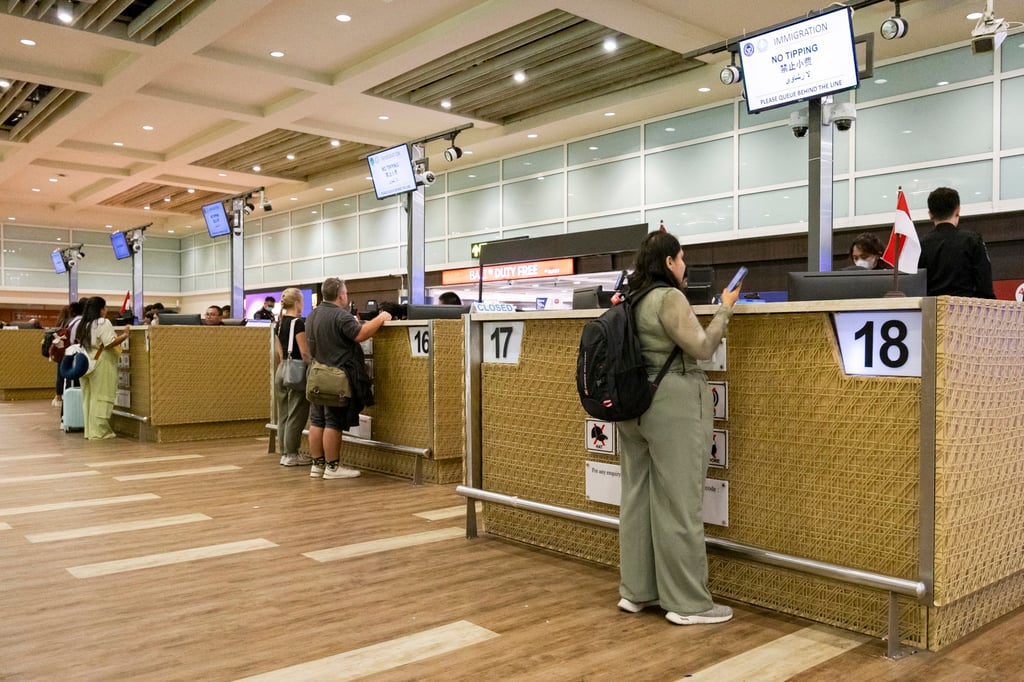
Heni Hamidah, director of the protection of Indonesian citizens at the Ministry of Foreign Affairs, urged the public to exercise vigilance against matchmaking offers involving foreign nationals – particularly those promising dowries, large financial windfalls or falsified documents.
“The public is expected to ascertain the background of prospective partners and the legality of the marriage process through authorised agencies before making a decision,” Heni said.
Heni did not respond to a question on whether Jakarta and Beijing had a formal legal mechanism to jointly investigate bride-trafficking cases. In 2019, then-foreign minister Retno Marsudi met her Chinese counterpart Wang Yi to discuss measures to stop the practice, including deepening law enforcement cooperation to arrest agents operating in China.
KioskNews shows a cleaned-up reading view extracted from the publisher’s page — the original always lives on their site, not ours.