Elon Musk, Jensen Huang have opposing outlooks on AI neoclouds. Who is likely correct?
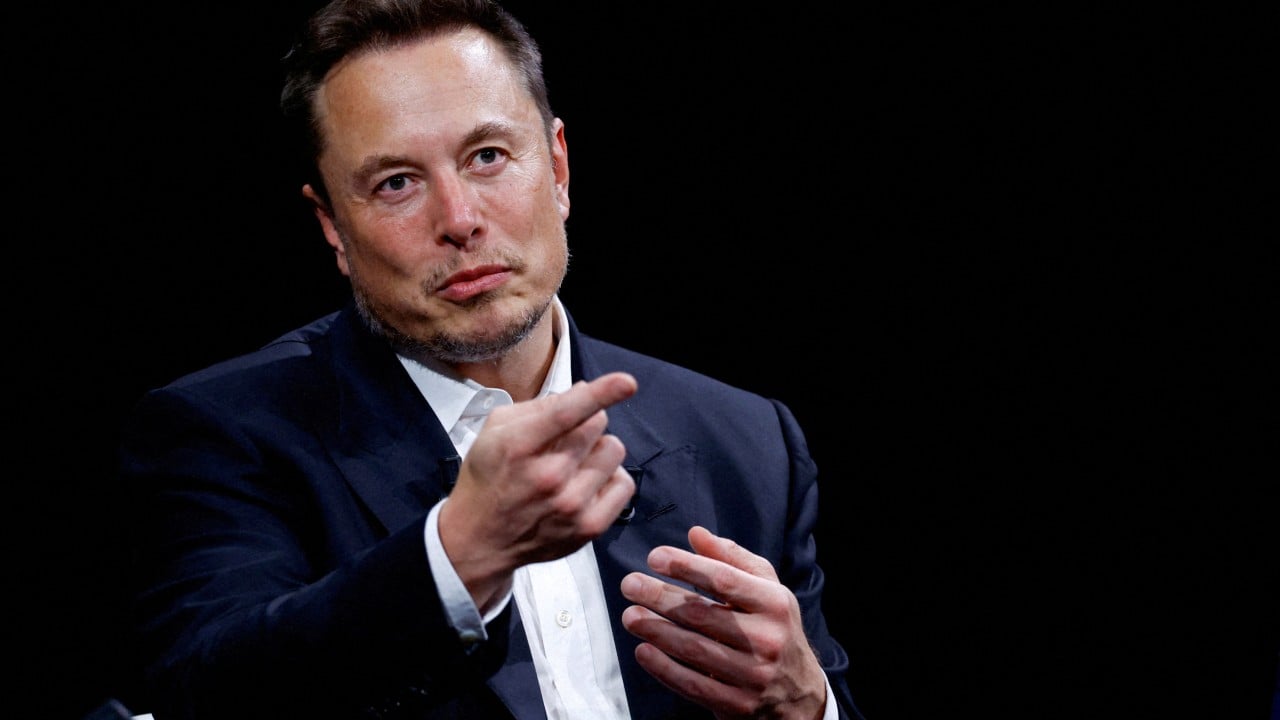
As investor anxiety over an artificial intelligence bubble mounts, SpaceX’s Elon Musk and Nvidia chief Jensen Huang have offered starkly divergent outlooks on whether the specialist cloud providers powering the boom can survive their mounting debts.
While Musk has warned of impending collapses and consolidation among the more than 200 dedicated graphics processing unit (GPU) rental ventures known as “neoclouds”, Huang remains bullish, insisting that robust market demand will unlock the capital needed to keep the sector afloat.
The dispute highlights the growing liquidity pressures facing AI infrastructure providers worldwide, including in China, where tech giants and specialised data-centre developers are committing tens of billions of dollars to build computing capacity before clear monetisation pathways emerge.
Musk, who heads Tesla, SpaceX and xAI, wrote on social media on Sunday, predicting widespread failures across the neocloud sector, noting that lenders have largely retreated from backing operators that lack established revenue streams outside of AI data centres.
“Some will make it through, but not many,” he wrote.
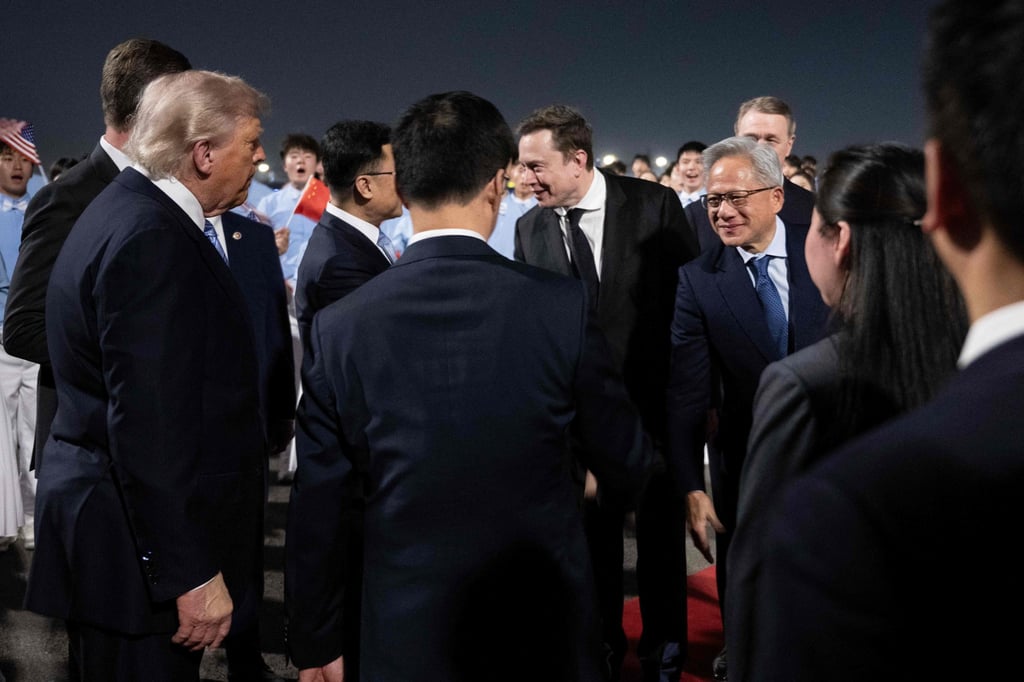
Huang offered a sharply contrasting assessment days earlier. Speaking to US broadcaster CNBC in Berlin on Thursday, the Nvidia boss described neocloud demand as “off the charts”. While acknowledging a near-term capital crunch, Huang dismissed systemic concerns, saying: “That’s going to get solved.”
Nvidia has actively stepped in to ease customer financing, announcing partnerships in August with six financial institutions to help mobilise more than US$500 billion in third-party capital over an extended period of time.
Neocloud operators face an acute cash-flow lag. They must outlay billions of dollars to secure high-end processors and data-centre space months or years before they can generate rental income. Construction delays can further postpone revenue while borrowing costs accumulate.
The strain is already visible among market front-runners. Bernstein Research estimated this week that US market leader CoreWeave would require between US$18 billion and US$42 billion in additional financing to deliver on its roughly US$129 billion contracted backlog. The report warned of rising funding costs as the firm pursued shorter leases.
CoreWeave’s second-quarter revenue more than doubled year on year to US$2.6 billion, but net interest expense surged to US$640 million from US$267 million over the same period.
In August, the company disclosed that a loan carrying a roughly five-year maturity was backed by customer contracts averaging just three years. While CoreWeave said shorter deals often commanded higher prices, the mismatch exposed the firm’s lenders to income uncertainty once initial agreements expired.
Higher borrowing costs or lower rental prices could put further pressure on CoreWeave’s profitability and ability to service debt, even if overall demand for computing continues to grow.
Financing lines remain open to some neocloud providers, but credit terms are bifurcating based on counterparty quality. Nebius secured a US$3.5 billion bridging loan from Citibank last week and said that longer-term funding options included borrowing against more than US$40 billion of contracts with investment-grade customers.
“The capital will be there, but increasingly on different terms for different borrowers,” Morgan Stanley wrote in a report on Sunday.
For hyperscalers such as Microsoft, Amazon, Alphabet and Meta Platforms – as well as China’s internet titans – large existing operating cash flows provide a protective buffer against capital-market volatility that pure-play data-centre operators lack.
Even for diversified conglomerates, however, the capital requirements are heavy. Chinese internet giants Alibaba Group Holding, Tencent Holdings and Baidu together racked up 131.9 billion yuan (US$19.8 billion) in capital expenditure during the second quarter, leaving all three with negative free cash flow, their filings showed.
Tencent generated 52.7 billion yuan in quarterly operating cash flow, reporting that free cash flow would have remained positive at 37.6 billion yuan were it not for heavy prepayments for computing capacity.
Alibaba owns the South China Morning Post.
Chinese builders hold some operational advantages over US peers, notably around power hookups and regulatory permits.
According to research firm SemiAnalysis, a standard 100-megawatt facility in China could be delivered in around 12 months, cutting the cash-burn window before rental income began, even though US export controls on advanced AI chips created distinct equipment bottlenecks.
Still, market valuation pressures could spill over into Chinese computing and data-centre counters, warned Chelsey Tam, senior equity analyst at Morningstar.
04:16
How AI is helping finance advisers provide clear and customised advice to clients
She noted that valuation multiples could compress in tandem with global peers before cash flows adjusted, adding that high capital expenditure across the industry was likely to persist through 2028 before revenues caught up.
Charlie Chai, vice head of research at investment consultancy 86Research, noted that unlike Western neocloud operators, which were buffeted by bond-yield swings, the Chinese AI players enjoyed relatively stable funding conditions.
However, a bigger risk for China’s AI industry lay in the cost- and margin-consciousness of domestic enterprises and consumers, raising doubts over whether end-user spending on AI tokens could ultimately justify vast infrastructure investments, he said.
Still, Chai expected the cycle to conclude in a soft landing globally, rather than an abrupt crash.
“Unusually significant constraints on capacity expansion across the AI supply chain could restrain overinvestment,” he said. “This distinguishes the current boom from previous speculative bubbles.”
He added that it was premature to tell if China was also facing a bubble concern, since geopolitics further compounded normal fab constraints.
“A bubble is only obvious in hindsight,” Chai said, echoing a remark often associated with former US Federal Reserve chairman Alan Greenspan.
KioskNews shows a cleaned-up reading view extracted from the publisher’s page — the original always lives on their site, not ours.