BOOK REVIEW: Is democracy Africa’s path to development? Jakkie Cilliers isn’t so sure
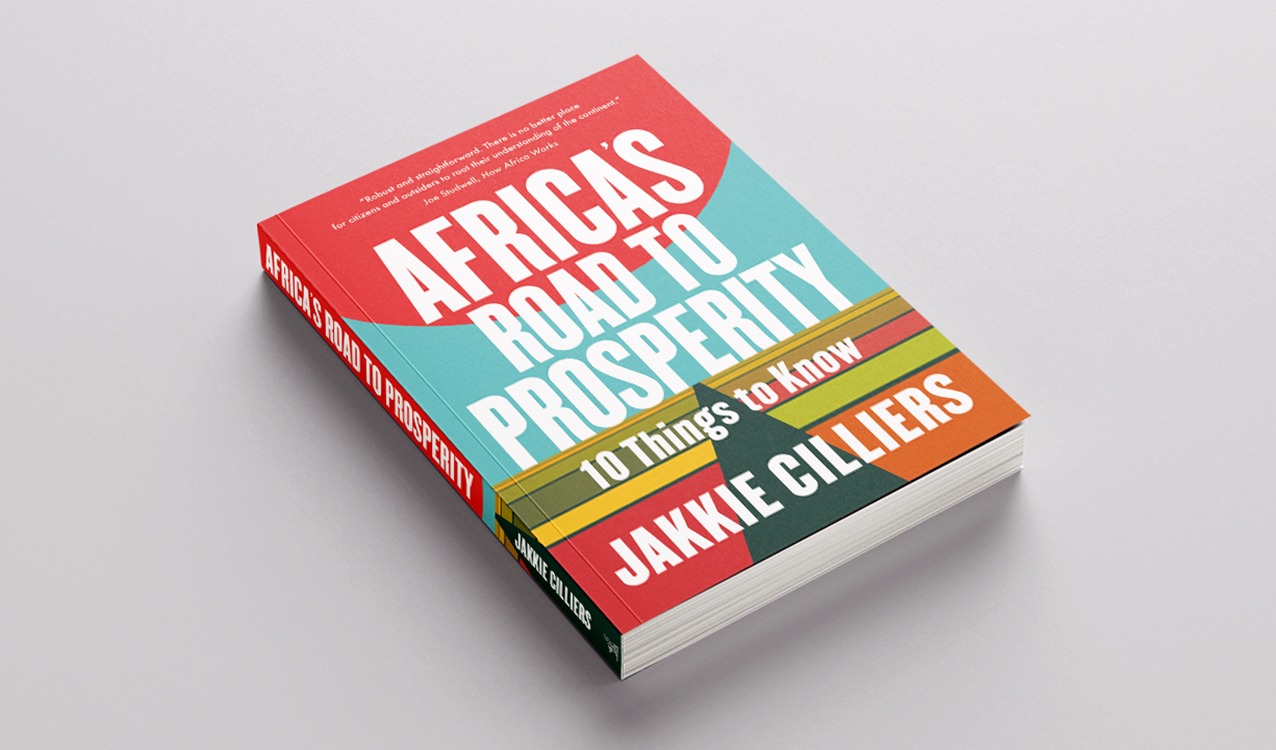
Jakkie Cilliers is not afraid to court controversy. In his latest book, Africa’s Road to Prosperity: 10 Things to Know, just published, Cilliers, founder of the Institute for Security Studies (ISS) and now head of its African Futures and Innovation Programme, for instance, says that democracy is not necessarily the panacea for Africa’s ills that many believe.
In fragile post-conflict states such as Somalia and South Sudan, competitive politics (including elections) can even undo much of the progress made in ending violence, as politicians often rally electoral support based on ethnic or religious grounds.
The historical evidence, he says, suggests rather that low-income African countries should first strive for stability, particularly control over their territories, which many lack, and strong institutions, to provide a secure platform for economic growth “and then gradually strengthen democracy”.
This view has, unsurprisingly, dismayed some African opposition leaders trying to dislodge dictators.
Cilliers acknowledges there is a dilemma as “authoritarian growth models are risky and often unsustainable as they depend heavily on individual leaders rather than durable institutions”. Indeed, one should add, the problem is that so many authoritarian African leaders cling so tenaciously to power, permanently postponing the evolution to democracy.
Democracy first or security first seems to be an insoluble chicken and egg conundrum.
Questioning the democratic dividend
Another controversial view is that demography is “the master variable” in determining a country’s developmental performance, even more important than governance, which most analysts would rank first.
Many believe Africa’s very large and rapidly growing population – which Cilliers predicts will explode from 1.552 billion in 2025 to 2.586 billion in 2050 – is a hopeful sign that it is the continent of the future. But Cilliers argues that because of its exceptionally young population, Africa has a very high proportion of young dependents for its workers to support.
Africa’s population will only become an asset when it enters a window of opportunity when its median age, now 19.5 years in southern Africa, reaches 25.5 years. Or put differently, when its working-age population exceeds its dependent population (children and retirees) by at least a ratio of about 1.7:1. Then it will reap a “democratic dividend”.
Cilliers advises African countries to hasten the demographic dividend, with measures such as more family planning, more empowerment of women and better education for girls since all these measures tend to bring down the birthrate and therefore increase the relative size of the working population.
/file/attachments/orphans/IMG_2435copy_268117.jpg "Africa's road to prosperity, Jakkie Cilliers. (Photo: NB Publishers)")
But Cilliers nevertheless does blame “gerontocracy”, ageing political elites and entrenched traditional authorities, who favour business as usual over radical transformation, for hindering Africa’s efforts to break out of poverty. He lists several geriatric presidents-for-life, notably Cameroon’s President Paul Biya, now 96, who has been in power since 1982 and got himself elected last year for another term during which he will turn 100, if he survives.
Perhaps the most important reform which geriatric and particularly traditional leaders are resisting, he says, is to transform the 90% of land held communally in Sub-Saharan Africa into freehold or leasehold so that individual landowners can fully develop it, including by raising loans against their own land.
Cilliers says that the Green (agricultural) Revolutions elsewhere in the world were typically ignited by monetising communal land in this way. He says private land ownership is being particularly strongly resisted in KwaZulu-Natal, where the Ingonyama Trust, run by the Zulu king, administers about one-third of the province’s land – as though it owns it – which it doesn’t.
Critical manufacturing
Then Cilliers says job creation “must become the organising principle of economic strategy” since he projects Africa’s working-age population will exceed 1.6 billion by 2050, and so the continent will have to generate hundreds of millions of jobs just to prevent the already high unemployment rate from rising and exacerbating instability.
He says formal wage employment cannot absorb this surge, so African countries must not only rebuild manufacturing, but also expand high-growth, tradable sectors such as tourism, agro-processing, horticulture and ICT-enabled services (like Kenya’s famous mobile-phone banking service M-Pesa). Cilliers says these tradeable services have been dubbed “industries without smokestacks”.
He notes that some analysts have proposed that Africa should go straight to services and bypass the usual next step because average African manufacturing has stagnated at about 13% of GDP since 2020. Even in Africa’s historically most industrialised nation, South Africa (which has just ceded the top spot to Morocco), manufacturing has shrunk from almost 25% of GDP in 1981 to 12.% in 2025.
However, Cilliers insists that some sort of manufacturing revolution is critical for Africa’s development because, apart from creating jobs, it fosters technological learning, export competitiveness and the growth of large firms to anchor value chains.
Free trade
He suggests that the fledgling African Continental Free Trade Area (AfCFTA) covering almost the entire continent, could be the key, by creating a market big enough to stimulate investment in light manufacturing – such as motorbikes, construction machinery, solar panels and intermediate goods – for the African market, as well as the processing of critical minerals, such as the DRC, Zambia and US joint venture to manufacture electric vehicle batteries.
Cilliers forecasts the AfCFTA could boost the African economy by more than a trillion dollars by 2050, increasing GDP per person by 9% and decreasing poverty by 14%.
A critical requirement for the AfCFTA to take off, though, will be filling Africa’s huge infrastructure financing gap, of between $130-billion and $170-billion, annually, building the roads, railways, bridges and one-stop border posts to link markets to one another.
To meet that need, most African countries have to greatly increase tax collection – which now equals only an average of 16% of GDP, much lower than almost all other regions. They also need to deepen their financial markets so they can borrow more domestically. He notes that only 34 countries have stock exchanges.
They also need to borrow more internationally, and the costs of such borrowing need to be reduced, including by improving credit ratings, which he believes are now biased against Africa, as well as by creditors providing more concessional financing and debt refinancing
Cilliers also recommends a balanced role for the private sector and government, with the former taking the lead in productivity while the latter regulates it and redistributes wealth, avoiding a Trumpian scenario “that leaves everything to billionaires and big firms”, which will create greater inequality and eventual instability.
Geopolitically, Cilliers suggests African countries should be non-aligned, though he also suggests, somewhat ambivalently, that they should draw closer to Europe and India, rather than China or the US, in part because of a greater alignment of values as well as for partnerships, particularly in green industrialisation, critical minerals, digital infrastructure and labour mobility.
The book is a comprehensive guide to African leaders.
“With smart choices and collective effort, Africa can become a place of prosperity, justice and leadership in the world,” Cilliers concludes.
That is no doubt true. The trouble, of course, is that you can take a horse to water, but will all those geriatric presidents and chiefs really want to drink? DM
KioskNews shows a cleaned-up reading view extracted from the publisher’s page — the original always lives on their site, not ours.