With rent of nearly S$10,000, can this Yishun family keep selling S$2 nasi lemak as costs rise?
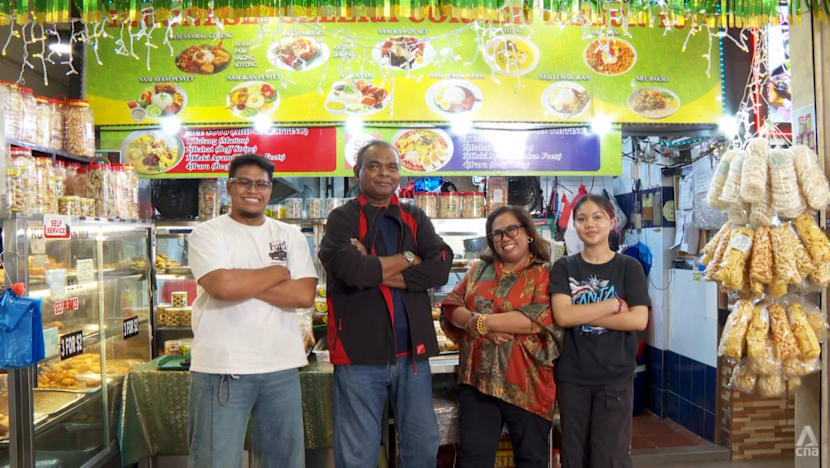
His parents see their stall’s best-known dish as a way of giving back, leaving second-generation owner Adam Danish to make the numbers work. CNA’s Money Mind finds out what the family must do.
New: You can now listen to articles.

This audio is generated by an AI tool.

26 Sep 2026 06:00AM
SINGAPORE: For a food stall whose rent is nearly S$10,000 (US$7,820) a month, but still sells nasi lemak at S$2, one might think its owners did calculate the cost of selling at that price.
Certainly, that was what Adam Danish thought until he joined the family business this year. “It was messy, because there weren’t any numbers being recorded,” said the 25-year-old second-generation owner of Indonesian Selera Corner in Yishun.
Without crunching the numbers properly, it was hard to tell if sales were covering costs — and if the family can keep the dish to S$2, a price they have maintained for more than a decade.
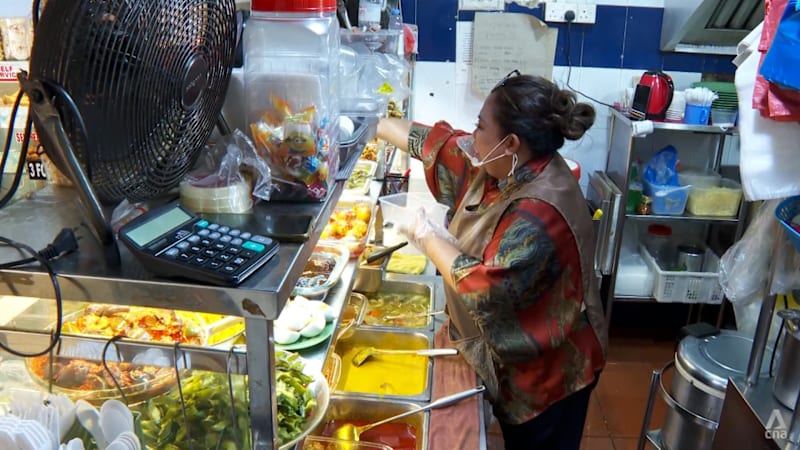
They run their stall in a privately owned coffee shop, where rents are commercially based and can be considerably higher than at government-run hawker centres. With utilities, the family pays S$13,000 a month, before manpower and ingredient costs.
Those cost pressures are climbing too. Adam said supplies and utilities were among the stall’s biggest cost increases over the past year, and the family has already had to raise the prices of many other dishes by 50 cents.
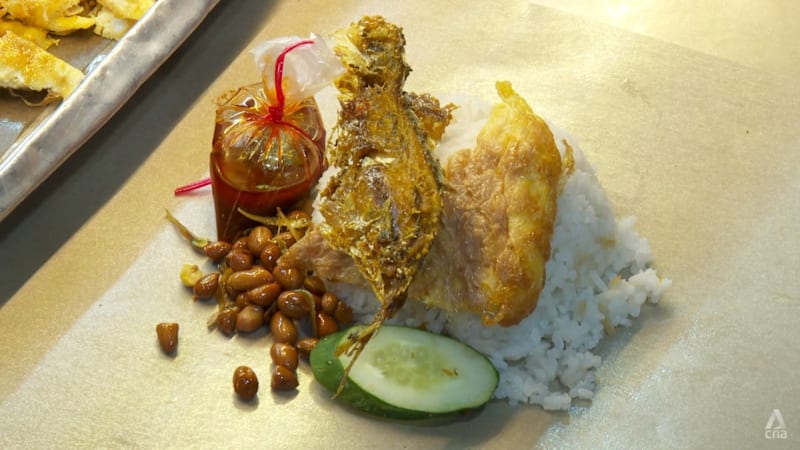
But not the S$2 nasi lemak, which his parents began selling after an elderly customer said she wanted something smaller than their standard S$5.50 portion.
They later found the smaller serving also suited other customers, such as workers caught up in the morning rush who need to grab a quick bite to eat.
The stall now sells about 200 packets a day. For Adam’s parents, this was never meant to be a big money-maker, but rather a little something for customers including large families, low-income households and the elderly.
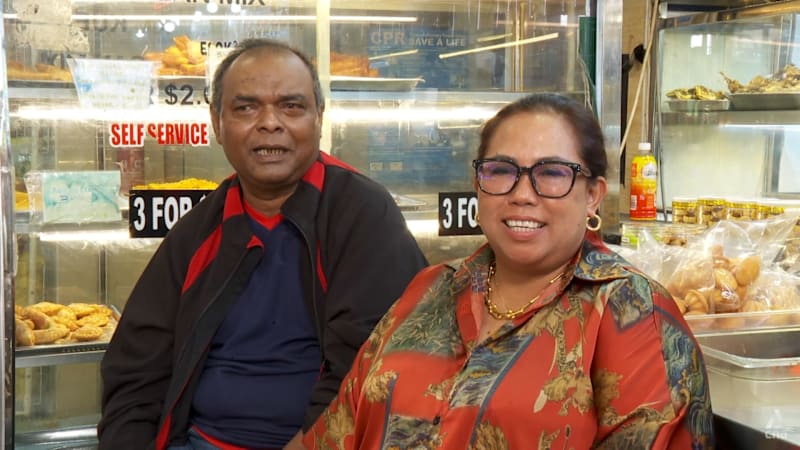
“I believe what we get we have to return to the public,” said his mother, Sakdiah Abdul Latiff, 53.
But can Adam and his sister, Nurangellina Hassan, 18, who goes by Angel, keep the stall going without raising the price of a dish their parents want to keep affordable?
They must get the business’ finances in order, rein in costs and find new revenue sources, Money Mind finds out.
GETTING A GRIP ON FINANCES
When Adam joined the business, its accounts were not detailed enough to show how much each dish was making.
WATCH: S$2 nasi lemak, ~S$10,000 rent — How this Gen Z hawker finds new ways to earn (7:26)
His parents had been looking at “top line numbers” instead of the bottom line, he said, referring to the amount they received from sales. This did not give them a clear view of their profit margins.
So, he began breaking down the costs. A S$2 packet of nasi lemak with rice (30 cents), fish (40 cents), egg (10 cents), sambal (20 cents) and other sides (30 cents), such as cucumber and peanuts, is worth S$1.30 in ingredients — before the other operational costs are added.
But nasi lemak is only part of a wider menu that includes epok epok (fried pastries) and nasi padang (Indonesian-style rice meal). And the latter is the stall’s main revenue earner: On average, customers spend about S$7 per order.
Adam worked out the break-even point for the stall as a whole: It needs to sell 159 plates of food every day, at S$7.40 each. This is before the family draw their salaries.
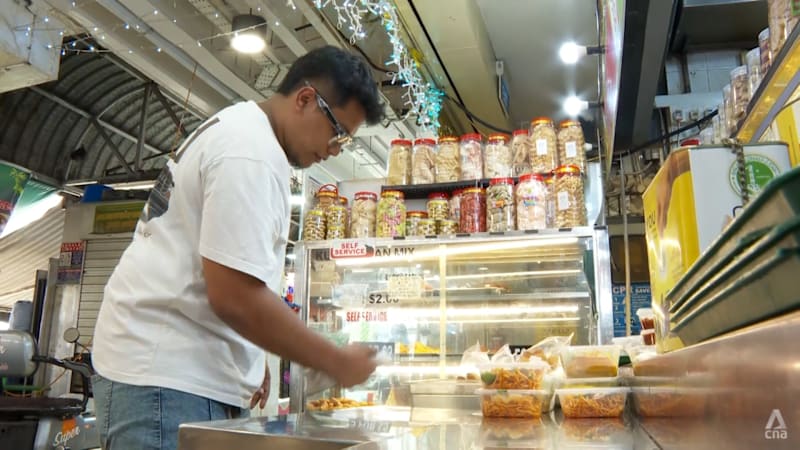
Getting the accounts in order also gave him a clear idea of what the business could pay him, which, for the first four months, was nothing.
His first pay cheque, in June, was S$1,500. And his target is a salary of S$4,000 a month, which he has yet to reach.
The family has also been looking more closely at costs — without lowering the quality of its food.
That requires “extra homework”, said Reban. For example, the family now buys fish at Jurong Fishery Port to “get the best price”, rather than from a fishmonger at the market.
Adam is looking at other operating expenses too. They spend about S$600 to S$700 a week on cooking gas and plan on switching to electric cookers, which he estimates would cut that cost by about half.
They have reduced petrol costs by, for example, making fewer trips to Jurong Fishery Port and filling up at a cheaper petrol station, paying S$190 for a full tank instead of S$220 to S$230 at the station near the stall.
But there is a limit to how much the family can save. “We can’t always look at reducing costs because things aren’t going to get cheaper,” said Adam.
“I’LL TAKE EVERY WIN”
There is room to bring in more revenue, however. Over the years, the family expanded the menu to include dishes such as nasi ambeng and nasi jenganan — both are Javanese-style rice sets — and introduced mini buffets.
More recently, Adam and Angel have taken the business online via TikTok Live, using different bundle deals and promotions to draw customers. She handles the morning livestreams, and he takes over from her in the afternoon.
With customers placing their orders via WhatsApp for pickup or delivery, the stall can reach people beyond Yishun. After about two months, said Adam, the gross revenue from the livestreams was as much as S$12,000.
Still, sales are not guaranteed. There are livestreams where they receive no orders. “It’s a new stream of revenue, so I’ll take every win,” he said. “But I believe we can do much better in the future.”
Taking orders online created a manpower challenge, however. Adam found it difficult to host a livestream while simultaneously responding to WhatsApp enquiries.
So he began using an artificial intelligence chatbot to process kitchen orders. It costs him S$50 a month, compared with the estimated S$900 it would cost to hire someone specifically for the role.
Previously, he could spend an hour and a half sorting out orders before packing them, he recalled. With the chatbot, they can be done at the same time, freeing him up to upsell to livestream viewers.
For all these changes made to the family business, its S$2 nasi lemak remains untouched. “That’s the only thing that we can (give) back to the public,” Reban said. “That’s why I say (to) my wife, we stay with it.”
Watch this Money Mind segment here. The programme airs every Wednesday at 9pm.
KioskNews shows a cleaned-up reading view extracted from the publisher’s page — the original always lives on their site, not ours.