Working above an MRT tunnel to deliver flats: Why this S’pore builder earned accolades for its first BTO project
This home-grown construction firm likes breaking new ground, even away from its building site.
For Vico Construction, Tampines GreenOpal represented new territory: It was the firm’s first Housing Board (HDB) build-to-order (BTO) development – and one that would test its mettle.
An MRT tunnel runs beneath the centre of the development, presenting an added challenge as construction teams had to carefully work around existing underground utilities. Then the Covid-19 pandemic brought a manpower crunch that threatened to hold up foundation works.
Navigating those challenges has now earned Vico another breakthrough – its first Certificate of Merit in the construction category for housing at the HDB Awards 2026.
The Housing Board’s annual awards recognise companies and consultants that have contributed to better homes, estates and construction practices in Singapore, including through quality construction and good project and site management.
Vico is no stranger to major projects, having worked on developments such as the Thomson Impressions condominium, Marina Bay Cruise Centre and commercial projects including Food Concept @ Pandan. But building a BTO project as the main contractor was new territory.
Vico’s project director and senior project manager Poh Kim Siah says: “This win is indeed a big milestone for us.”
The project comprises eight residential blocks, two multi-storey carparks with roof gardens and two childcare centres.
Building above an MRT tunnel
One of the biggest challenges Vico faced was out of sight, beneath the development.
The Downtown Line MRT tunnel runs under the centre of Tampines GreenOpal, resulting in more than half the project site falling within the Land Transport Authority’s Railway Protection Zone.
This meant construction had to be carefully planned and monitored to protect the rail infrastructure below.
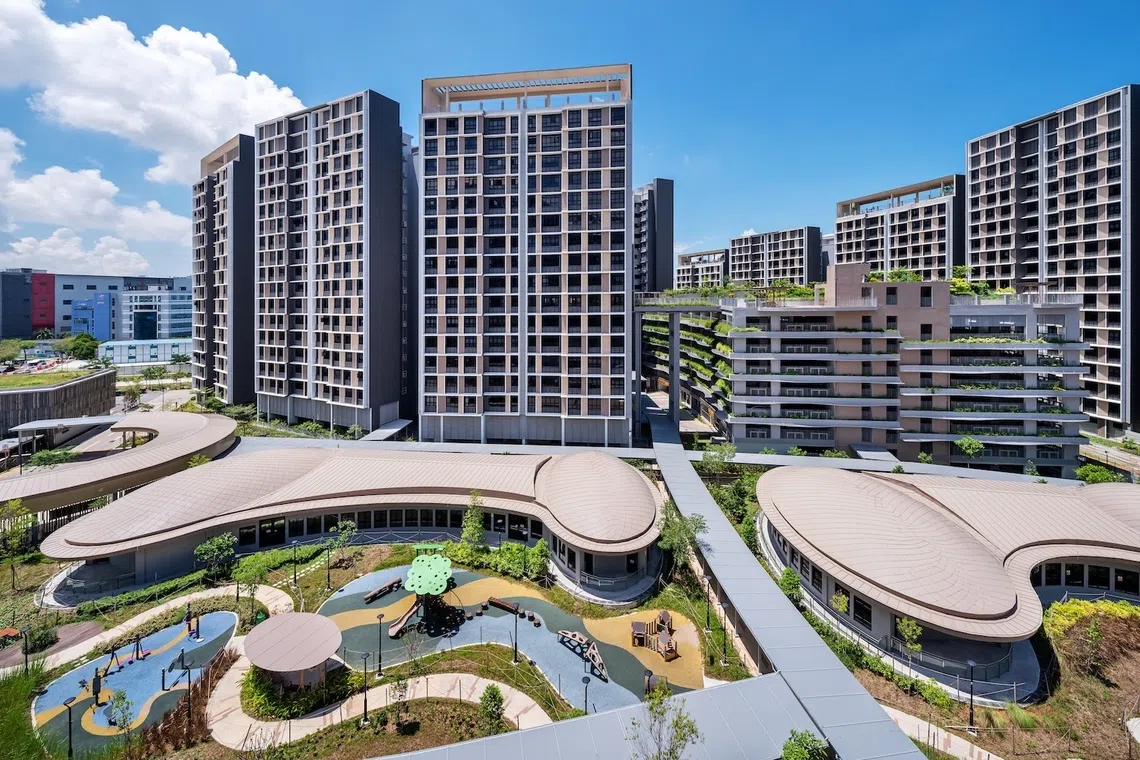
Tampines GreenOpal sits above the Downtown Line MRT tunnel, a key challenge during construction.
PHOTO: VICO CONSTRUCTION
Existing underground services added another layer of complexity. Before work began, multiple trial holes were dug to establish their exact locations and depths.
Vico then worked with the project consultants to determine where the building’s foundation piles could safely be placed. Close monitoring and additional precautions were also taken during construction to protect the underground utilities.
Another test came after the circuit breaker period when a key supplier faced a manpower shortage in fabricating rebar cages – steel reinforcement required for the project’s foundation piles.
Rather than waiting for the supplier to catch up, Vico deployed its own workers, training them to fabricate the cages in-house.
Poh says the team eventually produced about 30 per cent of the rebar cages itself, helping to save three months and keeping the project on track.
How technology is used to work smarter, faster
Technology was another way Vico sought to save time and manpower.
Poh says digital tools are becoming increasingly important as the construction industry seeks to boost productivity while relying on a smaller workforce.
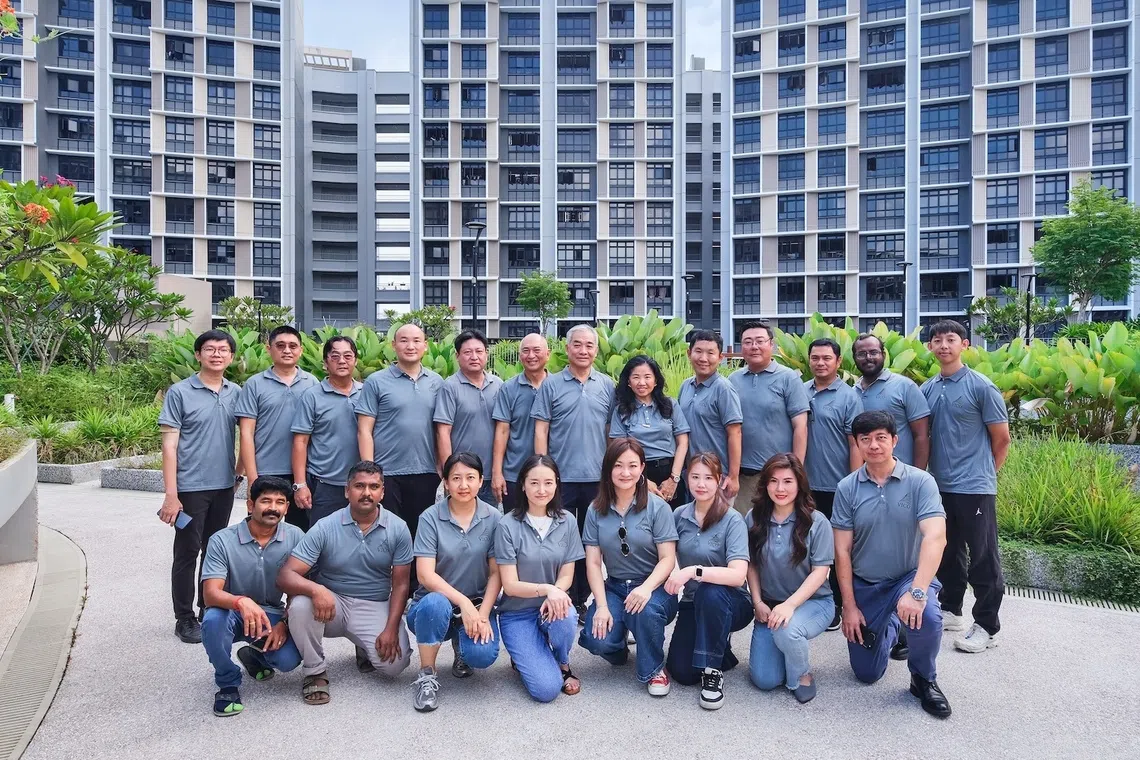
The Vico Construction team piloted 3D building models and QR-code tracking to save time, improve coordination and reduce rework at the BTO development.
PHOTO: VICO CONSTRUCTION
“In future, projects must move towards more productivity while relying on fewer workers. We must embrace technology to help increase productivity,” he says.
At Tampines GreenOpal, Vico used Building Information Modelling, which creates a digital model of a building so that its design and construction can be checked before work begins.
The 3D models allowed the team to see where pipes, openings and other building services should go, helping to identify potential problems early and reduce the risk of work having to be redone.
“Previously, a physical demo mock-up is required but with this technology, we are able to know where the pipes are, for example, and we can reduce abortive work and confirm the designs earlier,” says Poh.
QR codes were used to track precast building components from factory production to delivery and installation. This allowed problems to be spotted early and suppliers to be contacted when critical components were missing to prevent delay in progress.
Vico proposed using precast components for roof structures standing more than 5m high, instead of building them from scratch on site. These components were made in a more controlled environment before being transported to the development for installation.
The change saved about 700 man-days across the eight residential blocks, while reducing the risks of workers having to carry out extensive work at height.
Safety at the core
Safety was another priority for Vico. Poh says: “Safety shares equal importance with production, quality and cost.”
According to the company, it clocked 5.4 million accident-free man-hours over the course of the project, where the workforce reached about 500 to 600 people at its peak.
Workers attended daily toolbox meetings to go through the risks of the day’s activities and the protective equipment required. Vico also held regular meetings with subcontractors to review site conditions and address safety issues.
Having broken new ground with its first BTO project as main contractor, Vico is looking to build on the experience.
Poh says the company will continue exploring technology and construction methods that can make its projects safer, more efficient and less reliant on manpower.
KioskNews shows a cleaned-up reading view extracted from the publisher’s page — the original always lives on their site, not ours.