Israel establishes 12 military sites in Gaza since ceasefire: New York Times
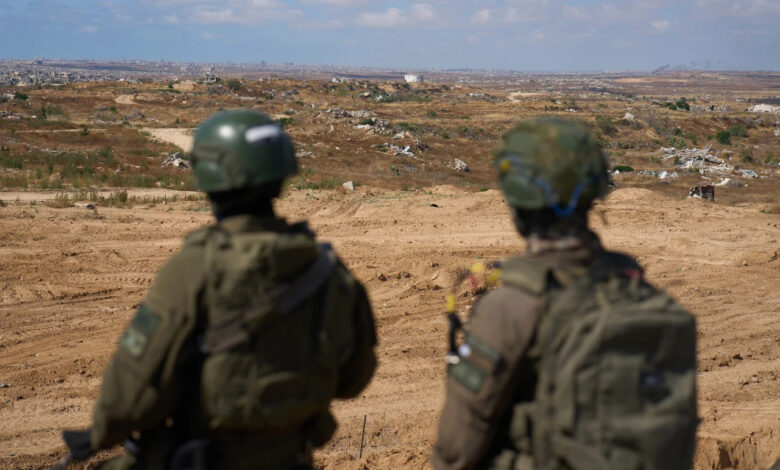
The New York Times revealed that Israel has entrenched and expanded its control within the Gaza Strip, a year since the ceasefire between Israel and Hamas took effect.
The newspaper noted that Israeli forces have fortified their positions, established at least 12 military outposts, and advanced beyond the agreed-upon withdrawal line.
Citing analysis of satellite imagery, the newspaper reported that—according to analysts, diplomats, and Gaza residents—Israel’s actions since the ceasefire appear to be cementing what was intended to be a temporary division of the Strip: an expanded Israeli-controlled zone and a smaller area administered by Hamas, where the majority of Gaza’s approximately two million residents currently live.
The New York Times explained that the US-backed ceasefire, which took effect in October 2025, placed about half of the Strip under Israeli control.
Israeli Prime Minister Benjamin Netanyahu meanwhile announced in May that the military controlled approximately 60 percent of Gaza’s territory and intends to seize more.
It added that Israel could still withdraw if a ceasefire agreement makes progress, though the subsequent steps appear stalled.
Hamas agreement
US officials said in July that they had reached an agreement with Hamas regarding the laying down of arms, but Netanyahu rejected the plan and refused to withdraw without “genuine disarmament.”
The Israeli military explained that the establishment of its bases in Gaza aligns with its defensive doctrine, operational needs, and the ceasefire agreement; the aim is to protect Israeli forces and nearby communities within Israel.
In addition to military outposts, Israeli forces have deployed roadblocks, erected earthen berms, and imposed restrictions on access to areas within the Strip.
Satellite imagery revealed new Israeli positions along the “Yellow Line,” while Israeli forces have destroyed thousands of buildings in areas under their control since the truce began—part of operations described as targeting — among other things — Hamas’s tunnel network.
The images also showed the destruction of more than 100 buildings south of Deir al-Balah between late August and early September.
The newspaper noted that, according to the UN Human Rights Office, approximately 80 percent of housing in Gaza has been destroyed or damaged, and at least 196 Palestinians—including 18 women and 43 children—have been killed near the “Yellow Line” since the ceasefire.
KioskNews shows a cleaned-up reading view extracted from the publisher’s page — the original always lives on their site, not ours.