Opinion: Opinion | Classroom Violence: Cinema, Society And The Crisis Of Responsibility
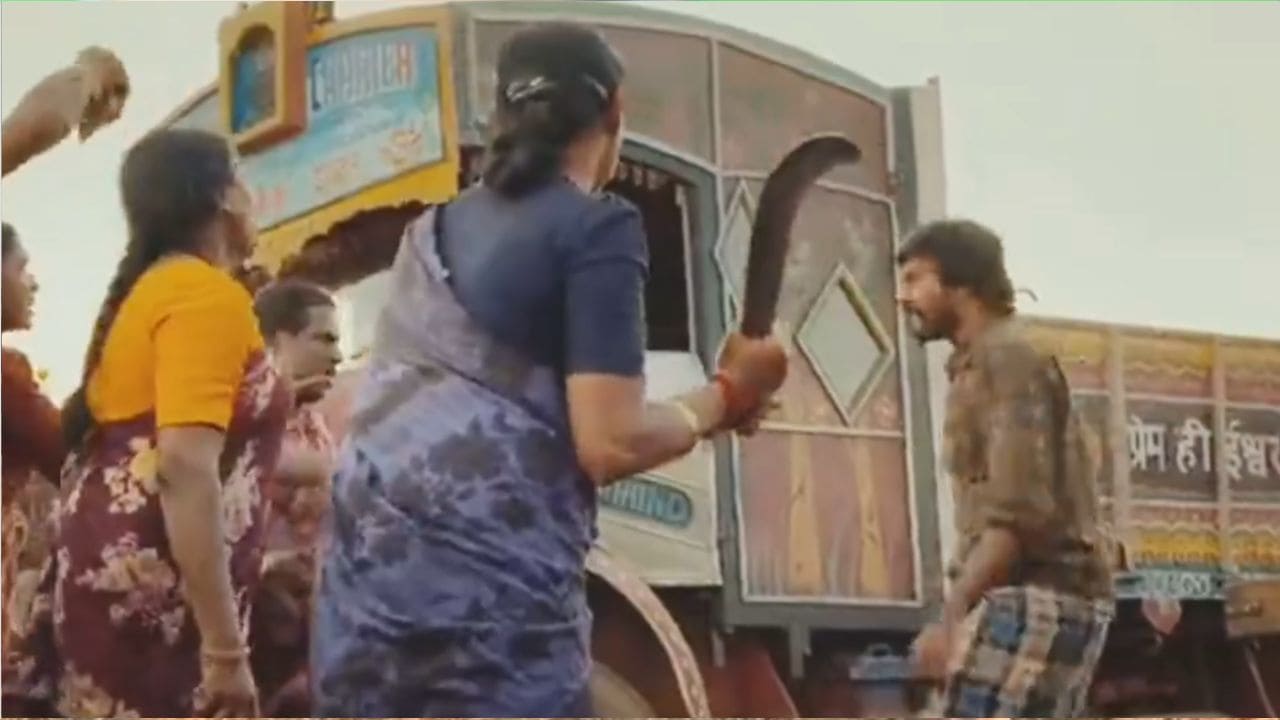
In Karthik Subbaraj's recently released Tamil film, Dorothy, a little boy named Subbu who grows up in a toxic all male household where the mother and sister died by suicide and the two older brothers are made to believe that women are poison, finds solace in his sister-in-law as he grows older. He learns how to cook with her, washes dishes with her, and shares his deepest secrets with her.
She teaches him that there is another way to live. Boys are allowed to cry, they don't always have to fight like Bruce Lee, and they don't have to treat women badly. The movie ends, controversially, with Subbu discovering he wants to be a woman, but it has sparked a conversation on the depiction of masculinity in cinema. The immediate spark is the two gruesome classroom assaults recently. One was in Panchkula where an eight-year-old boy brutally attacked a six-year-old in a government school classroom. The girl, who was seriously injured, is recovering in hospital and is now out of danger but is suffering from PTSD.
Advertisement - Scroll to continue
The other was a 21-year-old man, Hemanth, in Raptadu, who approached a 15-year-old student, and attacked her with a chainsaw, in a Zilla Parishad High School, leaving her critically injured. Another girl was injured when she tried to intervene. According to the police, Hemanth had been stalking the teenager and proposed to her. The attack is suspected to have followed her rejection of his advances.
There has been a combined outrage against violent movies such as 'Dhurandhar' and 'Animal', which have been blamed for such widespread behaviour. But to quote filmmaker Ram Gopal Varma's post on X, it is like blaming the Ramayana for a rise in kidnappings. Few buy the magic bullet theory now, which believes that media messages act like a bullet or a syringe, injecting ideas directly into a passive, uniform audience that absorbs them immediately without resistance.
Advertisement - Scroll to continue
But society is not passive. It is ever evolving and now. more than ever, there are many influences on adolescents, apart from parents and teachers. There are video games, social media attitudes and what is called the incel culture. All these were examined indepth in Netflix's disturbing series Adolescence (2025), the fictionalisation of a series of attacks in England on young women by young men increasingly in the grip of a culture that blames women, society, and genetic determinism for its romantic failures.
Movies are part of the culture, but not the whole, even if the classroom attacks bear a striking resemblance to a scene in Sandeep Reddy Vanga's 'Animal' (2023) where Ranbir Kapoor carries an AK47 into his sister's classrom to terrorise her classmates.
Movies certainly exacerbate latent deliquency but cannot be said to cause them. Mumbai-based clinical psychologist Varkha Chulani believes the two cases cannot be treated similarly. She believes the Panchukula incident is a failure of parenting. "The children have little to no idea about permissible and non permissible behaviour. We cannot censor aggression or ban it. But we definitely can as parents participate in stricter control of what children have acccess to. But today with parents being so scared of their children and constantly pandering to each and every whim of theirs, add to that no discipline or consequences of their conduct, I see that these episodes will only rise.''
She sees the 21-year-old's case differently. She believes there has been a shift in the last decade or so of how women are perceived in India. "The Indian man is threatened. Any woman who's stepping up her game by getting herself an education and financial freedom is being seen as a proverbial threat," she says. "The rise of the incel because the rise of the discerning woman is creating problems for many Indian men. I wouldn't say that the 21-year-old may have thought that far but it's increasingly evident that many men are not being sought because they aren't able to match up. Movies like 'Animal' propagate the philosophy of dominance, subjugation and control,'' she adds.
The influence of these ideologies is deeper for those who anyway are on shaky territory. So keeping a woman unattractive by acid attacks, cutting off her arms, and the ultimate subjugation by rape, will also go up in numbers, she says. Again all these films are easily converted to those who struggle with their own sense of self. The more fragile the more susceptible to influence, she adds.
This also brings up the age-old-debate: do movies mirror society or vice versa. Does nature matter more, or nurture? There is an argument towards the end of adolescence where the father of the 13-year-old who has killed his classmate says "we really don't know what they're watching in their room." To which the wife says: But he had a terrible temper. and sometimes I think we should have seen it and stopped it. "We can't blame ourselves," says the husband, to which the wife utters the utterly heartbreaking line: "But we made him, didn't we?"
Society gives everyone a way out of blame, parents, teachers, even social media. Cinema is a convenient scapegoat. But as much as society would like to take credit for its successes, it also has to acknowledge those it considers rejects. The problem is our institutions are not equipped to deal with those who do not fit into the norm. Any variation is immediately stigmatised, and condemned to invisibility. When such individuals choose to step out of the shadows they have been condemned to, there is a general sense of despair.
But they were always there, whether they are children who shoot other children in America or children who attack other children in India. Perhaps one of the most remarkable movies about school massacres, based on Lionel Shriver's novel, Lynne Ramsay's We Need to Talk About Kevin (2011), examines whether Kevin (the teenage archer who commits mass murder in his school) is a psycopath and hence couldn't bond with his mother or whether his mother's struggle with maternity made him one.
As for filmmakers, they are part of society and use their movies to express their point of view, especially if it is not socially acceptable, as in the case of filmmakers such as Sandeep Reddy Vanga who made Animal. As Cate Blanchett said in a recent speech, quoting the late British painter-novelist Leonara Carrington: "There is so much we cannot say, that is why we have art."
KioskNews shows a cleaned-up reading view extracted from the publisher’s page — the original always lives on their site, not ours.