Hong Kong looks to community networks to support Tai Po fire survivors’ mental health
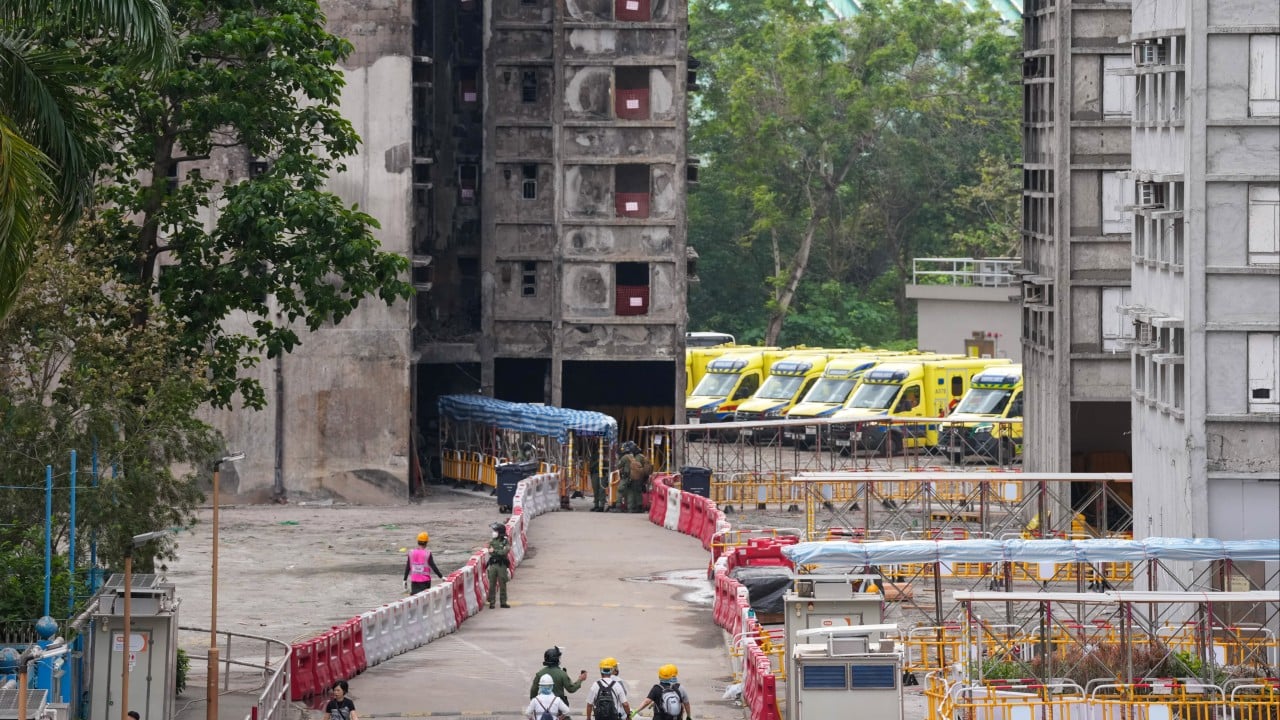
More than 3,000 survivors of Hong Kong’s deadly Wang Fuk Court fire have received mental health support from authorities in the past year, with some experiencing fewer symptoms of post-traumatic stress disorder (PTSD) after psychological intervention.
Dr Lam Ching-choi, chairman of the Advisory Committee on Mental Health, said on Friday that the government would study whether existing community networks could continue to offer mental health support to people affected by the fire.
The committee set up a task force shortly after the blaze last November to coordinate efforts with non-governmental organisations in providing 12 months of compassionate support to survivors of the blaze, which killed 168 people and displaced nearly 2,000 families.
Lam said that survivors faced a monumental challenge of losing their loved ones and their homes, and had taken on difficulties step by step, but emphasised that recovery did not have a deadline.
“These feelings do not necessarily fade away with time, and that is completely normal; they may even become a part of our lives,” he said.
“What is truly most important during this process is having friends, family and people from all walks of society accompanying them and offering continuous support.”
Under the compassionate support programme, NGOs have helped 156 bereaved families, with multidisciplinary professional teams providing free mental health support services such as grief counselling.
Lam said every family had members who might be experiencing different emotions and stages of bereavement, and that the team had provided practical support, including funeral arrangements and help through the grieving that followed.
“We also understand very well that this support does not simply end after the first month or two, because grief is a process, and I want to emphasise again that everyone is different and everyone has their own timeline,” he added.

A second programme for survivors living in transitional public housing estates reached 3,300 residents for initial screenings through outreach visits and psychological assessments.
“Among them, 1,800 residents received what we call low-intensity support, which involves group sessions, individual counselling, active listening and basic mental health therapeutic interventions,” Lam said.
“Another 200 residents required referrals for high-intensity treatment, which consists of professional services provided by clinical psychologists, psychiatrists and other specialists.”
Lam cited a survey conducted soon after the fire that found 21 per cent of the 56 residents displayed PTSD symptoms and 15 per cent had depressive symptoms.
“Later, thanks to mental health support and the residents’ own courage in facing things, both figures gradually dropped to single digits, so the overall trend is quite positive,” he said.
With the year-long compassionate support programme for bereaved families set to end, Lam added that the committee intends to comprehensively review how to advance its work in providing personalised mental health support.
As residents selected new flats under the government’s resettlement scheme, he suggested, the committee could explore making greater use of existing social services in their neighbourhoods.
“How we connect these residents to services in their local districts and help those local service units understand the specific needs of this group is one of the key approaches we are currently considering,” Lam said.
Specialists had advised against using a standardised approach for Tai Po blaze survivors after drawing lessons from the 2017 Grenfell Tower fire in the United Kingdom, where the use of narrow mental health questionnaires was criticised.
“Instead, we aimed for a one-on-one, individualised approach, treating every resident as a unique individual and every family as distinct,” Lam said.
“The feedback from residents has shown us that we walked the right path.”
KioskNews shows a cleaned-up reading view extracted from the publisher’s page — the original always lives on their site, not ours.