Can Indonesia’s Widodo rebuild his political dynasty with key allies gone?
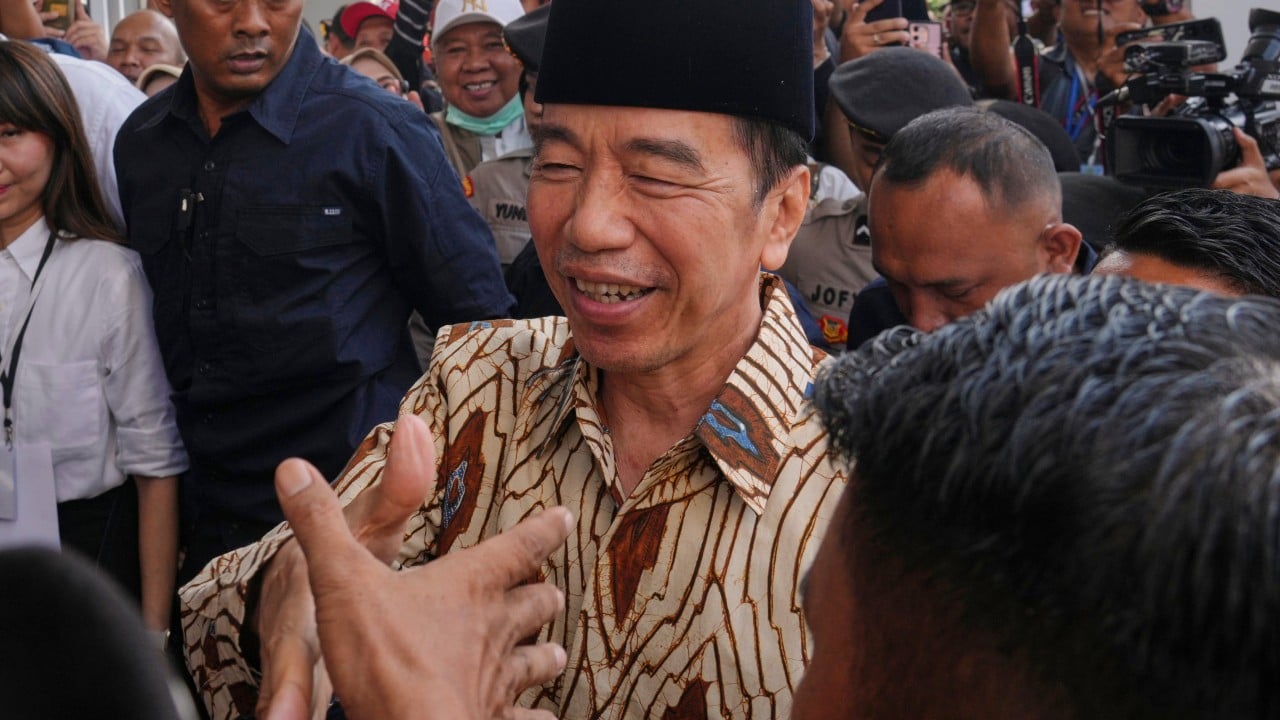
Former Indonesian president Joko Widodo has suffered two major political blows – the resignation of his eldest son as vice-president and the removal of a powerful police ally – recently, raising questions about whether the man popularly known as Jokowi is heading into a political winter.
However, analysts say that while the setbacks may have weakened Widodo’s grip on power, they have not dented his popularity among ordinary Indonesians. And a political party led by his younger son is claiming a surge in support, which could offer the family a path back to influence.
Widodo’s elder son, Gibran Rakabuming Raka, resigned as vice-president on November 12 amid a scandal over his educational qualifications. It followed the dismissal and arrest of police chief Listyo Sigit Prabowo, a known Widodo ally, over an alleged wiretapping scandal.
Gibran’s exit has been interpreted as a sign of a widening political fissure between Widodo and his successor, President Prabowo Subianto, whom he helped win power in 2024 by backing his presidential bid and placing Gibran on the ticket.
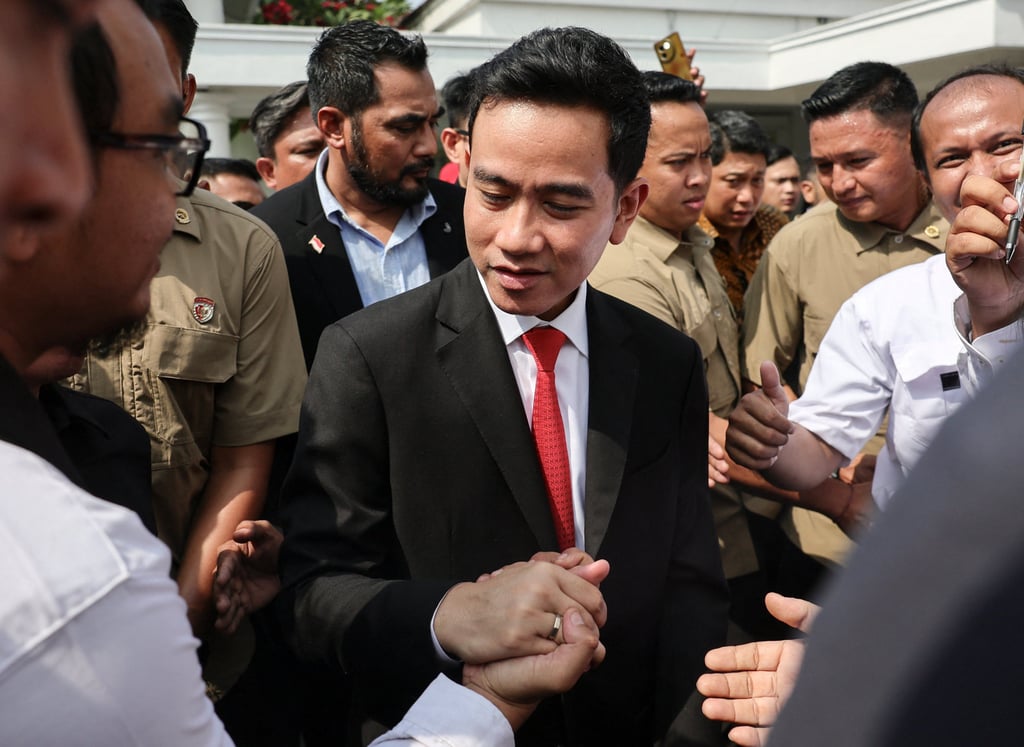
Marcus Mietzner, a political scientist at the Australian National University and author of Widodo’s political biography, Ruling Indonesia, said their falling out was inevitable.
It was only a matter of time before their “purely tactical” alliance disintegrated, he said. “The political interests of the two sides are diametrically opposed: one wants to retain power, the other wants to consolidate it independently.”
Made Supriatma, a visiting fellow at Singapore’s ISEAS-Yusof Ishak Institute, believes Gibran’s resignation, preceded by Listyo’s wiretapping scandal, had dealt a considerable blow to the former president’s political standing.
Listyo, Indonesia’s longest-serving police chief, was relieved of his post by Prabowo on October 1 and arrested on November 3, charged with illicit surveillance of presidential communications.
“With two vital assets gone, Jokowi is at his lowest in terms of influence and reach,” Made said.
Gibran’s resignation had signalled to all levels of government that “the Widodo family is now out of favour”, potentially closing many doors for the former president and his family, Mietzner said.
Popular with the people
But the loss of political influence does not necessarily mean a corresponding decline in popularity.
Wasisto Raharjo Jati, a political scholar at Indonesia’s National Research and Innovation Agency, said the impact on Widodo’s reputation had been limited, particularly among ordinary Indonesians. “At the grass roots level, those two events didn’t significantly affect Jokowi’s reputation,” he said, adding that Widodo’s infrastructure legacy would still endear him to many.
That enduring appeal could offer a political lifeline through the Indonesian Solidarity Party (PSI), chaired by Widodo’s son, Kaesang Pangarep, and of which the former president is also a member.
Mikhail Gorbachev Dom, head of PSI’s environmental division, reported a “sudden political windfall” as a “huge wave” of new members registered with the party this month.He attributed the surge to two events: Gibran’s resignation and Widodo’s court appearance.
01:48
Indonesia’s vice-president submits his resignation as protests continue
On November 5, Widodo testified at two court sessions in a trial against Roy Suryo and Tifauzia Tyassuma, who had been charged with defamation over repeated claims that the former president had used a forged university diploma to seek political office.
Norman Lianto, head of PSI’s disaster relief division, said the party, founded in 2014, had previously recruited between 500 and 1,000 new members daily. But between November 13 and 15, “our website server crashed as some 8,000 to 11,000 people wanted to register from day to day”.
Widodo had deftly used his court appearance to portray himself as being “victimised” to the watching public, Wasisto said. “What should have been his moment of humiliation was turned around into a halo effect.”
Norman attributed the party’s second membership boom to sympathy for Gibran following his resignation. “Gibran put his duty to the nation before his position as vice-president and people sympathised with his sacrifice.”
Given the widespread show of sympathy for both Jokowi and Gibran following recent events, the membership surge was “entirely plausible”, said Saidiman Ahmad, a researcher at pollster Saiful Mujani Research and Consulting (SMRC).
But the party has suffered setbacks too, with three senior figures – Giring Ganesha, Raja Juli Antoni and Isyana Bagoes Oka – leaving on November 9.
Hurdles ahead
Converting Widodo’s popularity into electoral success remains a challenge, though. A July SMRC poll put PSI’s electability at 4.1 per cent, just above the 4 per cent parliamentary threshold used in Indonesia’s 2019 and 2024 elections. Another poll by Survei IPO between July and August gave it just 1.9 per cent.
The party failed to cross the threshold in 2024, and there is talk that it may be increased in the 2029 election. Despite this, Norman said PSI wanted to be “among the four biggest vote-getters” in the next election.
This ambition may not be too far-fetched. Another SMRC poll put Prabowo’s approval rating at just 44.5 per cent in October, potentially creating an opening for Widodo’s family.
“In light of this, Jokowi, his popular predecessor, has become Prabowo’s antithesis,” Saidiman said, adding that PSI’s association with Widodo could boost its growth.
Beyond PSI’s fortunes, another question is whether Gibran can make a political comeback. The former vice-president has not specified his future plans, but Mietzner believes Widodo will have to “recalibrate his dynastic plans”.
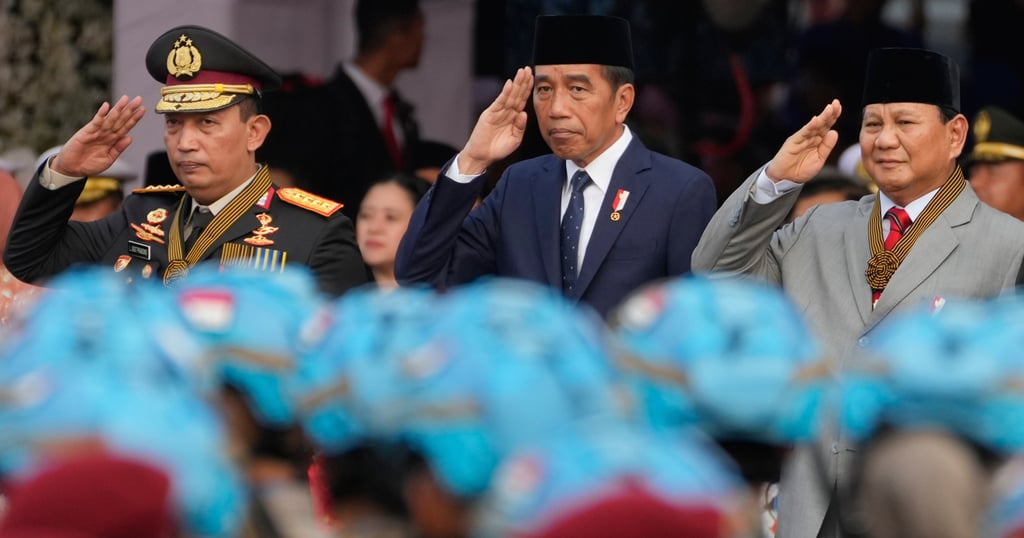
“The new goal for 2029 is presumably to pair Gibran as running mate with another popular candidate.”
One hurdle remains Gibran’s technically non-existent high school diploma, as declared by both the Constitutional Court and the Supreme Court.
A judicial review filed with the Constitutional Court on Saturday seeks to abolish the minimum secondary school education requirement for presidential and vice-presidential candidates.
But Mietzner suggested a more practical solution: “He can always take the Paket C to satisfy the legal requirement.” Kejar Paket C is an accredited high school equivalency programme in Indonesia.
For Widodo, whose political fortunes have long rested on pragmatism and strategic manoeuvring, the challenge now may be to preserve his legacy and his family’s ambitions without the support of the president he helped bring to power.
Mietzner recalled asking Widodo in a 2024 interview what he would do if Prabowo, once in office, sought to dismantle Indonesia’s democracy or his legacy.
“I will fight Prabowo if he does that. I will be at the frontline [of the protest],” Widodo replied at the time.
KioskNews shows a cleaned-up reading view extracted from the publisher’s page — the original always lives on their site, not ours.