Russia Trials Over, This Engine Will Soon Power India's New Stealth Drones
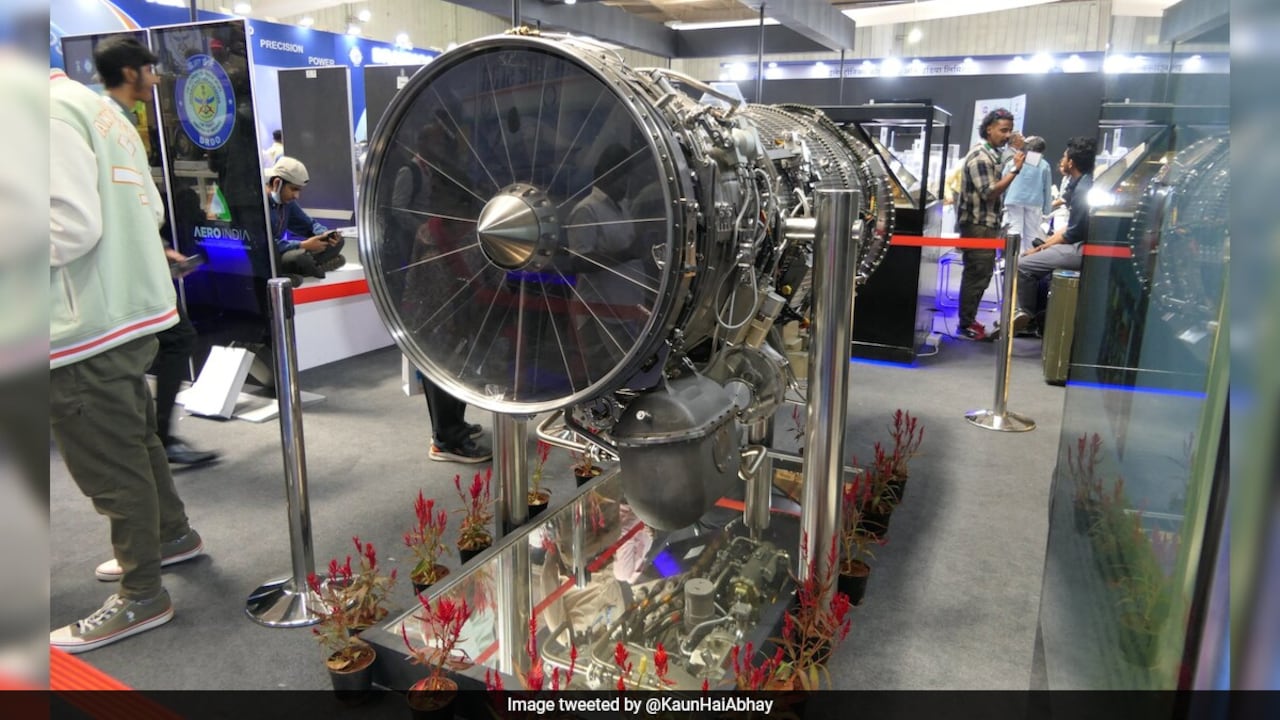
India's homegrown Kaveri dry engine has come through a round of high-altitude and flight trials in Russia, posting a peak dry thrust of 48.5 kilonewtons (kN). That's well above the roughly 46 kN it was meant to deliver.
The engine, built by the Defence Research and Development Organisation's (DRDO) Gas Turbine Research Establishment (GTRE), is meant to power Ghatak, India's planned stealth Unmanned Combat Aerial Vehicle (UCAV).
What Was Tested
The Kaveri Derivative Engine (KDE) is a non-afterburning version of the original Kaveri, made for aircraft that don't need the extra kick an afterburner gives. "Dry thrust" simply means thrust without that afterburner.
The trials ran at two Russian institutions: the Central Institute of Aviation Motors (CIAM) and the Gromov Flight Research Institute. At CIAM, the engine was put through conditions that mimic flying high up, where air pressure and temperature both drop sharply.
Then came the flight tests. Engineers took a modified Ilyushin Il-76 flying testbed, pulled off one of its standard engines and mounted the Kaveri in its place. A testbed like this lets a new engine fly without being tied to a particular aircraft.
Over the course of the trials, the team tested the engine across different ambient pressures, Mach numbers and thrust demands. Some of the work was done on the ground and the rest in the air.
A reading of 48.5 kN, against a target of around 46 kN, suggests the engine now has some room to spare.
What's Next
Now the work moves back home, to certification and integration.
The Centre for Military Airworthiness and Certification (CEMILAC) will go through the test data and other parameters before it grants airworthiness clearance, defence sources said.
None of this means the engine is ready for serial production. It still has to clear certification and be integrated with the platform before anyone can talk about operational use.
If certification and integration go through, the Kaveri derivative could become a serious indigenous engine option for the Ghatak and possibly other unmanned platforms down the line. For India's military aviation sector, it would be another step in a decades-long push to build advanced jet engines at home.
While Kaveri was never used in Light Combat Aircraft (LCA) Tejas, the project it was originally meant for, it gave India hands-on expertise in gas turbine technology and laid the groundwork for the derivatives that followed, including the dry variant now being readied for the Ghatak.
KioskNews shows a cleaned-up reading view extracted from the publisher’s page — the original always lives on their site, not ours.