10 Greatest Magical Realism Books of All Time

Luc Haasbroek is a writer and videographer from Durban, South Africa. He has been writing professionally about pop culture for eight years. Luc's areas of interest are broad: he's just as passionate about psychology and history as he is about movies and TV. He's especially drawn to the places where these topics overlap.
Luc is also an avid producer of video essays and looks forward to expanding his writing career. When not writing, he can be found hiking, playing Dungeons & Dragons, hanging out with his cats, and doing deep dives on whatever topic happens to have captured his interest that week.
Sign in to your Collider account
The label "magical realism" refers to stories that blend realistic fiction with fantasy. They serve up believable drama along with decidedly unbelievable supernatural elements. Often, these fantastical events are treated quite matter-of-factly: miracles, ghosts, impossible coincidences, and unexplained phenomena exist naturally alongside everyday life, often serving as metaphors or manifestations of the characters' emotions.
This subgenre has produced more than a few classics and offers a rich vein of writing to explore. It might not be as popular as high fantasy, but it has carved a distinct, highly successful niche for itself in modern literature. Here, we celebrate the all-time best magical realism books ever written, from Exit West to Pedro Páramo.
10 'Exit West' (2017)

"We are all migrants through time." This incredibly topical allegory follows Nadia and Saeed, two young lovers forced to flee their unnamed war-torn homeland after mysterious black doors begin appearing around the world. These doors instantly transport refugees across international borders. Cleverly, neither the characters nor the novel dwell on explaining the doors. Instead, they function as metaphors for displacement, globalization, and sudden, life-altering upheavals.
In other words, the magic here is subtle and serves to complement the emotional and psychological sides of the story rather than overshadow them. Author Mohsin Hamid uses this to spin a compelling, intelligent story about our current political moment, with debates about border security and illegal immigration roiling around the globe and intensifying with each new day. Exit West has already been the subject of a lot of critical attention and analysis, something which is probably only going to increase.
9 'Klara and the Sun' (2021)

"The Sun was always trying to help us." This gem from writer Kazuo Ishiguro is being adapted into a movie starring Jenna Ortega and Amy Adams, slated for release later this year. Set in a dystopian future, the tale is narrated by Klara, an Artificial Friend purchased to accompany a sick young girl named Josie. Through Klara's innocent observations of humanity, Ishiguro gradually explores love, mortality, faith, and what it truly means to possess a soul.
Although technically bearing elements of sci-fi, Ishiguro treats them in a way more reminiscent of magical realism. For instance, Klara herself has an almost fantastical way of perceiving things, like treating the sun as if it were an omniscient deity with supernatural powers. Likewise, the book is very rich in symbolism and moral ambiguity, casting all its characters in shades of gray.
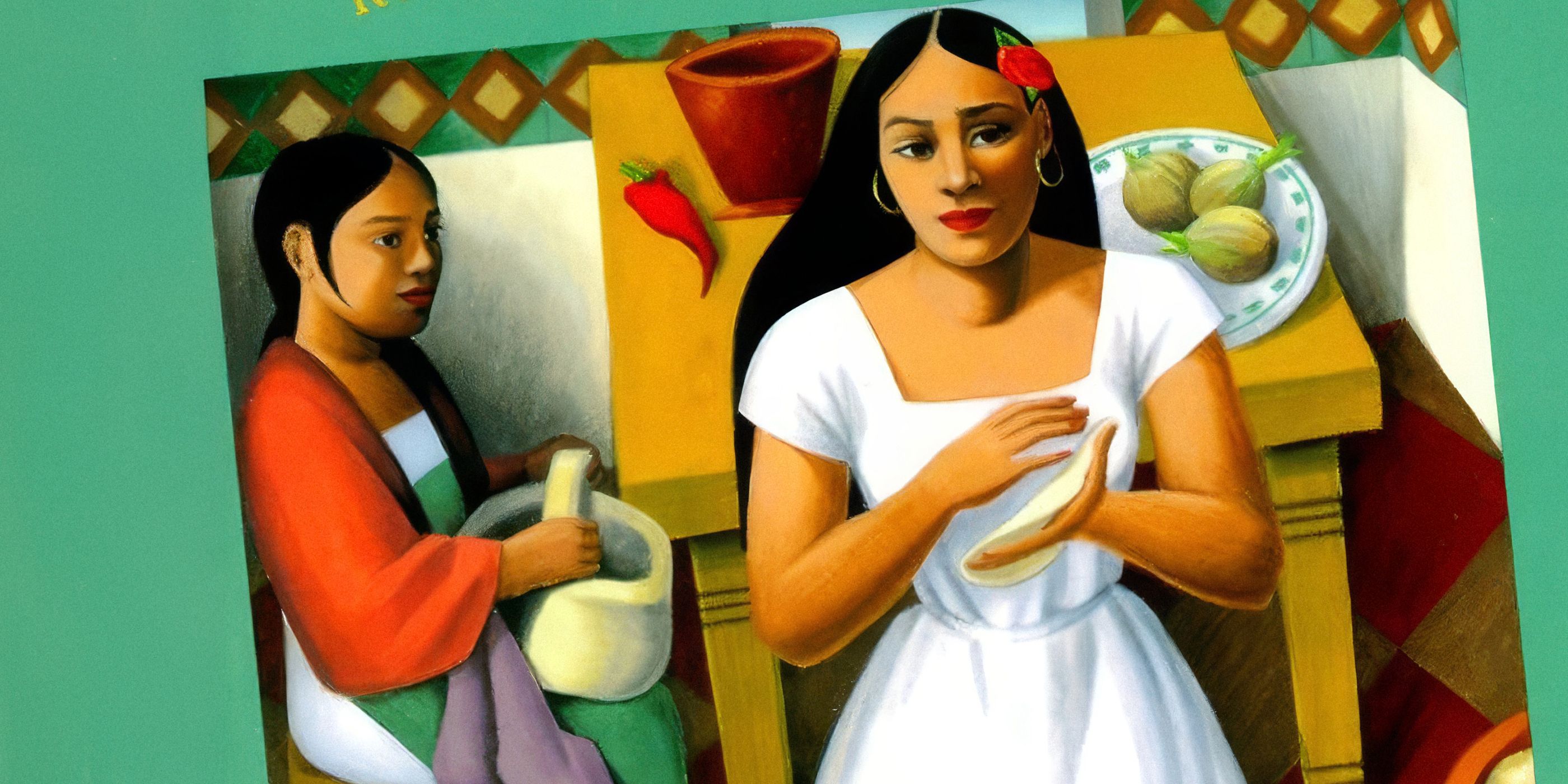
8 'Like Water for Chocolate' (1989)

"Each of us is born with a box of matches inside us." Laura Esquivel's Like Water for Chocolate is a landmark of magical realism that influenced a lot of books that followed. Set during the Mexican Revolution, it centers on Tita, the youngest of three daughters whose family tradition forbids her from marrying because she must remain at home to care for her mother. Unable to openly express her love for Pedro, Tita instead pours her emotions into her extraordinary cooking, causing everyone who eats her meals to experience her feelings in astonishing supernatural ways.
From here, the novel seamlessly intertwines recipes, romance, folklore, historical context, and family drama. Food itself serves as an instrument of communication, with tears becoming impossible quantities of salt and passion igniting miraculous transformations. Those curious about the story should also look into the HBO adaptation produced by Salma Hayek, which recently concluded with its second season.
7 'The House of the Spirits' (1982)

"Barrabás came to us by sea." This is the defining book (and an astonishingly assured debut) by Isabel Allende, who also penned A Long Petal of the Sea and Violeta. Spanning multiple generations of the Trueba family, The House of the Spirits focuses on Clara, a woman blessed with psychic abilities, alongside her descendants as their lives unfold against the backdrop of Chile's turbulent political history. Allende masterfully blends ghosts, prophecy, clairvoyance, and supernatural intuition into an otherwise realistic historical plot.
These magical elements never distract from the family's struggles. Instead, they deepen the themes: love, memory, political violence, and generational trauma. Here, the spiritual and the historical become inseparable, reflecting the way personal and national histories continually shape one another. In other words, Allende draws on the tradition of Gabriel García Márquez while giving the story its own voice. The recent Amazon Prime adaptation is a solid effort, too.
6 'Kafka on the Shore' (2002)

"Memories warm you up from the inside. But they also tear you apart." Kafka on the Shore is widely considered Haruki Murakami's masterpiece, and for good reason. Few contemporary authors employ magical realism as imaginatively as he does here. The book alternates between the stories of teenage runaway Kafka Tamura and elderly Nakata, a gentle man who lost much of his intellect during childhood but gained the extraordinary ability to communicate with cats.
As these separate journeys slowly converge, we encounter talking animals, mysterious soldiers, raining fish, alternate realities, and dreamlike metaphysical encounters. Murakami refuses to explain any of these seemingly impossible events, and his calm, understated prose allows the extraordinary to feel strangely ordinary. All in all, Kafka on the Shore is a book about loneliness, identity, fate, and unconscious desire, yet these themes never slow down the gripping, page-turning plot.
5 'Beloved' (1987)

"Freeing yourself was one thing; claiming ownership of that freed self was another." Beloved won Toni Morrison the Pulitzer, and it's remained a lightning rod ever since. Loosely inspired by a true story, it tells of Sethe, a woman living in post-Civil War Ohio whose home is haunted by the ghost of the daughter she killed rather than allow her to be returned to slavery. When a mysterious young woman calling herself Beloved appears, the boundary between memory, history, and the supernatural begins to dissolve altogether.
This setup becomes the basis for a devastating emotional excavation, as well as a genuinely creepy horror story, where we're never entirely sure what's real and what's imagined. The haunting represents the kinds of trauma that refuse to stay buried, the mistakes that weigh on us until we're unable to bear them. The novel's fluid movement through time represents the persistence of painful memories, which makes us literally lost in the vacuum of our experiences.
4 'Midnight's Children' (1981)

"To understand me, you'll have to swallow a world." Midnight's Children is perhaps Salman Rushdie's most beloved book, as well as one of the most highly regarded postcolonial novels ever written. It's about Saleem Sinai, a boy born precisely at the moment India achieved independence from British rule on August 15, 1947, who discovers he has telepathic powers. Indeed, in the book, every child born during the first hour of independence possesses extraordinary abilities, linking their individual destinies to the future of the newly formed nation itself.
In Rushdie's hands, fact and fiction blend so seamlessly that history itself begins to feel mythological. The story is gripping enough through a deeply personal anchor, but it also delves deep into complex ideas related to national identity, colonialism, and political upheaval. Through it all, Rushdie's writing is colorful and vivid, paying homage to many Indian classics.
3 'Life of Pi' (2001)
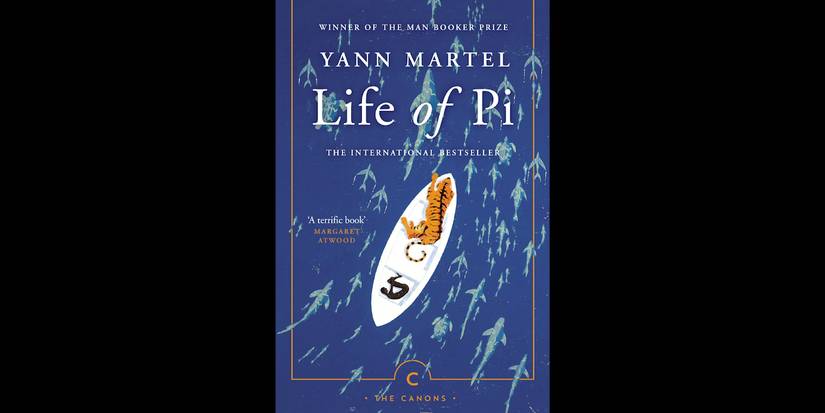
"I must say a word about fear. It is life's only true opponent." This one became a fantastic film, but the original novel is arguably still better. It begins as a survival adventure before evolving into a thought-provoking exploration of storytelling and belief. After a cargo ship sinks in the Pacific Ocean, sixteen-year-old Pi Patel finds himself stranded aboard a lifeboat with an enormous Bengal tiger named Richard Parker. Their astonishing voyage forces him to confront fear, faith, and loneliness.
The book is simply a treat to read, with a treasure to be found on practically every page. Life of Pi is a book that swaps out strict realism for wonder and metaphor, and is all the more powerful for it. It's philosophically rich and yet totally accessible, explaining why it resonated with millions of readers around the world, bringing magical realism to new audiences.
2 'Pedro Páramo' (1955)

"I came to Comala because I had been told my father lived here." Long before magical realism became internationally recognized, Juan Rulfo laid many of its foundations with Pedro Páramo. Indeed, this book hugely inspired One Hundred Years of Solitude, for example. It follows Juan Preciado as he travels to the deserted town of Comala in search of the father he never knew. There, he discovers a haunting landscape populated by voices, memories, and spirits, where the dead speak as naturally as the living and time itself seems to have collapsed.
At the time, Pedro Páramo was a bold reimagining of the ghost story. In this book, ghosts exist not as frightening apparitions but as ordinary inhabitants of a place consumed by regret, a town literally frozen in time, forever static and condemned because of the inaction of a single man. Rulfo's sparse prose creates an eerie sense that the past is never truly gone, lingering within every conversation and every ruined building.
1 'One Hundred Years of Solitude' (1967)
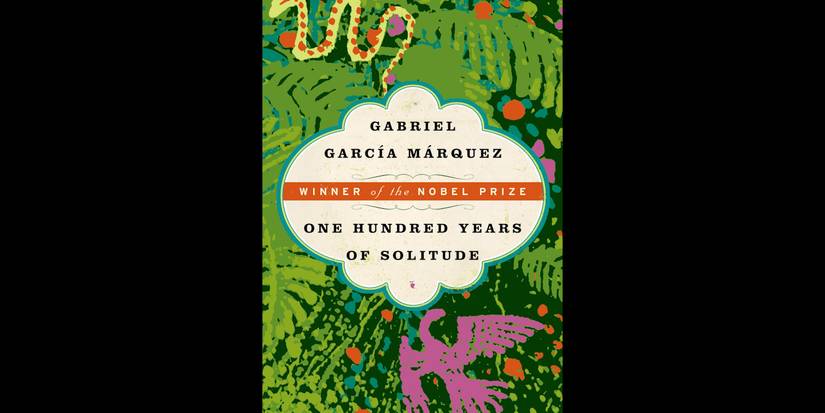
"It was as if God had decided to put to the test every capacity for surprise." The anchor point of magic realism, the touchstone that pretty much every novel in the subgenre either pays homage to or consciously rejects. Chronicling seven generations of the Buendía family in the fictional town of Macondo, One Hundred Years of Solitude presents miracles, ghosts, prophecies, impossible inventions, levitating priests, and rains lasting years with complete matter-of-fact acceptance.
Put another way, the extraordinary exists not in contrast to everyday life but as an inseparable part of it. It's a reminder of how strange and improbable human life really is, even at its most mundane. In the process, García Márquez touches on everything from violence to colonialism to the cyclical nature of history. The book is also simply brilliant on a sentence-by-sentence level, defined by ornate, flowing passages.
KioskNews shows a cleaned-up reading view extracted from the publisher’s page — the original always lives on their site, not ours.