News24 | ANC’s appeal over Lungisa ruling sets stage for constitutional showdown on party autonomy

ANC secretary-general Fikile Mbalula was found to have lacked the authority to remove Andile Lungisa from the Nelson Mandela Bay mayoral candidate list by the court.
@MbalulaFikile/X formerly Twitter
- The ANC is appealing a High Court ruling declaring Andile Lungisa’s removal from its Nelson Mandela Bay candidate list unconstitutional and unlawful.
- The party fears the judgment could set a precedent for excluded candidates across the country to challenge their removal in court ahead of November’s local government elections.
- The case raises fundamental questions about the ANC’s authority to select public representatives and the extent to which courts can intervene in parties’ internal affairs.
- For more political news, visit News24 Politics.
The ANC’s decision to appeal a High Court judgment declaring the removal of national executive committee (NEC) member Andile Lungisa from its Nelson Mandela Bay candidate list unconstitutional has thrust the party into a legal battle that could reshape how courts engage with political parties’ internal processes.
The intention to appeal, announced on Friday, escalates what began as a dispute over one controversial politician into a constitutional confrontation with implications for how parties select public representatives, and whether the judiciary can override those decisions.
The case has raised questions that have haunted democratic systems: where does a political party’s right to govern itself end and the courts’ duty to protect individual rights begin?
The Gauteng High Court in Johannesburg ruled on 9 October that the ANC’s removal of Lungisa from its proportional representation candidate list was “unconstitutional, unlawful, invalid and of no force or effect”.
Judge Nelisa Mali found that the party had failed to prove that Lungisa had missed the vetting process and that secretary-general Fikile Mbalula lacked the authority to remove him.
The court ordered the ANC to reinstate Lungisa and, if permitted by legislation, submit his name to the Electoral Commission of South Africa (IEC) on a supplementary list.
The ANC’s statement reveals the party views this as existential.
“While respecting the independence of the judiciary and the constitutional authority of our courts, the ANC has resolved to appeal the judgment, as it raises fundamental questions concerning the organisational autonomy of political parties and their authority to regulate internal democratic processes,” the statement read.
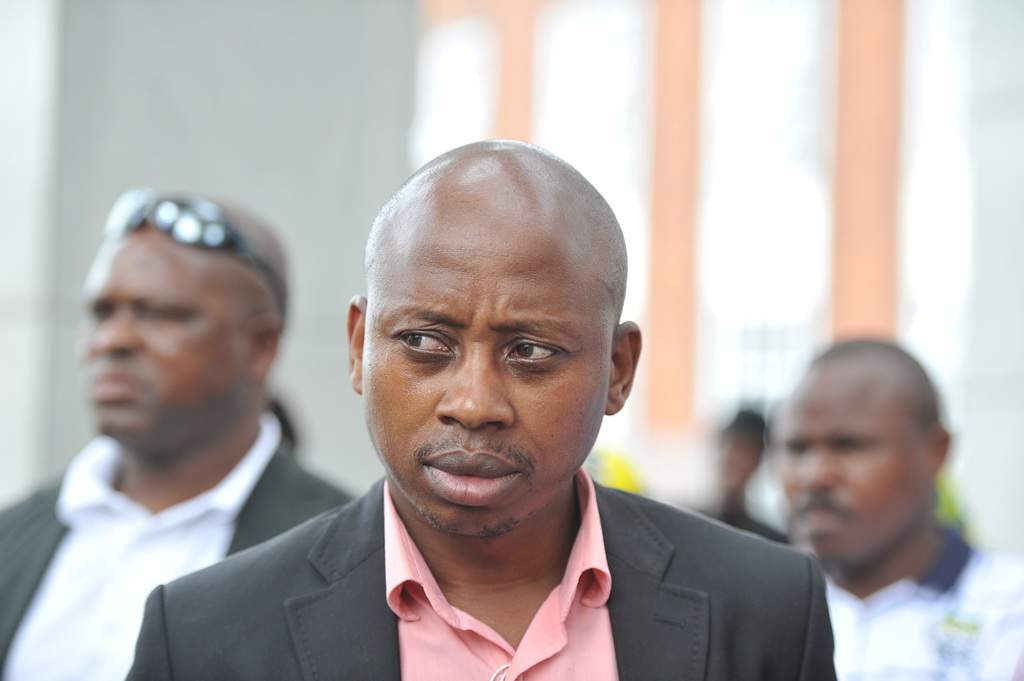
ANC NEC member Andile Lungisa took the party to court after his name was removed from the candidate list in Nelson Mandela Bay metro mayoral race.
Lulama Zenzile/Netwerk24/Gallo Images
Highly placed sources at Luthuli House say the leadership fears the ruling could open floodgates to litigation that would transfer power to select public representatives from party structures to the courts.
“A precedent is being set whereby the ANC will cede its right to deploy public representatives to courts,” one senior party source said.
“This will expose the ANC to class-action lawsuits because all candidate councillors removed from lists will cite this judgment.”
The warning carries weight. Across provinces, dozens of aspiring ANC councillors have seen their names struck from candidate lists as the party enforced vetting requirements ahead of November’s local government elections.
In the Eastern Cape, the party faces litigation over candidate selection.
In September, the Electoral Court dismissed the ANC’s appeal over 181 excluded candidates in six municipalities after the party failed to complete final submissions before the 28 August deadline.
READ | Andile Lungisa’s exclusion from ANC election list ruled unconstitutional
“If the Lungisa precedent stands, every removed candidate could mount a legal challenge, arguing their exclusion violated party rules or constitutional rights,” said the source.
The ANC maintains that candidate selection is “an organisational responsibility governed by its constitution, established guidelines and collective decision-making structures”.
The party argues the judgment “raises important legal questions regarding the interpretation and application of these internal rules, particularly the authority to enforce candidate eligibility requirements”.
Yet the Lungisa case exposes dysfunction within the ANC’s candidate selection machinery.
The party removed him, citing his 2018 conviction for assault with intent to cause grievous bodily harm – a conviction that remains valid after failed appeals to the Supreme Court of Appeal.
Lungisa was sentenced to two years’ imprisonment for smashing a glass water jug over the head of DA councillor Ryno Kayser during a chaotic council meeting in October 2016. He served part of his sentence before parole and was suspended from the ANC for 18 months.
ALSO READ | ANC expels seven members for contesting elections for other parties
Yet that same Lungisa was elected to the ANC’s NEC in December 2022 with 1 758 votes, demonstrating the party’s internal contradictions on discipline and candidate eligibility.
Sources say the appeal will test whether the ANC’s internal processes met constitutional standards or whether Mbalula exceeded his authority.
With the November elections looming, the party faces multiple candidate-related court battles across provinces.
In Gauteng, KwaZulu-Natal and the Eastern Cape, disgruntled members have launched legal challenges over alleged list manipulation.
The ANC now faces the challenge of defending its organisational autonomy without appearing to shield controversial figures.
The party’s statement called on “members and structures to remain united, disciplined and focused”.
READ MORE | ANC asks Electoral Court to overturn IEC deadline after party ‘logged out’ by system
Instead of voter engagement, the ANC marshals its resources for courtroom battles that threaten to establish binding precedents.
The appeal will require higher courts to draw the constitutional line between party sovereignty and judicial oversight, a line that will shape South African democracy long after Lungisa’s fortunes fade.
The source said the case tests whether political parties can maintain autonomy over internal affairs or whether courts will increasingly intervene in candidate-selection disputes, fundamentally altering the democratic architecture.
KioskNews shows a cleaned-up reading view extracted from the publisher’s page — the original always lives on their site, not ours.