Explaining fan interference call in Yankees vs. Rays ALDS Game 3: Why Anthony Volpe's hit was ruled a double
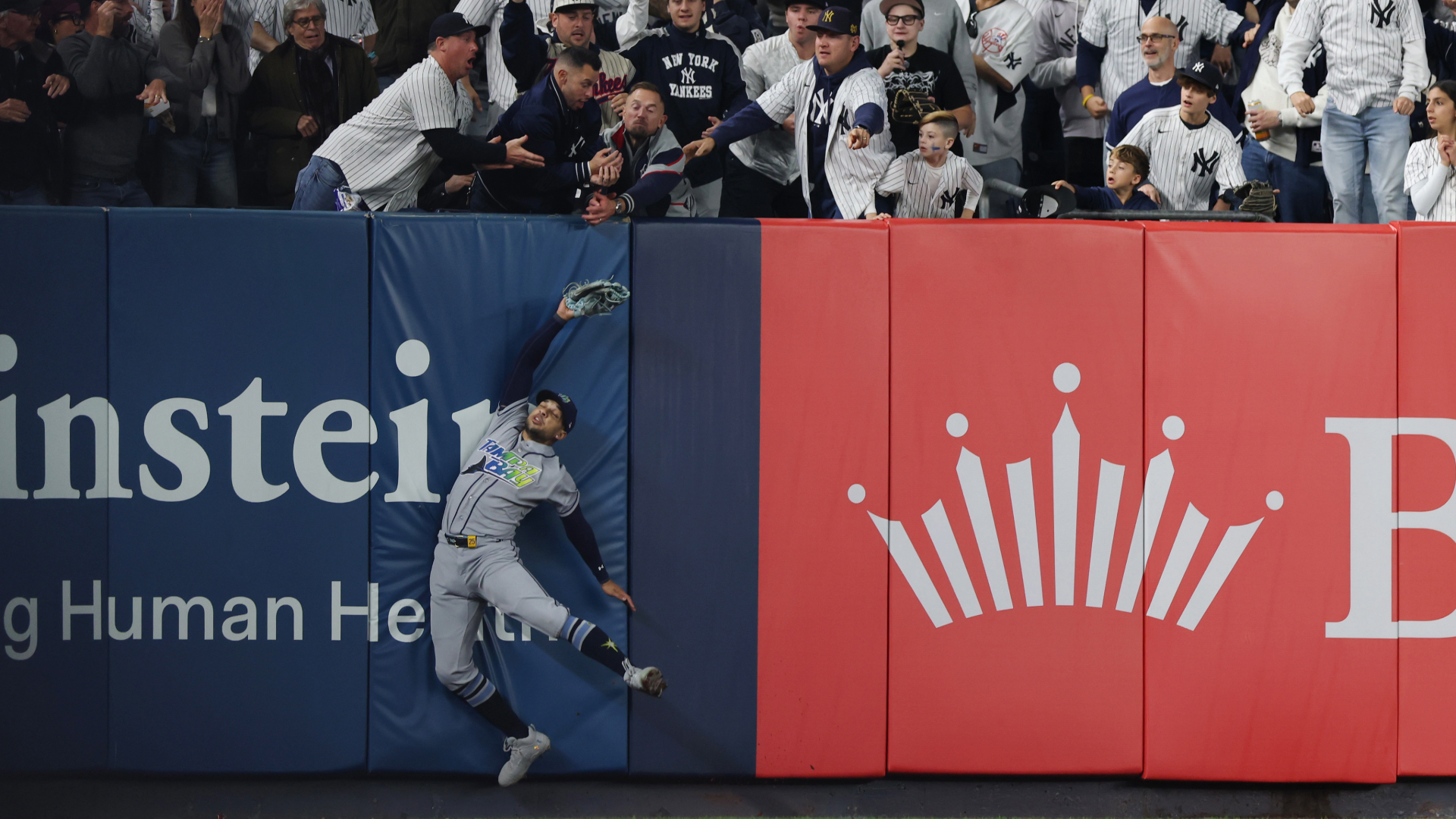
After replay, officials ruled that a fan had reached over the wall and Volpe's home run was overturned

• 2 min read
NEW YORK -- Anthony Volpe tied Game 3 of the ALDS in the sixth inning, or so he and the Yankees thought. Volpe's would-be game-tying two-run home run against the Rays on Wednesday (GameTracker) was overturned on replay and ruled fan interference. A fan clearly reached over the left field wall and got his hands on the ball. Victor Mesa Jr. was under it and attempting to make a play.
The call was overturned and Volpe was awarded a run-scoring double. Rays manager Kevin Cash argued that the play should have been overturned into an out, but to no avail. Here's the play:
A side angle replay showed clear evidence that the ball would not have gone over the fence for a home run, and instead would have remained in play. MLB Rule 6.0.1(e) covers spectator interference. Here is the rule, emphasis mine:
There is a difference between a ball which has been thrown or batted into the stands, touching a spectator thereby being out of play even though it rebounds onto the field and a spectator going onto the field or reaching over, under or through a barrier and touching a ball in play or touching or otherwise interfering with a player. In the latter case it is clearly intentional and shall be dealt with as intentional interference as in Rule 6.01(d). Batter and runners shall be placed where in the umpire's judgment they would have been had the interference not occurred.
In the replay center's judgment, Mesa would not have caught the ball and Volpe would have reached second base, so that's where he was placed. George Lombard Jr., the runner at first base, was allowed to score because he was running on contact with two outs. In the end, a game-tying two-run homer was turned into a double that brought New York to within one.
"After viewing all relevant angles, the Replay Official definitively determined the spectator interfered with the ball over the field of play," MLB's Replay Center said in a statement. "The ball would not have left the playing field nor would it have been caught. The call is OVERTURNED, there was spectator interference and no home run. Additionally, the Replay Official scored one run and placed the batter-runner at second."
The Rays hold a 2-0 lead in the ALDS. They're trying to complete the sweep in Game 3 while the Yankees try to force a Game 4 on Thursday.
KioskNews shows a cleaned-up reading view extracted from the publisher’s page — the original always lives on their site, not ours.