10 Apple TV Shows That Quietly Became Modern Classics
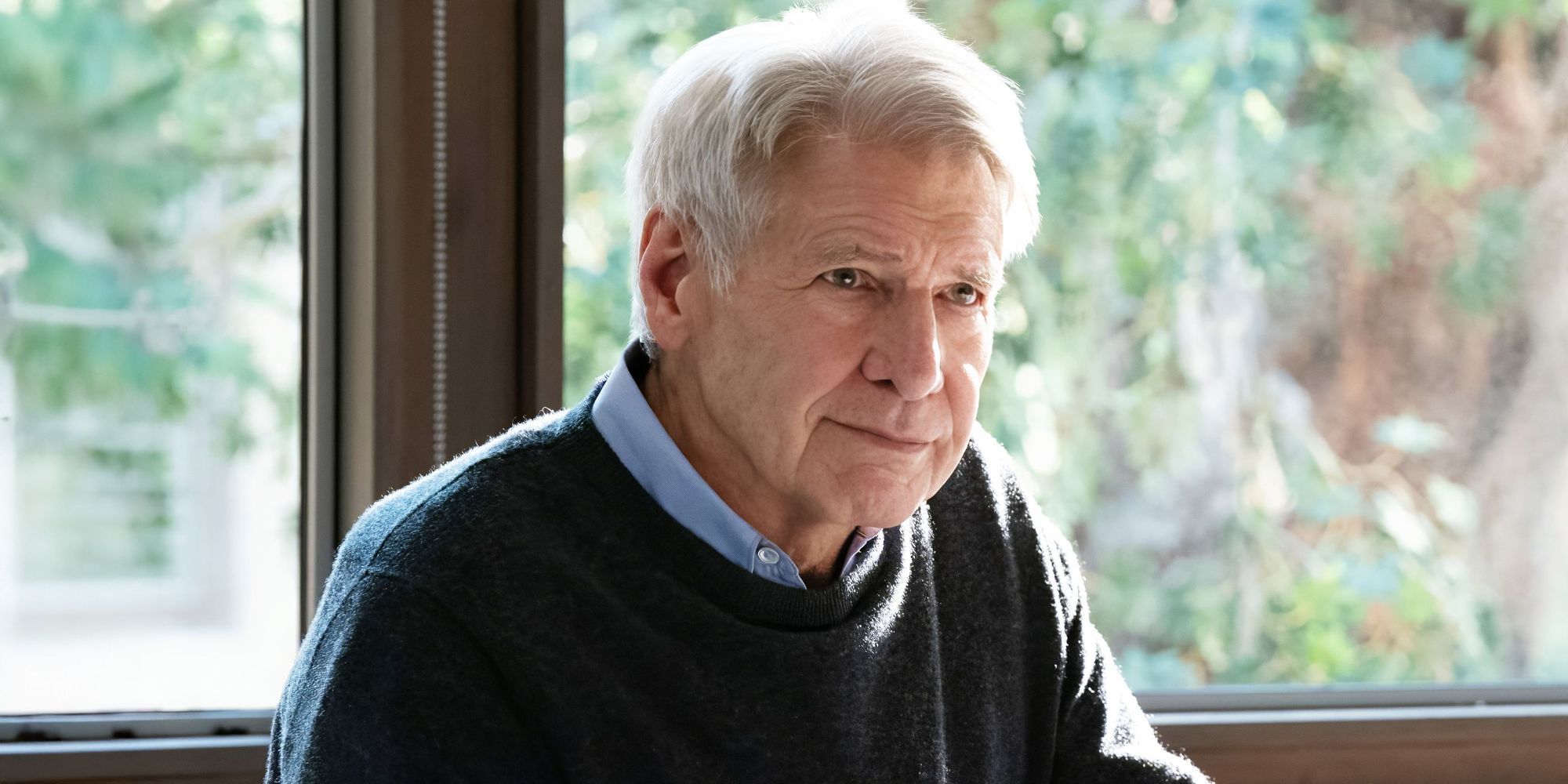

Sign in to your Collider account
Apple TV entered the streaming wars in 2019, which is pretty late compared to giants including Netflix and Amazon Prime. The platform had to build itself from scratch without decades of TV history behind it, but that’s what made its rise especially fascinating. Apple TV grew its reputation one series at a time. Some became immediate hits while others took a bit longer to find their audience. However, the common thread was that every show on the streamer knew what it wanted to be.
These titles never chased trends. Instead, they fully committed to their own unique worlds, characters, and ideas, and trusted audiences to follow along. A few years later, that consistency has left Apple TV with an unusually strong catalog of shows that already feel like they will go down in history. Here is a list of 10 such shows on the platform that have quietly become modern classics, not long after they premiered.
10 'Pachinko' (2022–2024)

Pachinko tells its story across decades, but the way its time periods flow into each other is the heart of the story. The series follows Sunja, played in her younger years by Minha Kim and later in life by Yuh-Jung Youn, who is born in Korea under Japanese colonial rule. Her life changes after she becomes involved with the wealthy and mysterious Hansu (Lee Min-ho). The choices that follow eventually take her to Japan, where she is forced to build a life in a country that often treats Koreans like outsiders. Decades later, her grandson Solomon (Jin Ha) is living a completely different life in 1989 as he works in finance and tries to prove himself in a society his family once struggled to survive in.
Pachinko’s intimate storytelling makes it more than just a historical drama. Sunja and Solomon are separated by generations, but the show constantly reveals how much of his life has been shaped by her decisions. The poverty, discrimination, migration, and compromises that defined Sunja’s generation do not disappear, but just take different forms once the family becomes more successful. The show doesn’t make this contrast feel too on the nose, but quietly demonstrates how progress doesn’t always erase the past. Pachinko is one of Apple TV’s most acclaimed dramas because it unfolds on a massive historical scale, but still feels like a deeply personal family story.
9 'For All Mankind' (2019–2027)
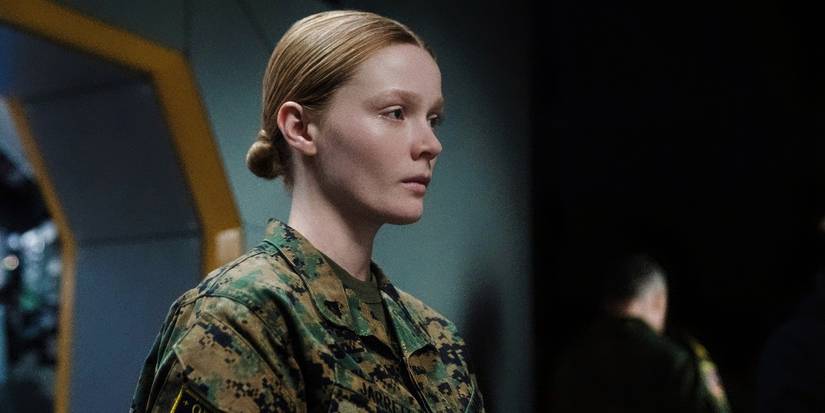
For All Mankind begins by changing one moment in history and then spends the rest of the series exploring the consequences of that one decision. In the show’s version of 1969, the Soviet Union beats the United States to the Moon. This throws NASA into a full-blown crisis and makes the space race far more competitive than it ever became in real life. Astronaut Ed Baldwin (Joel Kinnaman) is among the people caught in that shift, as the United States suddenly has much more to prove and far less room for failure. However, this alternate version of the Apollo era gradually grows into a completely different timeline where the space race never really ends.
For All Mankind is one of Apple TV’s most ambitious shows. Every season jumps forward several years, which keeps the story moving in all sorts of interesting directions. Women enter NASA earlier, permanent bases appear on the Moon, and humans actually start inhabiting Mars instead of just dreaming about it. However, even through all these advancements, the show never puts its primary focus on the technology of it all. Every giant leap into the future affects the characters, their careers, and families. This balance between substance and spectacle gives For All Mankind its staying power. The show keeps asking “what if?” on a massive scale, but always makes the answer feel relatable enough to matter.
8 'Bad Sisters' (2022–Present)

Bad Sisters begins with a funeral where almost nobody seems particularly upset about the man in the coffin. The story is set right after the death of John Paul Williams (Claes Bang), while his wife Grace (Anne-Marie Duff) grieves his loss. Now, it doesn’t take the audience long to learn that Grace’s sisters Eva (Sharon Horgan), Ursula (Eva Birthistle), Bibi (Sarah Greene), and Becka (Eve Hewson) all had plenty of reasons to want their brother-in-law gone. Bad Sisters then moves between the aftermath of his death and the months leading up to it. The premise instantly hooks the viewers in, but instead of a traditional murder mystery, they slowly learn how controlling and cruel John Paul really was, to the point where they understand why the sisters would want him dead.
However, the story is complicated when two insurance investigators begin looking into John Paul’s death and quickly realize that something is not right. This structure makes Bad Sisters impossible to stop watching. The show doesn’t take itself too seriously and uses humor to cushion its dark premise without ever undermining the seriousness of Grace’s situation. The show’s greatest strength is the natural dynamic between the sisters who interrupt each other, make terrible decisions, hold grudges, but still show up for each other no matter what. The mystery keeps things moving, but the real reason to stay is the messy, heartwarming, and occasionally disastrous family dynamic that the Garvey sisters bring to every episode.
7 'Widow's Bay' (2026–Present)

Widow’s Bay is a horror comedy that has mastered the art of balancing the two genres without losing what makes them special. The show follows Mayor Tom Loftis (Matthew Rhys), who is desperate to revive the remote New England island of Widow’s Bay and build a better future for his teenage son. The problem is that the locals wholeheartedly believe that the place is haunted, and what’s worse is that they might actually be right. The island has terrible cell service, almost no modern infrastructure, and old supernatural legends that Tom just keeps dismissing. He actually succeeds in attracting tourists by paying no heed to the residents, but that is exactly when the stories he laughed at start coming true.
Apple TV's Widow’s Bay tells this story by refusing to choose between being funny and truly frightening. One episode can play with haunted-house horror, another can feel closer to a slasher, while later stories dig into the island’s much older history. The show never turns those genres into simple spoofs. The horror hits hard while the comedy comes from Tom and the other residents trying to treat completely ridiculous supernatural events like another local problem that somehow needs fixing. Widow’s Bay’s greatest strength is its setting, which has a unique personality. The deeper the show goes, the more its supernatural elements start to make sense. The series could have survived on its bizarre premise alone, but its real achievement is making viewers want to spend more time with the people trapped inside it.
6 'Pluribus' (2025–Present)

Pluribus completely distorts the idea of what should seem like a utopia, and that is the show’s hook. The series follows novelist Carol Sturka (Rhea Seehorn) after most of humanity is suddenly absorbed into a collective consciousness known as the Joining. The event eradicates all crime from the world; people become endlessly helpful, and it looks like everyone is genuinely happy. However, Carol is one of the handful of people who remain immune, and she is horrified by a world where billions of individuals have essentially become one mind. That makes her an awkward kind of survivor, because unlike most apocalyptic protagonists, she is not fighting people who want to hurt her. She is surrounded by people who want nothing more than to make her happy. That contradiction fuels the show.
The collective offers Carol almost everything she asks for, so resisting them doesn’t even make sense. Through this premise, Pluribus keeps forcing the audience to question whether a peaceful world is still worth wanting if everyone has to surrender their individuality to create it. Carol is also the perfect person to explore that idea because she is stubborn, unhappy, and sometimes difficult to like, yet those imperfections suddenly become proof that she still belongs to herself. The show is deliberately patient about answering its biggest questions and spends long stretches showing Carol test the limits of this strange new world she is suddenly in. That slow pace gives the audience plenty of time to sit with the show’s central dilemma instead of rushing toward an easy answer, which is exactly what a narrative like this requires.
Collider Exclusive · Sci-Fi Survival Quiz Which Sci-Fi World Would You Survive? The Matrix · Mad Max · Blade Runner · Dune · Star Wars
Five universes. Five completely different ways the future went wrong — or sideways, or up in flames. Only one of them is the world your instincts were built for. Eight questions will figure out which dystopia, galaxy, or desert wasteland you'd actually make it out of alive.
💊The Matrix
🔥Mad Max
🌧️Blade Runner
🏜️Dune
🚀Star Wars
01
You sense something is deeply wrong with the world around you. What do you do? The first instinct is often the truest one.
02
In a world of scarcity, what resource do you guard most fiercely? What we protect reveals what we believe survival actually requires.
03
What kind of threat keeps you up at night? Fear is useful data — if you're honest about what you're actually afraid of.
04
How do you deal with authority you don't trust? Every dystopia has a power structure. Your approach to it determines everything.
05
Which environment could you actually endure long-term? Survival isn't just tactical — it's physical, psychological, and very much about where you are.
06
Who do you want in your corner when things fall apart? The company you keep is the clearest signal of who you actually are.
07
Where do you draw the line — if you draw one at all? Every survivor eventually faces a moment that tests what they're actually made of.
08
What would actually make survival worth it? Staying alive is one thing. Having a reason to is another.
Your Fate Has Been Calculated You'd Survive In…
Your answers point to the world your instincts were built for. This is the universe your temperament, your survival instincts, and your particular brand of stubbornness were made for.
The Matrix
You took the red pill a long time ago — probably before anyone offered it to you. You're a systems thinker who can't help but notice the seams in things.
- You're drawn to understanding how the system works before figuring out how to break it.
- You'd find the Resistance, or it would find you — your instinct for spotting constructed realities is the machines' worst nightmare.
- You function best when you have access to information and the freedom to act on it.
- The Matrix built an airtight prison. You'd be the one probing the walls for the door.
Mad Max
The wasteland doesn't reward the clever or the well-connected — it rewards those who are hard to kill and harder to break. That's you.
- You don't need comfort, community, or a cause larger than the next horizon.
- You need a vehicle, a clear threat, and enough fuel to outrun it — and you're good at all three.
- You are unsentimental enough to survive that world, and decent enough — just barely — to be something more than another raider.
- In the wasteland, that distinction is everything.
Blade Runner
You'd survive here because you know how to exist in moral grey areas without losing yourself completely.
- You read people accurately, keep your circle small, and ask the questions others prefer not to answer.
- In a city where humanity is a legal designation rather than a feeling, you hold onto something that keeps you functional.
- You're not a hero. But you're not lost, either.
- In Blade Runner's world, that distinction is everything.
Dune
Arrakis is the most hostile environment in the known universe — and you are precisely the kind of person it rewards.
- Patience, discipline, and political awareness are your core strengths — and on Arrakis, they're survival tools.
- You understand that the long game matters more than any single victory.
- Others come to Dune and are consumed by it. You'd learn its logic and earn its respect.
- In time, you wouldn't just survive Arrakis — you'd begin to reshape it.
Star Wars
The galaxy far, far away is vast, loud, and in a constant state of violent political upheaval — and you wouldn't have it any other way.
- You find meaning in being part of something larger than yourself — a cause, a crew, a rebellion.
- You'd gravitate toward the Rebellion, or the fringes, or whatever pocket of the galaxy still believes the Empire's grip can be broken.
- You fight — not because you have to, but because standing aside isn't something you're capable of.
- In Star Wars, that willingness is what makes all the difference.
5 'Silo' (2023–Present)
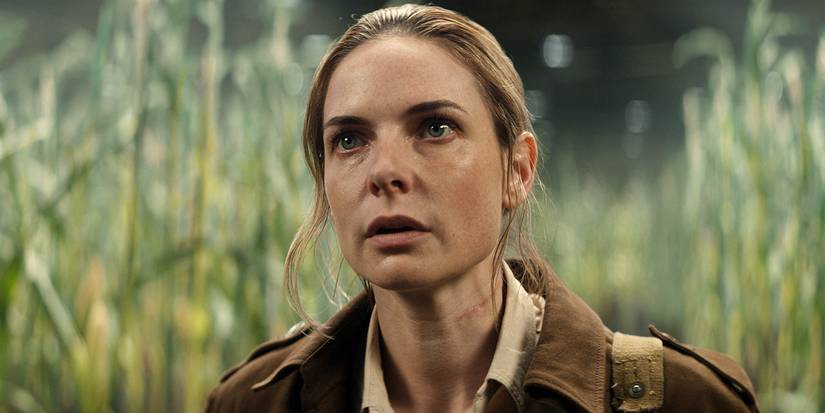
Silo builds an entire mystery around the unsettling question of what one would do if everything they knew to be real actually wasn’t. The sci-fi series is set in a massive underground structure where roughly 10,000 people live because the outside world is believed to be toxic and uninhabitable. Nobody knows exactly who built the silo or what happened before people moved underground. All they know is that asking too many questions is dangerous, and anyone who says they want to go outside is allowed to leave but can never return. The story eventually centers on engineer Juliette Nichols (Rebecca Ferguson), who begins investigating a suspicious death and slowly realizes that the rules keeping everyone alive may also be hiding something much bigger.
Silo’s gripping premise treats every piece of information like contraband. Everything Juliette finds out puts her life at risk, but what’s interesting is that she approaches every problem like the engineer that she is. If something does not make sense, she keeps digging until she understands how it works, even if that means inviting danger. Every episode of Silo expands the central character’s investigation to reveal the secrets of this underground community going back centuries. Silo uses every revelation to change the meaning of whatever the audience believed they knew. The series opens with a simple premise that eventually turns into one of TV’s most carefully layered worlds, which is why it deserves to be on this list.
4 'Shrinking' (2023–Present)
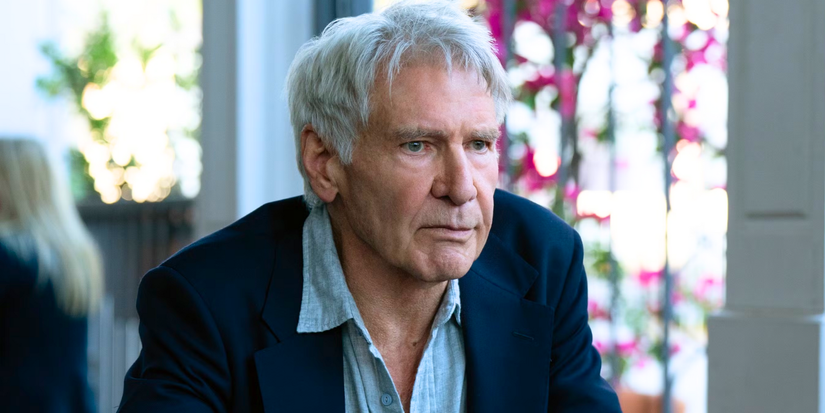
Shrinking follows therapist Jimmy Laird (Jason Segel), who is struggling to keep up with work and raise his daughter Alice (Lukita Maxwell) after losing his wife. Eventually, he gets tired of sitting quietly through therapy sessions and starts telling his patients exactly what he thinks they should do, instead of letting them figure things out on their own. That obviously crosses every professional boundary imaginable, but it also creates the show’s central tension, because Jimmy begins changing his patients’ lives while he is still figuring out how to rebuild his own. His colleagues Paul (Harrison Ford) and Gaby (Jessica Williams) become an important part of that process.
At the same time, Shrinking never reduces any of these characters to one-dimensional supporting roles. The show allows Jimmy and everyone else in his life to make terrible decisions, but that messiness is what makes their dilemmas feel extremely real. Jimmy’s healing is uneven and complicated, but the humor in his situation comes from the fact that life keeps moving even when he clearly is not ready for it to. Shrinking finds its best moments in that awkward middle ground where grief, friendship, parenting, and bad decisions all start bleeding into one another. It’s one of Apple TV’s most emotionally honest comedies, one that feels both heartbreaking and heartwarming at the same time.
3 'Ted Lasso' (2020–Present)
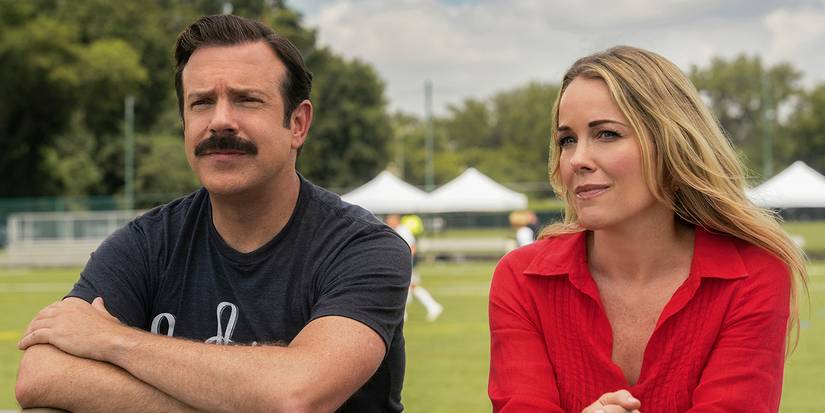
Ted Lasso is the kind of show that can instantly lift anyone’s mood. The series follows Ted (Jason Sudeikis), an American football coach who is hired to manage struggling English soccer club AFC Richmond despite knowing almost nothing about the sport. What Ted also doesn’t know is that club owner Rebecca Welton (Hannah Waddingham) hired him specifically to fail as part of her plan to destroy something her ex-husband loves. However, Ted walks into this hostile situation with an almost ridiculous amount of optimism. The clever part is that the show never treats Ted’s kindness as stupidity.
He may not understand football, but he understands people, and that gradually becomes much more important. Rebecca goes from secretly working against him to becoming one of his closest friends, arrogant striker Jamie Tartt (Phil Dunster) slowly learns how to be part of a team, and Roy Kent (Brett Goldstein) has to figure out who he is once playing football can no longer define him. Ted isn’t just this ray of sunshine, though. The show reveals that he is also dealing with panic attacks and personal problems, which makes his relentless positivity feel like a conscious choice rather than just a quirk. Ted Lasso became one of Apple TV’s defining successes because its optimism never feels effortless, and that is the essence of humanity after all.
2 'Slow Horses' (2022–Present)
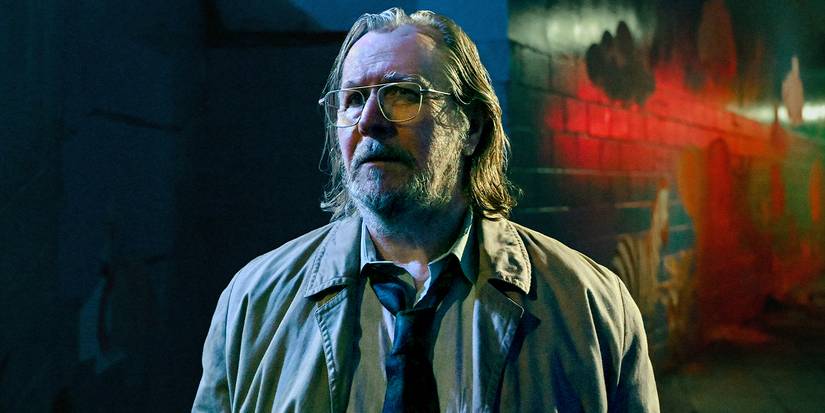
Slow Horses builds its entire premise around failure, but manages to tell an extremely hopeful story. The show follows MI5 agent River Cartwright (Jack Lowden), who is sent to Slough House after a disastrous training exercise nearly ruins his career. Slough House is essentially where British intelligence dumps agents who have made serious mistakes, where they receive dull assignments until they eventually give up and leave. The unit is run by the brilliant but extremely rude Jackson Lamb (Gary Oldman), who is more interested in insulting his team than helping them.
However, this group of rejects seems to have a strange habit of getting pulled into real intelligence operations. What’s interesting, though, is that these situations often prove that they are the only people who can actually see the problem clearly. The agents in Slough House are definitely the underdogs here, but that’s what makes all their wins feel earned. Even Lamb, who looks completely checked out initially, eventually comes through and proves exactly why MI5 has never been able to write him off completely. The series has now grown into one of Apple TV’s longest-running dramas, and the way it continues to work with the same basic idea just goes to show the brilliance of its writing.
1 'Severance' (2022–Present)

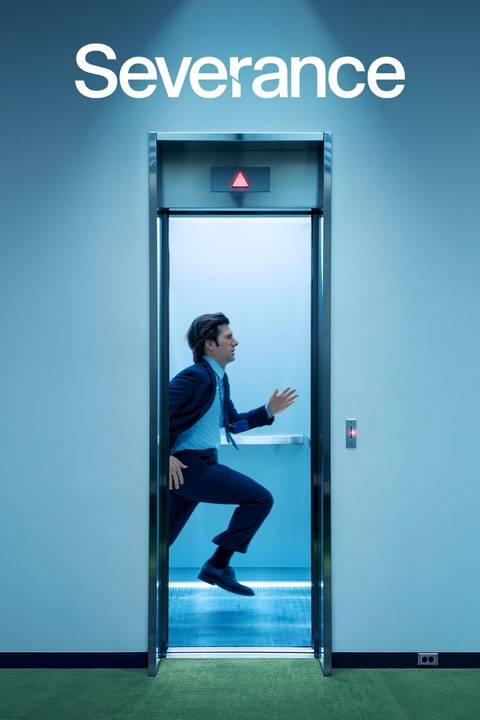
Severance makes office life feel terrifying without changing much about it. The series follows Mark Scout (Adam Scott), an employee at Lumon Industries who has undergone a procedure that completely separates his work memories from his personal ones. His “outie” remembers nothing about the office, while his “innie” knows nothing except the time he spends inside it. That means one version of Mark gets to leave at the end of every shift, while the other effectively exists only to work. However, things start to unravel when Mark and his coworkers Helly (Britt Lower), Dylan (Zach Cherry), and Irving (John Turturro) begin questioning what Lumon actually wants from them.
Severance creates its sense of dread from things that seem pretty harmless, including employee handbooks, bizarre corporate perks, and meaningless everyday tasks at work. The company controls its workers through strange rules, rituals, and the fact that the innies have no outside life instead of obvious violence. The more Mark and the others learn about Lumon, the more they also begin asking whether their innies are separate people with lives and rights of their own. Given the show’s unique premise, it’s no surprise that it became Apple TV’s most-watched show during Season 2. It feels like a modern classic because it takes the most ordinary frustrations of working life and makes them feel existential in a way that no other show has.
Severance
- Release Date
- February 17, 2022
- Network
- Apple TV
- Showrunner
- Dan Erickson, Mark Friedman
- Directors
- Ben Stiller
KioskNews shows a cleaned-up reading view extracted from the publisher’s page — the original always lives on their site, not ours.