Why Centre may convene special sitting of Parliament before Winter Session
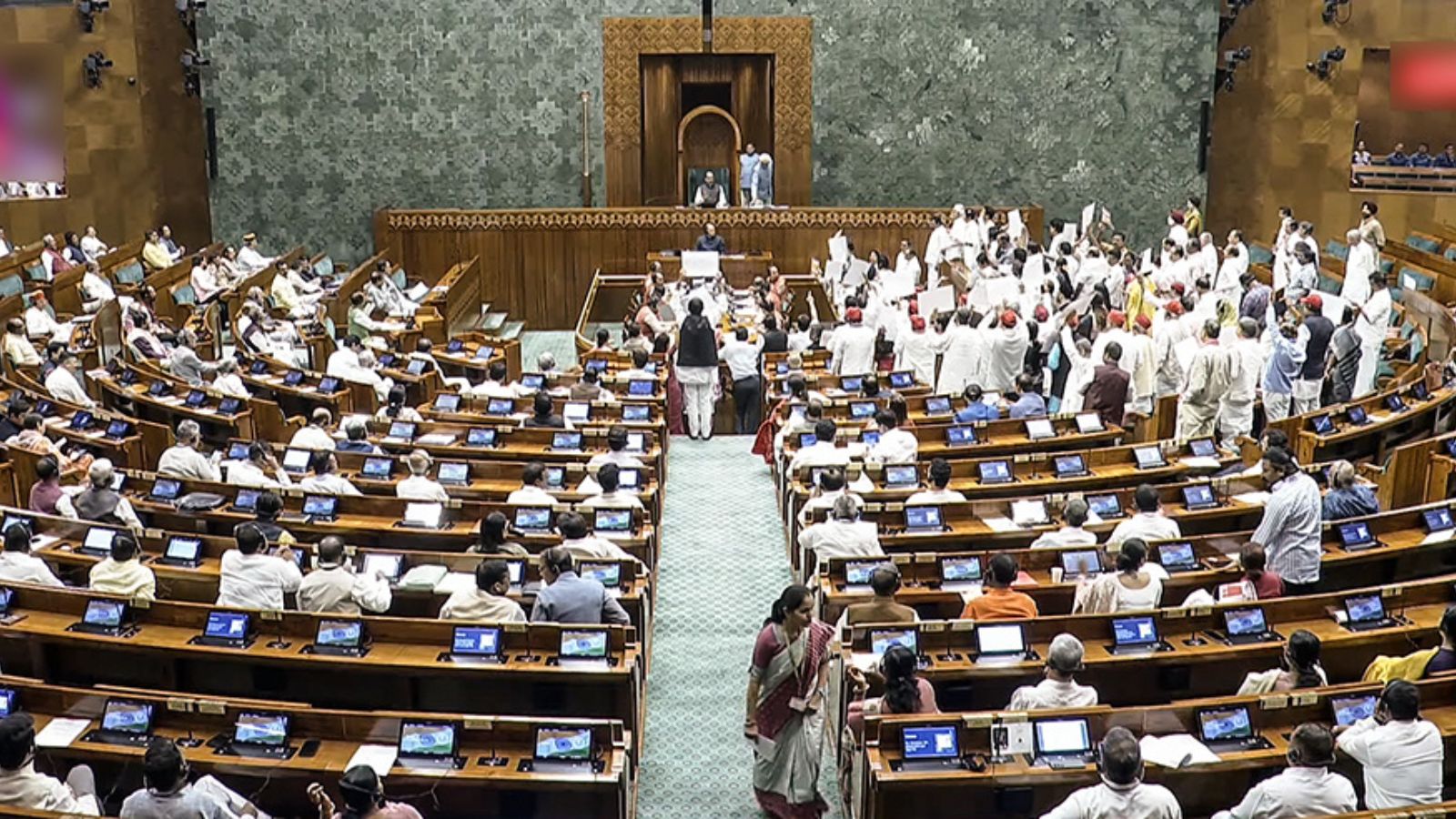
Sources in the BJP said the Winter Session was likely to commence on either November 30 or December 4, meaning the government has time to fit in a short special session if it wishes to. Last year, the Winter Session had commenced on December 1.
“A special session of Parliament may be convened before the Winter Session. There is no hard and fast rule that the Winter Session must commence in the third week of November,” a senior Union Minister said Thursday.
A source in an NDA constituent said that there were two options to pass the legislative package, either in a Special Session or in the Winter Session, adding that the BJP’s allies were led to believe that passage in the Winter Session was more likely. According to sources in the BJP-led NDA, this could be the last window to advance the implementation of women’s quota to 2029, when the Lok Sabha elections are scheduled to be held. The central piece of the legislative package on operationalising the Women’s Reservation Act is a Constitutional Amendment Bill, which is bundled together with the Delimitation Bill, and a Union Territories Laws (Amendment) Bill.
As of November 12, the Monsoon Session of Parliament has not been prorogued for 91 days since being adjourned sine die on August 13. This means Parliament can be convened any day without the mandatory 14-day notice required before the House is called into session, government sources said. Should a special session be convened, a Delimitation Bill will be introduced to set up a Delimitation Commission and redraw constituencies to increase the Lok Sabha’s strength to a maximum of 850.
The numbers hurdle
A Constitutional amendment must be passed in each House by a majority of the total membership and at least two-thirds of members present and voting. It cannot be passed in a joint sitting of both Houses. The Centre already burnt its fingers in April, when the Constitutional Amendment Bill to advance the implementation of the women’s reservation law was defeated in the Lok Sabha for want of numbers.
The BJP-led NDA’s strength in the Lok Sabha is 320 and 155 in the Rajya Sabha, as per BJP sources. In the Lower House, this number is 40 short of the required 360 for a two-thirds majority in the event that all MPs are present and voting. In the Rajya Sabha, the NDA is six short of the two-thirds mark of 161 at full strength.
This means the NDA needs the backing of more parties, either through their support or through abstentions that would reduce the two-thirds mark in both Houses. For this, the Bills to be introduced should unequivocally fulfil the demands of the parties opposed to it. A senior BJP leader said that, as per the calculations, the party is about 15 above the two-thirds mark, but he did not go into further detail.
“We will be able to muster the numbers to pass the pending Constitution amendment Bills, as no party can oppose the delimitation exercise. What parties such as the DMK need is an assurance that their state’s share of representation is not changed. The Centre can do it,” said a senior BJP MP.
The DMK factor
BJP sources pointed out that with the resignation of Aga Syed Ruhullah Mehdi as the National Conference MP from Srinagar, the Opposition had lost one more vote. Speaker Om Birla has accepted Mehdi’s resignation.
Reiterating that the DMK has not rejected delimitation outright and is considering the Centre’s assurance of a 50% increase in the Lok Sabha allocation of all states irrespective of population growth, insiders in the southern party said its leadership was awaiting a written assurance from the Central government.
Tamil Nadu Chief Minister and TVK leader C Joseph Vijay, the DMK’s biggest rival at the moment, has urged the Centre to provide a clear legislative assurance that no southern state will suffer a reduction in its share of parliamentary seats because it had managed to stabilise its population. Tamil Nadu’s Assembly had earlier passed a resolution seeking a freeze on Lok Sabha seats at the current strength of 543.
BJP sources said they were confident that a “shift” in the TVK’s stand — though it has no MP at present — would encourage the DMK to take a favourable stand without the “anxieties and fears over the public reaction” in Tamil Nadu.
The SP question
Though the BJP is set to face off against the Samajwadi Party (SP) in next year’s Uttar Pradesh elections, BJP insiders said the party expects to receive its support. In April, the SP’s 37 Lok Sabha MPs had rejected the Constitution Amendment Bill.
“With the Uttar Pradesh elections coming up, the SP cannot afford to oppose delimitation because UP is a state that is going to benefit in a big way. It will have to avoid being seen as opposing the legislation,” claimed a BJP MP from UP.
The counter argument is that the Akhilesh Yadav-led party will not want to be seen as voting with the BJP just before the UP elections. However, should the SP decide to abstain, the effective strength of the Lok Sabha will come down to 503 from the current 540, and the two-thirds mark will be down to 336. That will still leave the NDA short of 16 votes if the House votes at full strength and no other Opposition party supports it.
KioskNews shows a cleaned-up reading view extracted from the publisher’s page — the original always lives on their site, not ours.