What happens to a dog when its owner can’t leave hospital? | Ranjana Srivastava
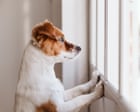
Her face lights up. “Well, he is just a lovely little thing. When I am knitting, he curls up on my lap and keeps me company. We are very happy, the two of us.”
It is unlikely that our patient has knitted in the last year, during which a series of mishaps has brought her in and out of hospital. But the rest of her account rings true.
For as long as possible, she stayed at home, managing miraculously well despite her cognitive impairment, with little help beyond an occasional carer. But now, a fall has brought her undone. For weeks, she has been waiting for residential care, one more statistic in the familiar story of “bed block”.
From our medical perspective, she is waiting for a facility. But from hers, she is waiting to see her dog. She can recall very little about her life but, when it comes to her pet, her descriptions are unwavering. Her words paint a small brown dog, quietly following her around her apartment. Jumping into her lap when she settles into her armchair. Ready to do it all over again tomorrow.
The paramedic who rescued her from her garden noted that the neighbour had offered to take the dog until the patient’s return. But this time, the patient is not going home.
Seeing how much she enjoys the nurses fussing over her – and because she has never once asked to go home – we have not mentioned her living arrangement. But she longs for her dog – and our decision not to lie is far easier in principle than in practice.
There is no easy provision to reunite her with her dog. The neighbour can’t bring the dog in. The hospital won’t let the dog in. (“Imagine the other patients.”)
What if seeing her dog proved distressing afterwards? What if it created a safety risk? And if we made an exception for her, what would we do for the next patient who pined for her turn?
The more frequently I encounter the problem, the more I see it as an emblem of the things medicine considers peripheral to patient care, even when they may not be peripheral at all.
Our relationships with pets matter to wellbeing. They provide physical activity, psychological comfort and social connection. For some older people, an animal is their most constant companion.
But concern for a pet’s welfare can also become a practical barrier to healthcare. Patients may delay seeking care, worry about coming to hospital, or discharge themselves because there is a pet at home.
A recent essay in the New England Journal of Medicine on human-animal relationships points to a perhaps delayed recognition of something we have understood for years: the wellbeing of humans and their pets is intertwined.
When I was an intern, just two questions often formed the social history: Does the patient smoke? Does the patient drink?
Today we do better. We ask: Where does the patient live? What services exist? Is there a history of falls? Is the family involved?
after newsletter promotion
Perhaps we should add another question: Are you concerned about a pet?
It is a deceptively easy question to ask. Because what happens when the answer is yes?
Who will feed the cat? Who will walk the dog? What if the patient cannot return home?
The solution can’t be another mental responsibility casually added to the medical worklist. Yet ignoring the issue doesn’t obscure the problem.
More of us are starting to notice what we have traditionally neglected – not only where a patient lives but also which animal lives with them and what will happen to that animal if the patient doesn’t go home.
For many people, pets are part of the social determinants of health. Hospitals cannot take on this responsibility alone. But it’s time to ask how hospitals can work effectively with community services and animal welfare agencies to care for the whole patient.
Know thy neighbour – and thy neighbour’s dog.
For as long as we cared for her, one doctor from our team sat down with our patient and heard her retell the story about her dog. We never let our interest drift, even when our hearts slightly broke each time. Every one of us would have brought in her dog – if only we could.
One day, all of us rotated out. We left her in the hands of another team, hoping they would continue the ritual.
KioskNews shows a cleaned-up reading view extracted from the publisher’s page — the original always lives on their site, not ours.